


Recherche dans le blog
REVERSE OSMOSIS
What Is a Reverse Osmosis System?
Vincent's Bioelectronics and Reverse Osmosis
Why Install a Reverse Osmosis System?
The Health Benefits of a Reverse Osmosis System
- A high-quality drink
- Water that is easy to drink
- More reasons
- Your kidneys will thank you
- More advantages of RO systems
Reverse Osmosis System: Pros and Cons
How to Choose a Home Reverse Osmosis System
- RO water definition
- RO water and health
- RO water and aquariums
- RO water and pH
- RO water and demineralized water
- RO water or spring water?
- How to make RO water
- "A RO system is expensive" - Not anymore!
- How much does RO water cost?
Frequently Asked Questions About RO Systems
- Why are prices so low?
- RO system installation
- Where?
- How much space?
- How long does it take?
- What tools?
- How do you drill a sink?
- How do you connect the water?
- How much does the whole system weigh?
- Home uses
- Baby bottles?
- Ice cubes?
- American-style fridge?
- Face and hair?
- Plants?
- Windshield washers?
- Heating appliances?
- Dishes?
- Windows?
- Maintenance
- Technology
- Advantage of the booster pump?
- Disadvantage of the booster pump?
- Benefit of quick connectors?
- Benefit of a UV sterilizer?
- Benefit of a TDS tester?
- What TDS level can you expect?
- Performance
How to Install a Reverse Osmosis System
Technical Explanations on Using RO Systems
- Why Does TDS Rise in the First Centiliters of Water Produced?
- Why Does TDS Rise When the RO System Is Idle?
- Why Does My Tank-Based RO System Sometimes Start and Sometimes Not?
- My RO System Produces Less Water: Why?
- How to Avoid Drilling Your Countertop
Reverse Osmosis System Maintenance
- What are Total Dissolved Solids (TDS)?
- Where do dissolved solids come from?
- Why measure the TDS level of your water?
A Reverse Osmosis System With No Wastewater?
- Why does a RO system produce wastewater?
- How to limit wastewater
- Wastewater-free technology: ultrafiltration
Looking for a Reverse Osmosis System Manufacturer?
Why Is the Reverse Osmosis System the Ideal Product in Africa?
Why Does TDS Rise in the First CL of Water Produced?
Natural osmosis
To answer this question, we need to discuss the principle of osmosis. Osmosis is a diffusion phenomenon observed when solvent molecules pass through a semipermeable membrane separating two solutions with different solute concentrations; the net transfer of solvent then occurs from the less concentrated solution to the more concentrated solution.
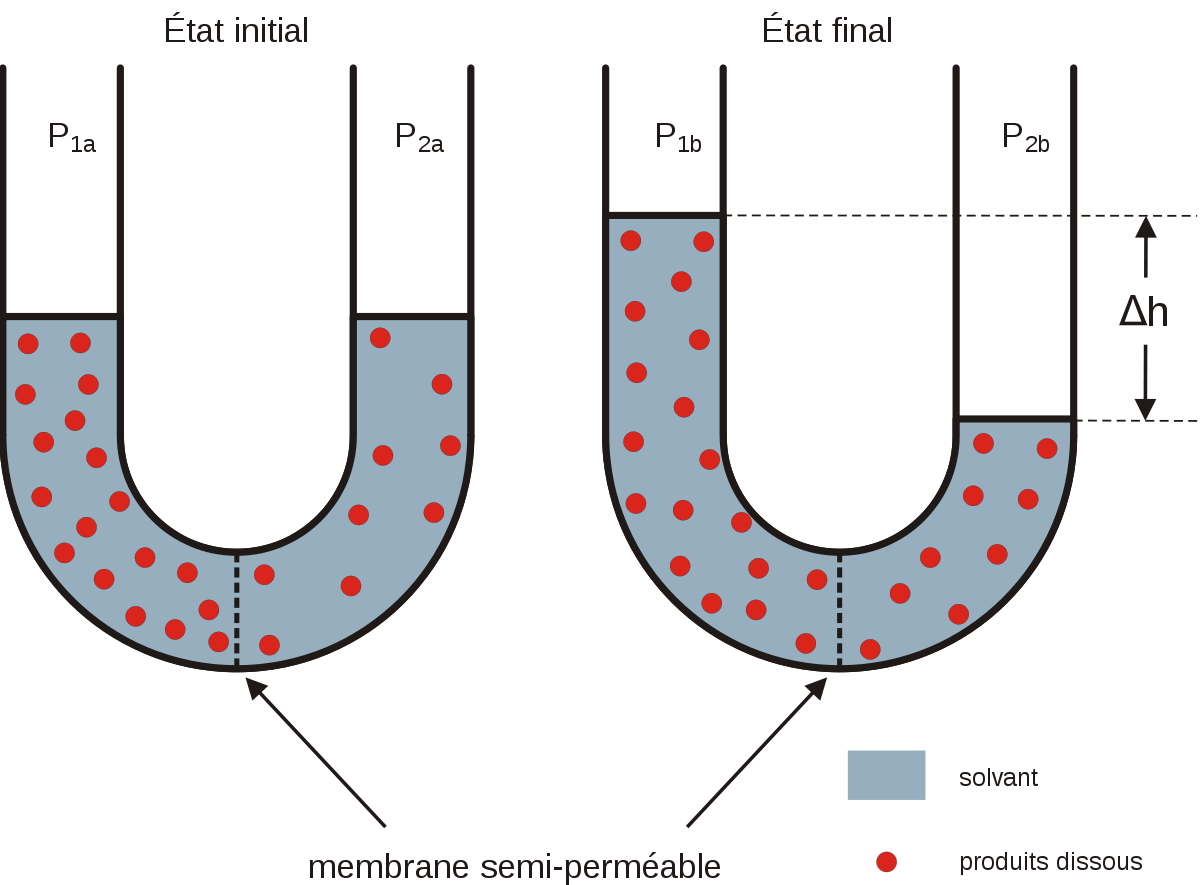
By applying osmotic pressure on the more concentrated side, reverse osmosis makes it possible to reverse this phenomenon, creating a large difference in concentration between the two solutions. However, when the booster pump is not powered, the pressure equalizes on each side of the membrane, and as a result the concentration also equalizes through natural osmosis.
When you then start your RO system, this small amount of water is sent to the faucet/tank first, which explains this temporary rise in TDS.
Not all particles take part in this phenomenon, only the smallest minerals (calcium, magnesium), so although the water is more concentrated, it still remains good quality. If you absolutely want to avoid mineral water, you can let the water run for a few seconds before filling your glass, but this is not necessary.
- Published on
- REVERSE OSMOSIS
Related products
Related blog posts
>-

A Closer Look at Dry Residue in Water
The amount of dry residue in water is the amount of...
-

Understanding Bottled Water
Excessive mineral content, failure to meet standards,...
-

What Is TDS?
TDS, or Total Dissolved Solids, is a key indicator of...
-

Why Does TDS Rise When Your RO System Is Idle?
If you have a reverse osmosis system with an LCD...
-

A Reverse Osmosis System—What's That ???
What is a reverse osmosis system? Today, we see and...
-

How to Choose Your Home RO System: Pure or Mineral Water?
Explore the differences between models to choose the...
-

What Water Should You Drink? Video Lecture by Chemist Marc Henry
A chemist who has worked extensively in the field of...
-

Can Your Body Absorb Minerals in Drinking Water?
For mineral water producers, the answer is clearly a...
-
A Closer Look at Dry Residue in Water
The amount of dry residue in water is the amount of...
-
Understanding Bottled Water
Excessive mineral content, failure to meet standards,...
-
What Is TDS?
TDS, or Total Dissolved Solids, is a key indicator of...
-
Why Does TDS Rise When Your RO System Is Idle?
If you have a reverse osmosis system with an LCD...
-
A Reverse Osmosis System—What's That ???
What is a reverse osmosis system? Today, we see and...
-
How to Choose Your Home RO System: Pure or Mineral Water?
Explore the differences between models to choose the...
-
What Water Should You Drink? Video Lecture by Chemist Marc Henry
A chemist who has worked extensively in the field of...
-
Can Your Body Absorb Minerals in Drinking Water?
For mineral water producers, the answer is clearly a...