Recherche dans le blog
REVERSE OSMOSIS
What Is a Reverse Osmosis System?
Vincent's Bioelectronics and Reverse Osmosis
Why Install a Reverse Osmosis System?
The Health Benefits of a Reverse Osmosis System
- A high-quality drink
- Water that is easy to drink
- More reasons
- Your kidneys will thank you
- More advantages of RO systems
Reverse Osmosis System: Pros and Cons
How to Choose a Home Reverse Osmosis System
- RO water definition
- RO water and health
- RO water and aquariums
- RO water and pH
- RO water and demineralized water
- RO water or spring water?
- How to make RO water
- "A RO system is expensive" - Not anymore!
- How much does RO water cost?
Frequently Asked Questions About RO Systems
- Why are prices so low?
- RO system installation
- Where?
- How much space?
- How long does it take?
- What tools?
- How do you drill a sink?
- How do you connect the water?
- How much does the whole system weigh?
- Home uses
- Baby bottles?
- Ice cubes?
- American-style fridge?
- Face and hair?
- Plants?
- Windshield washers?
- Heating appliances?
- Dishes?
- Windows?
- Maintenance
- Technology
- Advantage of the booster pump?
- Disadvantage of the booster pump?
- Benefit of quick connectors?
- Benefit of a UV sterilizer?
- Benefit of a TDS tester?
- What TDS level can you expect?
- Performance
How to Install a Reverse Osmosis System
Technical Explanations on Using RO Systems
- Why Does TDS Rise in the First Centiliters of Water Produced?
- Why Does TDS Rise When the RO System Is Idle?
- Why Does My Tank-Based RO System Sometimes Start and Sometimes Not?
- My RO System Produces Less Water: Why?
- How to Avoid Drilling Your Countertop
Reverse Osmosis System Maintenance
- What are Total Dissolved Solids (TDS)?
- Where do dissolved solids come from?
- Why measure the TDS level of your water?
A Reverse Osmosis System With No Wastewater?
- Why does a RO system produce wastewater?
- How to limit wastewater
- Wastewater-free technology: ultrafiltration
Looking for a Reverse Osmosis System Manufacturer?
Why Is the Reverse Osmosis System the Ideal Product in Africa?
Why Does My Tank-Based RO System Sometimes Start and Sometimes Stay Off?
All OJA reverse osmosis systems use pressure sensors that detect the presence of water at the system inlet to prevent the pump from running dry, and monitor RO water pressure to prevent continuous water discharge when the faucet is closed and the tank is full.
With a direct-flow (tankless) RO system, the RO water pressure reading is binary: either the faucet is open and the pressure is low, or the faucet is closed and the pressure is high. The result is therefore very easy for the pressure sensor to interpret.
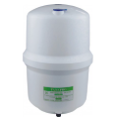
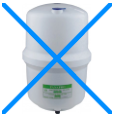
However, if you have a tank-based RO system, things work differently. Every time you use RO water, the tank pressure drops slightly. Either it falls below the sensor's threshold and the pump starts to refill your tank, or it stays above the threshold and nothing happens.
Another consequence is that the RO system's running time, and therefore the amount of drain water, may seem high compared to the amount of RO water used at that particular moment. However, your calculation must also account for the total amount of RO water used previously without the system starting.
Here is a quick example… I draw 10 cl of RO water from my Classicos to make a coffee at 8 a.m., then another at 10 a.m. At noon, I pour myself a 20 cl glass of water, and my RO system starts. It then produces 40 cl of RO water and discharges 80 cl into the drain.
The ratio is therefore indeed 2:1, rather than 4:1 as you might think if you compare the 80 cl discharged with the 20 cl in my glass of water.
If you have any other questions about RO systems, feel free to call us at 09.72.55.18.50 or send an email to contact@josmose.fr.
- Published on
- REVERSE OSMOSIS
Related products