Recherche dans le blog
REVERSE OSMOSIS
What Is a Reverse Osmosis System?
Vincent's Bioelectronics and Reverse Osmosis
Why Install a Reverse Osmosis System?
The Health Benefits of a Reverse Osmosis System
- A high-quality drink
- Water that is easy to drink
- More reasons
- Your kidneys will thank you
- More advantages of RO systems
Reverse Osmosis System: Pros and Cons
How to Choose a Home Reverse Osmosis System
- RO water definition
- RO water and health
- RO water and aquariums
- RO water and pH
- RO water and demineralized water
- RO water or spring water?
- How to make RO water
- "A RO system is expensive" - Not anymore!
- How much does RO water cost?
Frequently Asked Questions About RO Systems
- Why are prices so low?
- RO system installation
- Where?
- How much space?
- How long does it take?
- What tools?
- How do you drill a sink?
- How do you connect the water?
- How much does the whole system weigh?
- Home uses
- Baby bottles?
- Ice cubes?
- American-style fridge?
- Face and hair?
- Plants?
- Windshield washers?
- Heating appliances?
- Dishes?
- Windows?
- Maintenance
- Technology
- Advantage of the booster pump?
- Disadvantage of the booster pump?
- Benefit of quick connectors?
- Benefit of a UV sterilizer?
- Benefit of a TDS tester?
- What TDS level can you expect?
- Performance
How to Install a Reverse Osmosis System
Technical Explanations on Using RO Systems
- Why Does TDS Rise in the First Centiliters of Water Produced?
- Why Does TDS Rise When the RO System Is Idle?
- Why Does My Tank-Based RO System Sometimes Start and Sometimes Not?
- My RO System Produces Less Water: Why?
- How to Avoid Drilling Your Countertop
Reverse Osmosis System Maintenance
- What are Total Dissolved Solids (TDS)?
- Where do dissolved solids come from?
- Why measure the TDS level of your water?
A Reverse Osmosis System With No Wastewater?
- Why does a RO system produce wastewater?
- How to limit wastewater
- Wastewater-free technology: ultrafiltration
Looking for a Reverse Osmosis System Manufacturer?
Why Is the Reverse Osmosis System the Ideal Product in Africa?
Why Buy a Home Reverse Osmosis System?
Water quality is not always adequate, and it is sometimes necessary to use various devices to improve it. Among the wide range available on the market are RO systems, which are very popular in France and throughout Europe. The reason is simple. You will have pure water available, free of all substances harmful to your body.
The models available for purchase are constantly being improved, which does not always make choosing one easy. You should also learn more about this device before deciding which RO system to buy.
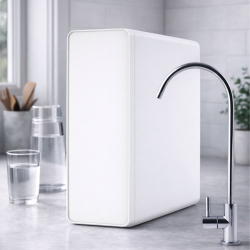
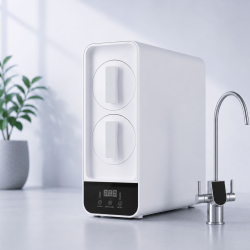
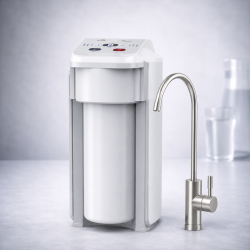
A closer look at the RO system
In simple, practical terms, an RO system is a system that filters water. It operates on the principle of reverse osmosis developed by NASA. The goal was to allow cosmonauts to recycle water so they could reuse it. The equipment quickly became widely available through brands that now offer a wide variety of models on the market. In short, having this device guarantees pure, quality water. Although the water used for daily drinking is potable, that does not mean it is free of all impurities.
Using an RO system ensures that this water is 100 % free of all waste and therefore suitable for drinking. You do not run the risk of ingesting heavy metals or lead. Some cities in France even offer the option of getting an RO system free of charge upon request.
How it works
The water that comes out of the device is the result of filtration. The device includes a sediment filter that prevents small particles from passing through, such as :
- Algae
- Sand
- Dust
- Etc.
The presence of two activated carbon filters also prevents chlorine and even pesticides from passing through. After this first stage, the water passes through a reverse osmosis membrane that separates out the various molecules except H20. Only then does it move on to the polishing filter to improve its taste. By using an RO system, you remove between 95 and 98 % of the impurities in the water.
What should you budget ?
You will notice that RO systems on the market are fairly expensive. From a technical standpoint, you should know that filtering one liter of water requires draining 1 or 2 liters, depending on the model. The budget you should allow for system maintenance and upkeep depends on your RO system. An RO system with a bayonet system will cost you more to maintain than a standard RO system.
You can install your RO system yourself using our instructional videos. If you do not feel up to it, call a professional who will install it for you without difficulty.
To find the RO system that matches your needs, follow our guide:
- Published on
- REVERSE OSMOSIS,
- FILTERING YOUR DRINKING WATER
Related products