


Recherche dans le blog
REVERSE OSMOSIS
What Is a Reverse Osmosis System?
Vincent's Bioelectronics and Reverse Osmosis
Why Install a Reverse Osmosis System?
The Health Benefits of a Reverse Osmosis System
- A high-quality drink
- Water that is easy to drink
- More reasons
- Your kidneys will thank you
- More advantages of RO systems
Reverse Osmosis System: Pros and Cons
How to Choose a Home Reverse Osmosis System
- RO water definition
- RO water and health
- RO water and aquariums
- RO water and pH
- RO water and demineralized water
- RO water or spring water?
- How to make RO water
- "A RO system is expensive" - Not anymore!
- How much does RO water cost?
Frequently Asked Questions About RO Systems
- Why are prices so low?
- RO system installation
- Where?
- How much space?
- How long does it take?
- What tools?
- How do you drill a sink?
- How do you connect the water?
- How much does the whole system weigh?
- Home uses
- Baby bottles?
- Ice cubes?
- American-style fridge?
- Face and hair?
- Plants?
- Windshield washers?
- Heating appliances?
- Dishes?
- Windows?
- Maintenance
- Technology
- Advantage of the booster pump?
- Disadvantage of the booster pump?
- Benefit of quick connectors?
- Benefit of a UV sterilizer?
- Benefit of a TDS tester?
- What TDS level can you expect?
- Performance
How to Install a Reverse Osmosis System
Technical Explanations on Using RO Systems
- Why Does TDS Rise in the First Centiliters of Water Produced?
- Why Does TDS Rise When the RO System Is Idle?
- Why Does My Tank-Based RO System Sometimes Start and Sometimes Not?
- My RO System Produces Less Water: Why?
- How to Avoid Drilling Your Countertop
Reverse Osmosis System Maintenance
- What are Total Dissolved Solids (TDS)?
- Where do dissolved solids come from?
- Why measure the TDS level of your water?
A Reverse Osmosis System With No Wastewater?
- Why does a RO system produce wastewater?
- How to limit wastewater
- Wastewater-free technology: ultrafiltration
Looking for a Reverse Osmosis System Manufacturer?
Why Is the Reverse Osmosis System the Ideal Product in Africa?
How to Maintain Your RO System
Flushing the RO membrane
As you use your residential or professional RO system, various particles accumulate on the membrane's surface and may eventually clog it, requiring early replacement. To extend its service life as much as possible, we have implemented a flushing system for the RO membrane or membranes. This system is manual or automatic, depending on the RO system model.
When it is manual, it consists of a small valve, often blue, that you should regularly open for 2 to 3 minutes. The frequency depends on how you use your RO system, but roughly every 5 hours of use.
On most OJA RO systems, this draining process is automatic, so you do not have to worry about it. For example, on the Ultimos, it runs for 5 seconds after each use, when you close the RO water faucet.
Replacing the filters
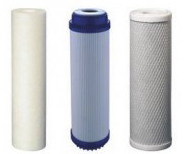
After filtering several thousand liters of water, the pre-filters lose their effectiveness:
- The PP filter clogs and reduces the flow rate of the entire RO system;
- The GAC and CTO filters no longer completely remove chlorine, which may then gradually dissolve the RO membrane;
- The membrane clogs and eventually produces less and less RO water while discharging more and more water down the drain;
- The post-membrane filter cartridge lets through any tastes and odors that develop in the tank.
To avoid these issues, we recommend regularly replacing the pre-filters:
- The PP filter every 6 months;
- The GAC and CTO filters every year;
- The membrane every 2 years;
- The post-membrane filter cartridge every 1 to 2 years, if your RO system has a tank.
If in doubt, the OJA team encourages you to check your water's purity with a TDS tester. The reading should be between 10 and 100 ppm.
Caution: When replacing a filter, remember to turn off the water supply, close the tank valve if you have a tank, and open the RO water faucet to reduce the pressure in the RO system. This prevents a small flood each time you perform maintenance.
Tip: Use the plastic wrenches supplied with your RO system to unscrew the filter housings. If you are lucky enough to have a model with bayonet fittings, such as the Ultimos, you do not need a wrench: a simple quarter turn is enough to detach a filter!
- Published on
- REVERSE OSMOSIS
Related products
Related blog posts
>-

Why Does TDS Rise in the First CL of Water Produced?
Have you noticed that the TDS of the first water from...
-
Why Does TDS Rise in the First CL of Water Produced?
Have you noticed that the TDS of the first water from...