


Recherche dans le blog
Water Softeners
What is a water softener used for?
- What is a water softener?
- Why should you remove limescale from water?
- Does this affect me? Do I need a water softener?
- Is installing a water softener complicated?
- How do I adjust my water softener?
- What comes next?
- Reason No. 1: Rediscover the true feel of water on your skin
- Reason No. 2: Protect your pipes and your wallet
- Reason No. 3: Protect your household appliances
- Reason No. 4: Stop using excessive amounts of cleaning products
The impact of limescale on your bills
How do you choose your water softener?
The different types of water softener valves
TUTORIAL: Connecting your water softener to the water supply
VIDEO: Installing your water softener
- The different buttons on the water softener valve
- Programming your water softener
- Manually regenerating your water softener
Recommendations before installing a water softener
- Choosing the right location for your water softener
- Thoroughly checking your water softener before installation
- A minimum pressure is required
- Protecting your water softener
- Tools for installing your water softener
- Accessories for installing your pre-filter
Water softener diagram and components
- Water softener installation diagram
- The different components of a water softener
- How a water softener works
- The regeneration process
- Where should you install a water softener?
Does a Water Softener Make Water Safe to Drink?
Since a water softener is a water filtration system, it is natural to wonder whether it improves water quality for drinking. To answer this question, we will look at the purpose of a water softener and the changes water undergoes as it passes through the softener.
The purpose of a water softener

As its name suggests, a water softener will soften the water in your supply. In this article, we will focus on salt-based systems (the most common type).
The harder the water, the more limescale-forming minerals it contains. The purpose of a water softener is therefore to reduce the concentration of these minerals in water. The water is then said to be softened. However, softened water is not synonymous with drinking water; it simply means that it contains no limescale-forming minerals.
The changes water undergoes as it passes through the water softener
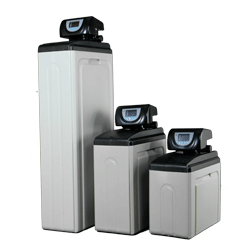
A salt-based water softener works using an ion-exchange resin. When hard water enters the softener, it passes through this resin. The calcium and magnesium ions responsible for limescale formation will be exchanged for the sodium ions on the resin.
When the water leaves the softener, it is therefore free of calcium and magnesium ions, which are replaced with sodium ions. Water softened by ion-exchange resin therefore has a high sodium level.
Consequences of drinking softened water
Water with such a high sodium level is safe to drink in the sense that drinking it will not make you sick. However, over the long term, excessive sodium consumption causes high blood pressure, which is the leading cause of cardiovascular disease. In addition, when consumed in large amounts, sodium is a risk factor for kidney disease and heart attacks.
In addition to containing too much sodium, softened water is not filtered. All the heavy metals, pesticides, pharmaceutical residues, chlorine, and many other substances harmful to your health are present in the water and are not retained by the water softener. These substances therefore end up in your water along with the sodium. Needless to say, we do not recommend drinking this water !
We therefore recommend adding a filtration system such as an RO system downstream of your water softener so you can enjoy soft water throughout your home and pure water at a specific location thanks to the RO system. In addition, a water softener extends the lifespan of your RO system's pre-filters and membrane.
Take advantage of our water softener + RO system bundle with exceptional discounts !
- Published on
- Water Softeners,
- Combating Limescale
Related products
Related blog posts
>-

Why Should You Avoid Drinking Salt-Softened Water?
The effects of softened water on your health, your...
-

What Is a Water Softener For?
Here, we answer the main questions about our water...
-

Where Does Limescale Come From?
Where does limescale come from? This scourge of your...
-
Why Should You Avoid Drinking Salt-Softened Water?
The effects of softened water on your health, your...
-
What Is a Water Softener For?
Here, we answer the main questions about our water...
-
Where Does Limescale Come From?
Where does limescale come from? This scourge of your...