


Recherche dans le blog
Water Softeners
What is a water softener used for?
- What is a water softener?
- Why should you remove limescale from water?
- Does this affect me? Do I need a water softener?
- Is installing a water softener complicated?
- How do I adjust my water softener?
- What comes next?
- Reason No. 1: Rediscover the true feel of water on your skin
- Reason No. 2: Protect your pipes and your wallet
- Reason No. 3: Protect your household appliances
- Reason No. 4: Stop using excessive amounts of cleaning products
The impact of limescale on your bills
How do you choose your water softener?
The different types of water softener valves
TUTORIAL: Connecting your water softener to the water supply
VIDEO: Installing your water softener
- The different buttons on the water softener valve
- Programming your water softener
- Manually regenerating your water softener
Recommendations before installing a water softener
- Choosing the right location for your water softener
- Thoroughly checking your water softener before installation
- A minimum pressure is required
- Protecting your water softener
- Tools for installing your water softener
- Accessories for installing your pre-filter
Water softener diagram and components
- Water softener installation diagram
- The different components of a water softener
- How a water softener works
- The regeneration process
- Where should you install a water softener?
Where Does Limescale Come From?
Where does limescale come from ?
The presence of limescale in your water shows up as white spots on your dishes and clothing, as well as dry skin. All these reasons make limescale a harmful substance when it is present in your water.
– Dissolution of limestone in water
How can a rock (limestone) end up in the water you use / consume every day ?
To answer this question, we will look at a little chemistry.
Water, H2O, cannot dissolve limestone on its own. In fact, if you try putting water on limestone at home, the limestone will not dissolve (or only very slightly). However, by reacting with carbon dioxide, water forms dilute carbonic acid. It will then dissolve the limestone and take up magnesium and calcium ions (the ions responsible for limescale formation).
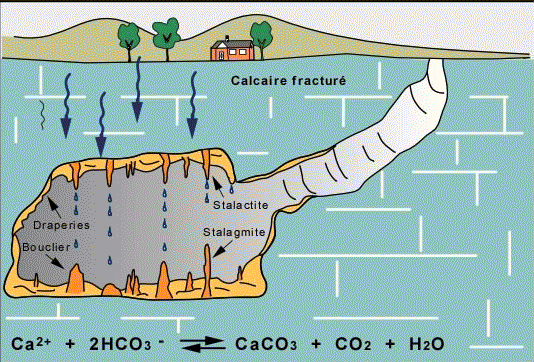
But how does water take up carbon dioxide ?
Simply by seeping into the soil and passing through decomposing plant and organic matter.
– Water hardness varies by geographic location
Water hardness varies depending on the region where you live. As a result, buying a water softener will be more or less worthwhile depending on your region.
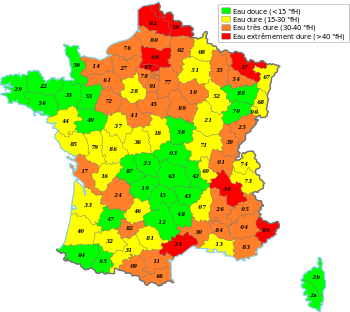
On this map, you will see the regions with high limescale levels in orange-red. We recommend installing a water softener if you live in these regions, as it is the best way to combat limescale. Use our guide to find the water softener that meets your needs.
– Harmful effects of limescale
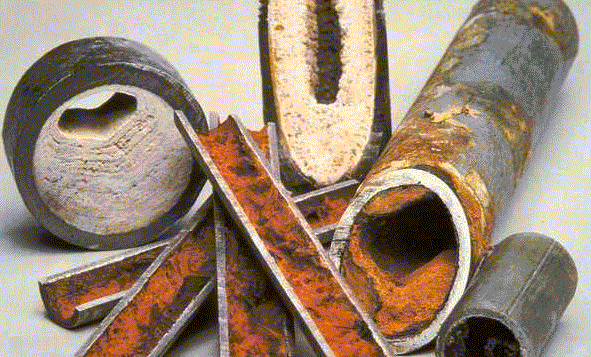
Water with high limescale levels has many drawbacks for your household appliances, your energy consumption, and your skin.
Limescale in water will damage your household appliances that use water, such as your washing machine, dishwasher, and even your water heater !
This makes these appliances less efficient, resulting in poorer washing performance. It also increases your electricity bill, because your water heater will need more energy to bring the water to the desired temperature.
When washing your dishes or clothing with hard water, you will use more detergent. In addition, hard water dries out your skin and hair. This can be a major problem for people with eczema.
– How do you combat limescale ?
Several solutions are available to combat limescale. It all depends on the problems the limescale causes.
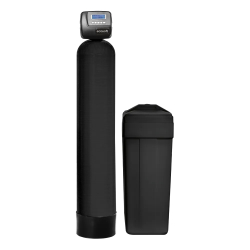
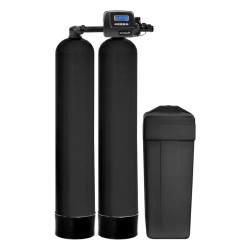
If you want to protect your entire home, we recommend buying a water softener (salt-based or electromagnetic). This system will provide soft water throughout your home and thus eliminate all the problems caused by limescale in water.
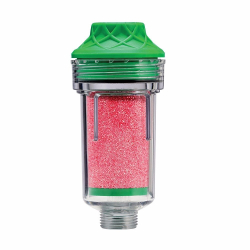
To protect a single appliance or your water heater, we offer compact, affordable solutions. These are the SCALEX models, which connect to your installations in 5 minutes and require no maintenance !
Finally, if you only want to remove limescale from the water you consume, choose an RO system. This system purifies water to a level of 98%, but it cannot treat all the water in your home.
- Published on
- Water Softeners
Related products
Related blog posts
>-

How to Choose Your Water Softener
To get the information you need to know how to choose...
-

Why Soften Your Water?
Wondering why it is important to soften your water?...
-

The Water Situation in France
The water situation in France is barely any brighter...
-
How to Choose Your Water Softener
To get the information you need to know how to choose...
-
Why Soften Your Water?
Wondering why it is important to soften your water?...
-
The Water Situation in France
The water situation in France is barely any brighter...