


Recherche dans le blog
Scientific Articles
- A few figures?
- Why drink water?
- When should you drink water?
- How much water should you drink each day?
- Signs of dehydration
- Qualities required for good drinking water
Why Should You Avoid Drinking Softened Water?
- The reason given by the WHO
- Further details on water softeners
- Maintenance considerations
- An alternative to conventional salt-based water softeners
Should You Filter Tap Water in France?
- The official answer: No, water filtration is not necessary
- According to scientists: Yes, purifying your drinking water is essential
Can Your Body Absorb the Minerals in Drinking Water?
- An interesting study in Germany
- What does the WHO think?
- Water for dummies
- The study results
- The minerals in water are not bioavailable
- Other drawbacks of mineral water
A Closer Look at Dry Residue in Water
- Drinking water: a luxury in France?!?
- Pesticides and other little gifts in tap water
- As with VW, the levels change, but the nature stays the same...
- Another major problem: water chlorination!
- Are we drinking medicated water?!?
- What goes unnoticed in health safety tests...
- ...but not under scientists' scrutiny, as they even find heroin in tap water
- Laboratories' conflict of interest
Drinking Water Around the World
Beware of Natural Water Sources!
- Double standards…
- Bottled waters have very different mineral levels
- A few unexplained peculiarities
- The case of Cristaline water
- Thermal waters
- Beware of minerals!
- And where does soda fit into all this?
How to Read Your Mineral Water Label
- Dry residue
- Anions/cations
- Calcium
- Magnesium
- Sodium
- Potassium
- Bicarbonate
- Chloride
- Sulfate
- Nitrate
- The bioavailability of minerals in water
Municipal Water and Nanoscale Particles
Aluminum in Water Doubles the Risk of Developing Alzheimer's Disease
- A danger worse than asbestos
- Tap water, a cocktail of chemical medications
- What the « official recommendations » don't say
The Water Situation in France
Drinking water: a luxury in France ?!?
You don't have to be a genius to understand that something is no longer right in our beautiful country. Access to our most vital element is already a critical problem for many people in France (France TV info, August 23, 2014, and France 3 National 19/20 http://www.francetvinfo.fr/sante/video-l-acces-a-l-eau-potable-source-de-precarite-en-France_676305.htmlt-toirs ).
According to the Fondation Abbé Pierre, 2 million people lack adequate access to drinking water and sanitation in our country, and 140,000 people experiencing homelessness simply have no access at all.
On Tuesday, March 4, 2014, ledauphiné.com published a survey by “UFC Que Choisir” on its website : “Too many French people still receive polluted tap water”. It states that despite the progress made over the past 2 years, nearly 1.5 million French people drink tap water that is too polluted. This report identifies agriculture as the main source of pollution, with its host of pesticides and nitrates from fertilizers applied to crops. Every year, no fewer than 400 drinking water abstraction sites are closed, primarily because of agricultural pollution ; which means that each time, another problem is buried instead of being solved.
Pesticides and other little gifts found in tap water
When it comes to water pollution, it is important to understand that France is the leading user of pesticides in Europe and the third-largest in the world, after the United States and Brazil (DNA, June 25, 2013).
In 2005, 76,105 metric tons of pesticides, including 2,469 metric tons of insecticides, 37,174 metric tons of fungicides, 26,102 metric tons of herbicides, and 10,360 metric tons of various substances, were legally purchased and released into our environment (Source UIPP). Inevitably, sooner or later, we find these molecules in our groundwater, streams, rivers, and ultimately in our tap water. Future generations can expect to become increasingly ill from consuming polluted water, fruits, and vegetables.
Not a month goes by without the media reporting cases of water pollution of varying severity. The agence nationale de sécurité sanitaire de l’alimentation (ANSES) acknowledges this, but downplays these various forms of pollution by describing isolated instances of contamination at infinitesimal doses, some of which are toxic. Let's wait 50 years and see what impact and harmful effects this pollution will have had on humans…
The highly controversial Professor Gilles-Éric Séralini, following his study on the effects of GMOs and the pesticide Roundup, has just coauthored, with other members of the University of Caen, an article approved by the peer reviewers of the journal Biomed Research International (http://www.hindawi.com/journals/bmri/) : it reveals that studies more extensive than those conducted on Roundup have shown that formulated pesticide products as sold to gardeners and farmers are 2 to 1,000 times more toxic than the active ingredients alone tested in vivo over the medium and long term. Of 9 pesticides tested, 8 formulations are on average 100 times more toxic than their active ingredient (Science et Avenir Santé, January 31, 2014). There is a major misunderstanding about the actual toxicity of pesticides.
What are the authorities waiting for before making tests on the chronic effects of pesticide formulations mandatory ? This is a true public health requirement ; but when you think about it, it is also true that illness generates far more profit than health !
Furthermore, we know that the chemical industry produces approximately 143,000 different chemical molecules that, for one reason or another, may also inadvertently end up in the environment and in water. When Dr. Philippe Douste-Blazy was Minister of Health, he acknowledged that traces of residues from approximately 600 different chemical and pharmaceutical molecules not screened for in official analyses could be present in our drinking water, and that this figure was realistic. France officially tests for only 54 different parameters.
In 2012, the assessment of river water and groundwater quality remains very concerning. 50 % of aquifers are polluted. The leading culprits are agricultural pollutants, followed by industrial pollutants. We are facing an obvious lack of political will, with money remaining the driving force.
As with VW, the levels change, not the nature...
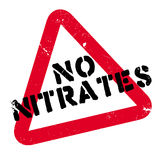
Did you know that the permissible nitrate level in drinking water was 5 mg/l 50 years ago, and that today this same level has risen to 50 mg/l without any real assessment of whether such a nitrate level in drinking water is nontoxic !? On February 14, 2014, in Tarbes, a prefectural order authorized the distribution of drinking water containing a nitrate level of 70 mg/l ! For bottled water, however, this level must be below 15 mg/l...
For your information, once inside our bodies, these molecules affect oxygen transfer. Babies who drink this water turn blue and risk suffocation. This is why pediatricians recommend drinking bottled water with a low mineral content. But just because an adult can tolerate a higher nitrate level than an infant does not mean it is good for their long-term health !
Another major problem : water chlorination !
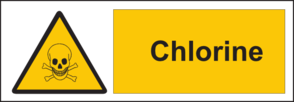
The law requires large cities to chlorinate their drinking water as a precaution against potential bacterial contamination. Indeed, contaminated surface water, groundwater, or water from pipes can enter the drinking water network, and protection against this is necessary. Nevertheless, we must face the facts : chlorine is a toxic biocide for humans, with numerous side effects. While it destroys bacteria in water, it also disrupts or even destroys our intestinal flora. The gut is now considered our second brain. A large proportion of the population suffers from a leaky gut and abnormal intestinal flora. Could chlorine be one of the reasons ?
Furthermore, some scientists discuss the formation of chloramines in the presence of bacteria in the gut. What should we make of the excess number of cancer cases among lifeguards who inhale chlorinated water in swimming pools every day ? Some in Germany have protested about this. Chlorine is suspected to be carcinogenic, and almost no one talks about it !
Acknowledging this would mean recommending that all households equip themselves with appropriate devices to dechlorinate their water. One simple method is to let tap water sit in pitchers for several hours before drinking it. The optimal solution is to adopt the reverse osmosis process.
Every citizen will realize for themselves that something serious is happening in France concerning our drinking water, and that human health counts for little compared with political and financial interests.
Who can still have complete confidence in the water flowing from their faucet ? Don't take risks: protect yourself with a reverse osmosis system.
Source : “How to Purify and Revitalize Your Drinking Water” by Richard Haas :
A former healthcare professional specializing in aqueous injectable solutions who spent years researching water using Vincent's bioelectronics (BEV).
- Published on
- Scientific Articles,
- FILTERING YOUR DRINKING WATER
Related blog posts
>-

Beware of Natural Water Sources!
We reviewed the 3 main alternative sources of drinking...
-

Should You Filter Tap Water in France?
After this broad overview (see previous articles), the...
-

Medications in Drinking Water
The presence of medications in drinking water in...
-

The “Cocktail” Effect
The “cocktail” effect has nothing to do with...
-

Drinking Water Around the World
An article reporting on the drinking water situation...
-
Beware of Natural Water Sources!
We reviewed the 3 main alternative sources of drinking...
-
Should You Filter Tap Water in France?
After this broad overview (see previous articles), the...
-
Medications in Drinking Water
The presence of medications in drinking water in...
-
The “Cocktail” Effect
The “cocktail” effect has nothing to do with...
-
Drinking Water Around the World
An article reporting on the drinking water situation...