


Recherche dans le blog
Water Softeners
What is a water softener used for?
- What is a water softener?
- Why should you remove limescale from water?
- Does this affect me? Do I need a water softener?
- Is installing a water softener complicated?
- How do I adjust my water softener?
- What comes next?
- Reason No. 1: Rediscover the true feel of water on your skin
- Reason No. 2: Protect your pipes and your wallet
- Reason No. 3: Protect your household appliances
- Reason No. 4: Stop using excessive amounts of cleaning products
The impact of limescale on your bills
How do you choose your water softener?
The different types of water softener valves
TUTORIAL: Connecting your water softener to the water supply
VIDEO: Installing your water softener
- The different buttons on the water softener valve
- Programming your water softener
- Manually regenerating your water softener
Recommendations before installing a water softener
- Choosing the right location for your water softener
- Thoroughly checking your water softener before installation
- A minimum pressure is required
- Protecting your water softener
- Tools for installing your water softener
- Accessories for installing your pre-filter
Water softener diagram and components
- Water softener installation diagram
- The different components of a water softener
- How a water softener works
- The regeneration process
- Where should you install a water softener?
What Is the Difference Between a Water Softener and Other Filtration Systems?
Water softeners are distinctive in that they filter out only one component found in water: limescale. Other filtration systems, by contrast, focus on the size of the molecules to be filtered out.
Membrane filtration
Ultrafiltration and reverse osmosis operate on the same principle. Water is passed through a membrane ; particles that cannot pass through the membrane are removed. The water coming out of the system is pure water.

Salt-based water softeners
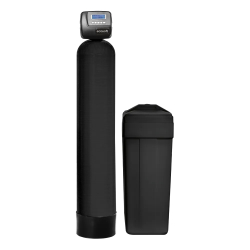
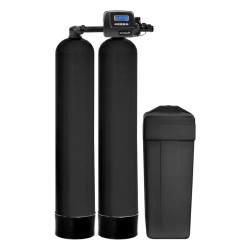
Water softeners do not filter out limescale using a fine mesh. They use the principle of ion exchange to remove limescale. Hard water passes through a tank containing resin. As it passes through the resin, the ions responsible for limescale formation (magnesium and calcium) attach to the resin beads. In exchange, the sodium ions that were attached to the resin pass into the water. This is known as ion-exchange resin.
Once the resin is saturated with magnesium and calcium ions, the water softener enters its regeneration phase. Brine, a mixture of water and salt, is stored in a tank in the water softener (hence the name salt-based water softener). This brine then passes through the tank containing the resin, this time to exchange the magnesium and calcium ions for the sodium ions present in the water. When the process is complete, the water is discharged into the sewer.

Electromagnetic system
Electromagnetic systems do not soften water because they do not change its composition. They create an electromagnetic field that will change the structure of calcium and magnesium ions so that they cannot join together and form limescale. These systems are effective at protecting your pipes, but nothing else.

SCALEX
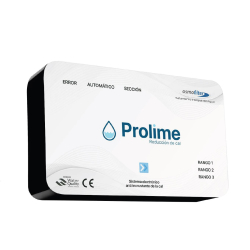
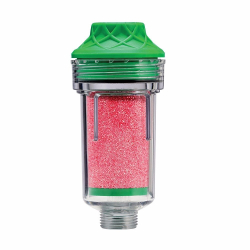
Finally, the SCALEX system is a hardness reducer rather than a water softener. Its resin will stop the growth of limescale crystals because it will break them down into smaller parts. Finally, it will prevent the crystals from sticking together. That is why this system is called a hardness reducer rather than a water softener.
- Published on
- Water Softeners
Related products
Related blog posts
>-

Different Types of Water Softener Valves and Their Everyday Impact
Here are the differences between timer-controlled and...
-

The Different Types of Filtration Systems
There are several types of filtration, and each...
-

How to Choose Your Water Softener
To get the information you need to know how to choose...
-
Different Types of Water Softener Valves and Their Everyday Impact
Here are the differences between timer-controlled and...
-
The Different Types of Filtration Systems
There are several types of filtration, and each...
-
How to Choose Your Water Softener
To get the information you need to know how to choose...