


Recherche dans le blog
Water Softeners
What is a water softener used for?
- What is a water softener?
- Why should you remove limescale from water?
- Does this affect me? Do I need a water softener?
- Is installing a water softener complicated?
- How do I adjust my water softener?
- What comes next?
- Reason No. 1: Rediscover the true feel of water on your skin
- Reason No. 2: Protect your pipes and your wallet
- Reason No. 3: Protect your household appliances
- Reason No. 4: Stop using excessive amounts of cleaning products
The impact of limescale on your bills
How do you choose your water softener?
The different types of water softener valves
TUTORIAL: Connecting your water softener to the water supply
VIDEO: Installing your water softener
- The different buttons on the water softener valve
- Programming your water softener
- Manually regenerating your water softener
Recommendations before installing a water softener
- Choosing the right location for your water softener
- Thoroughly checking your water softener before installation
- A minimum pressure is required
- Protecting your water softener
- Tools for installing your water softener
- Accessories for installing your pre-filter
Water softener diagram and components
- Water softener installation diagram
- The different components of a water softener
- How a water softener works
- The regeneration process
- Where should you install a water softener?
Everything You Need to Know About Water Softener Salt
Why is salt used?
A salt-based water softener works through ion exchange. As water passes through the resin, the ions responsible for limescale formation (calcium and magnesium) are captured by the resin. The resin exchanges these ions for the sodium ions present on it.
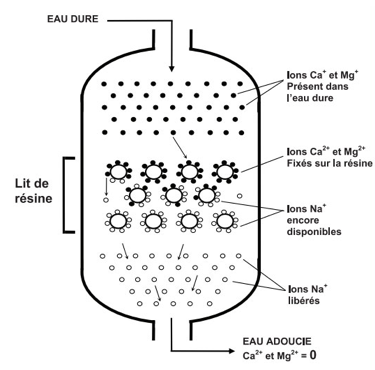
When the resin is completely depleted of sodium ions, it is time for regeneration. The salt pellets in the tank dissolve in water, and this solution then passes through the resin. The sodium ions are exchanged for magnesium and calcium ions. The water is then discharged directly into the drain, and the water softener starts a new cycle.
Make sure to replenish the salt in your water softener regularly. The salt level in the tank should be similar to the water level.
Discover our full range of water softeners
Water softener salt composition
The salt used in water softeners is refined salt, different from table salt. This type of salt is used because it must be extremely pure.
There are 3 purity criteria:
-Microbiological: No germs must be present on the salt
-Physical: To prevent insoluble substances from fouling the resin
-Chemical: The presence of other chemical substances would be harmful to the water softener.
The impact of using salt
First, using salt adds sodium to the water. The water therefore contains more salt, but does not taste salty, since that taste comes from sodium chloride. However, the sodium in softened water is absorbed by your body when you drink it.
- Published on
- Water Softeners
Related products
Related blog posts
>-

Why Should You Avoid Drinking Salt-Softened Water?
The effects of softened water on your health, your...
-

Maintaining Your Water Softener
Through a service contract or telephone guidance and...
-

Manually Regenerating Your Water Softener
Sometimes you need to start your water softener's...
-
Why Should You Avoid Drinking Salt-Softened Water?
The effects of softened water on your health, your...
-
Maintaining Your Water Softener
Through a service contract or telephone guidance and...
-
Manually Regenerating Your Water Softener
Sometimes you need to start your water softener's...