


Recherche dans le blog
Water Softeners
What is a water softener used for?
- What is a water softener?
- Why should you remove limescale from water?
- Does this affect me? Do I need a water softener?
- Is installing a water softener complicated?
- How do I adjust my water softener?
- What comes next?
- Reason No. 1: Rediscover the true feel of water on your skin
- Reason No. 2: Protect your pipes and your wallet
- Reason No. 3: Protect your household appliances
- Reason No. 4: Stop using excessive amounts of cleaning products
The impact of limescale on your bills
How do you choose your water softener?
The different types of water softener valves
TUTORIAL: Connecting your water softener to the water supply
VIDEO: Installing your water softener
- The different buttons on the water softener valve
- Programming your water softener
- Manually regenerating your water softener
Recommendations before installing a water softener
- Choosing the right location for your water softener
- Thoroughly checking your water softener before installation
- A minimum pressure is required
- Protecting your water softener
- Tools for installing your water softener
- Accessories for installing your pre-filter
Water softener diagram and components
- Water softener installation diagram
- The different components of a water softener
- How a water softener works
- The regeneration process
- Where should you install a water softener?
Removing Limescale From Your Toilet
How do you remove limescale from your toilet?
Almost all of us have faced that dreaded moment when we had to clean the toilet. But despite countless efforts and buckets of sweat, there is always that stubborn stain at the bottom of the bowl. That stain is limescale!
Where limescale comes from
Limescale is a calcium deposit resulting from the precipitation, or crystallization, of minerals in water under the effect of heat.
In general, limescale refers to all the calcium and magnesium salts that build up in your pipes, such as:
-
Calcium carbonate,
-
Calcium oxalate,
-
Calcium phosphate,
-
And silicate.
Lime is a natural substance. The presence of calcium comes from the ground through which the water has passed. Depending on the water's path, its lime content varies considerably. This is why water sometimes contains more lime in some regions than in others.
Depending on its lime content, water is described as hard (if it contains a lot of lime) or soft (if it contains little lime).
The effects of limescale on your fixtures and pipes

Limescale appears as a white deposit (which can turn yellow/red/black, usually in toilets) that builds up on walls, seals, pipes, heating elements, etc.
Although drinking hard water poses no health risk in itself, limescale damages your fixtures. Here are some of its effects:
-
Limescale building up on the heating elements of your appliances increases energy consumption by approximately 30 %.
-
It also reduces the diameter of pipes.
-
It causes a loss of seizing in faucets and thermostats.
Finally, limescale deposits increase the risk of bacterial growth, especially when water stagnates, as it does in.... your toilet!
How to remove limescale
The most common technique: scrubbing

Whatever you do, the bottom of the bowl eventually develops limescale and quickly becomes dirty. It does not look very nice and is even less hygienic, so you make an effort to scrub the bottom of the bowl regularly. You think you can get rid of it with elbow grease alone, yet the result is always less than perfect.
Yet we have a wide range of detergents at our disposal, and we promise incredible results.
There are also the well-known home remedies, such as applying white vinegar to the limescale and letting it sit, doing the same with hydrochloric acid, cleaning with a mixture of hot water and citric acid, or using a coffee maker descaler...
However, all these techniques vary in effectiveness and require a significant investment of time and money!
The water softener

As the saying goes, prevention is better than cure! Why shouldn't that apply to your toilet?
A water softener is a water filtration system that removes lime from water. There are several types of water softeners. They can use salt or be salt-free, and can also operate with or without electricity. There is an option for every budget and every purpose.
A water softener can filter the water for an entire house or work more locally by removing all the lime from the water in a pipe.
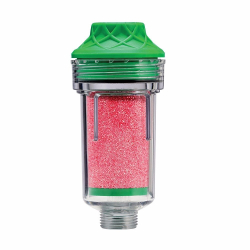
This is the case with Scalex. It is a small filter housing installed on the water inlet pipe of your system. It will remove all the lime from the water entering your system.
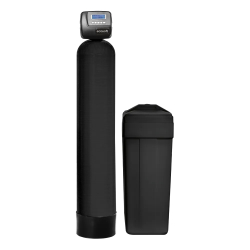
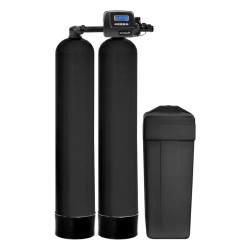
Salt-based RO systems work in much the same way, but on a larger scale. They are installed on your home's main water inlet pipe and treat all the water in the house.
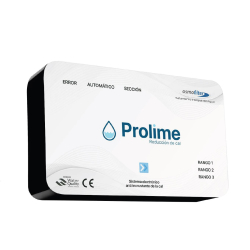
Decal technology also treats all the water in your home, but this device operates using an electromagnetic system that changes the structure of the minerals in the water. It therefore does not remove lime, but simply prevents it from clumping together and causing limescale buildup in your fixtures.
A water softener therefore enables you to prevent any limescale buildup in your toilet, saving you hours spent trying to clean it!
- Published on
- Water Softeners
Related products
Related blog posts
>-

Fighting Limescale Every Day
Limescale is a threat to your plumbing, household...
-

How to Choose Your Water Softener
To get the information you need to know how to choose...
-

What Is a Water Softener For?
Here, we answer the main questions about our water...
-
Fighting Limescale Every Day
Limescale is a threat to your plumbing, household...
-
How to Choose Your Water Softener
To get the information you need to know how to choose...
-
What Is a Water Softener For?
Here, we answer the main questions about our water...