- Online only
Tested and inspected RO systems for pure water at a reduced price.
See offers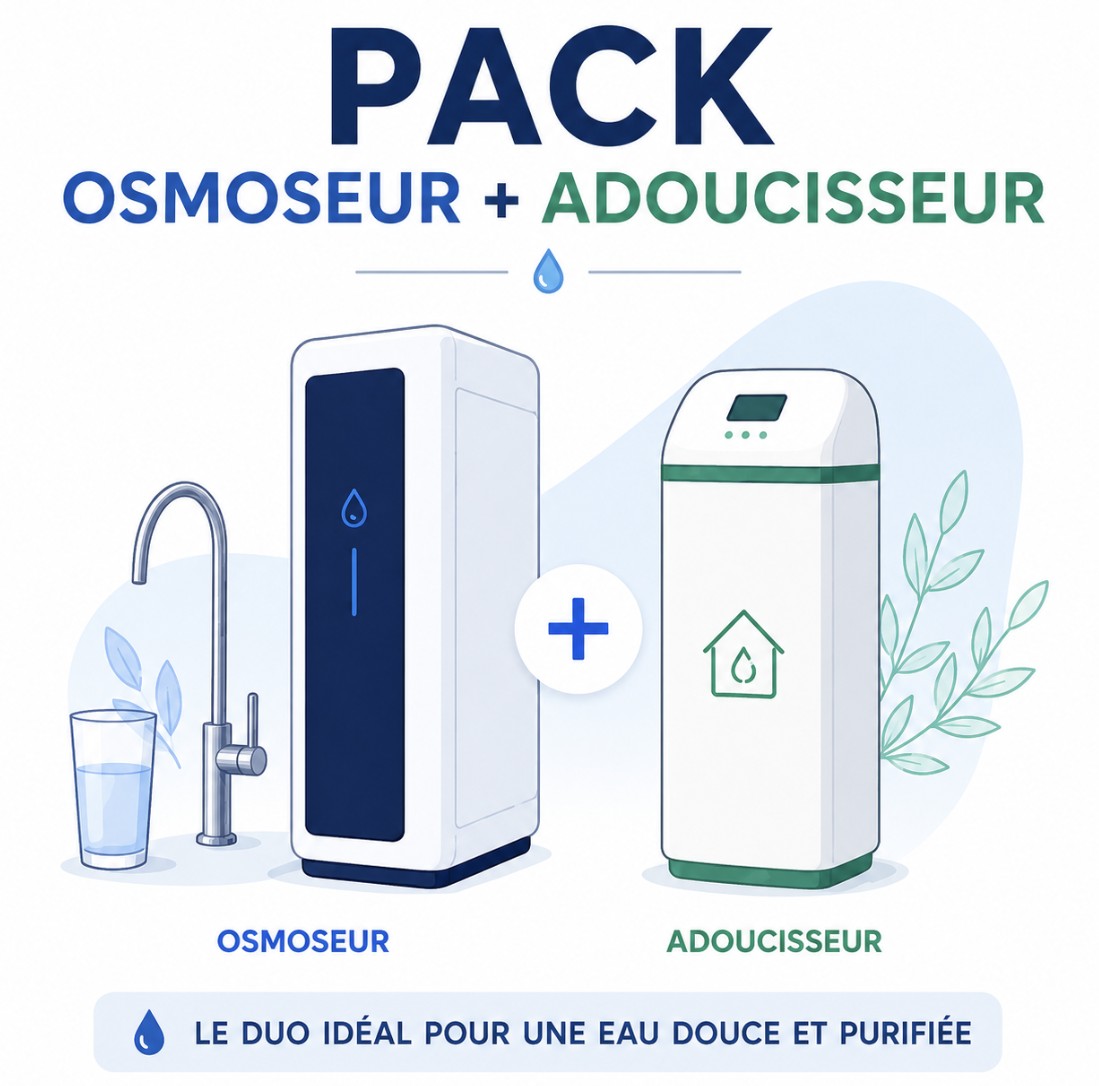
Complete protection with an RO system and a water softener.
Get 15% off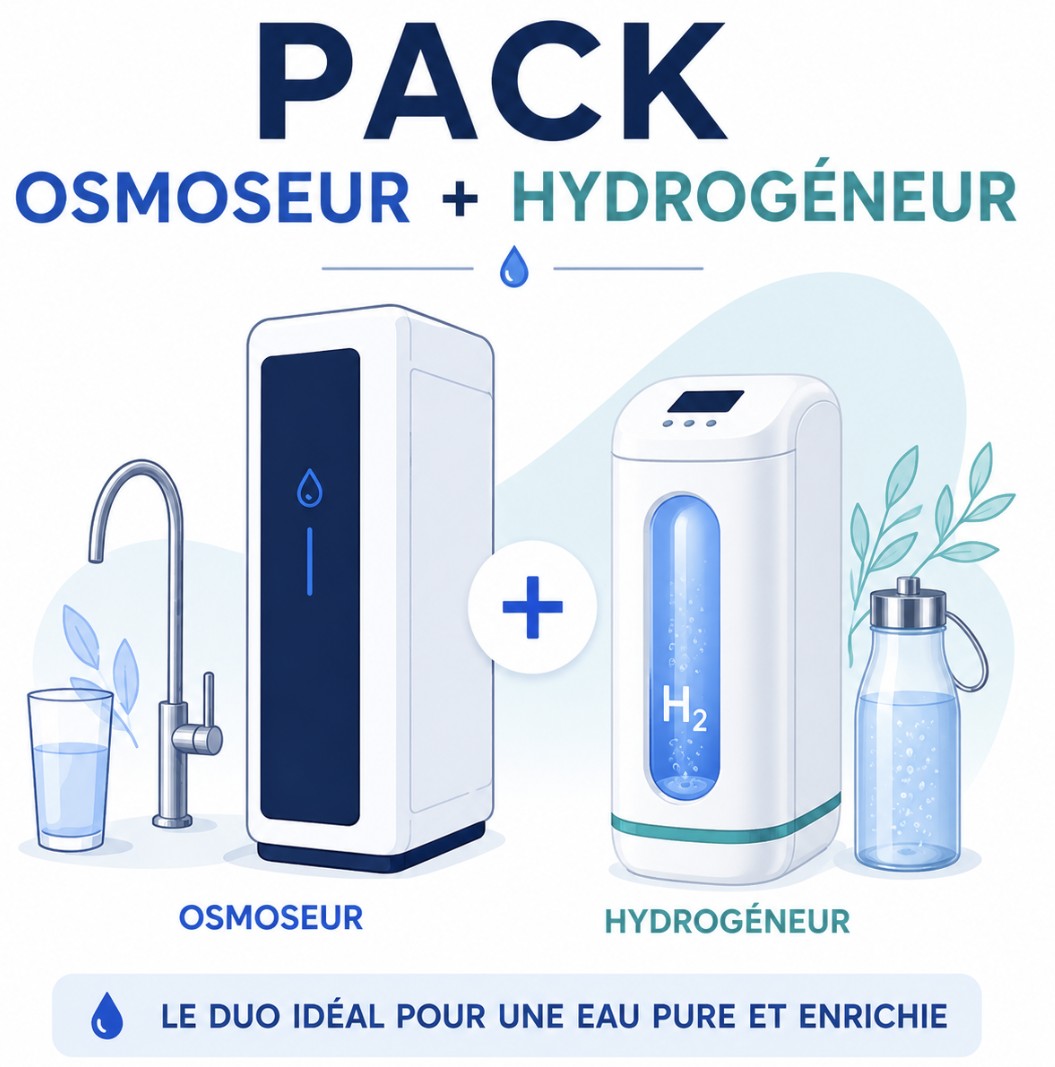
Combine reverse osmosis water and hydrogen-rich water.
Get 15% offFREE SHIPPING
On orders of €150 or more within mainland France
(home products only)
Ships within 24 hours
+33 3 66 88 17 85
Call us Monday to Friday,
9:30 am–5 pm (Paris time)!
Email: contact@josmose.fr

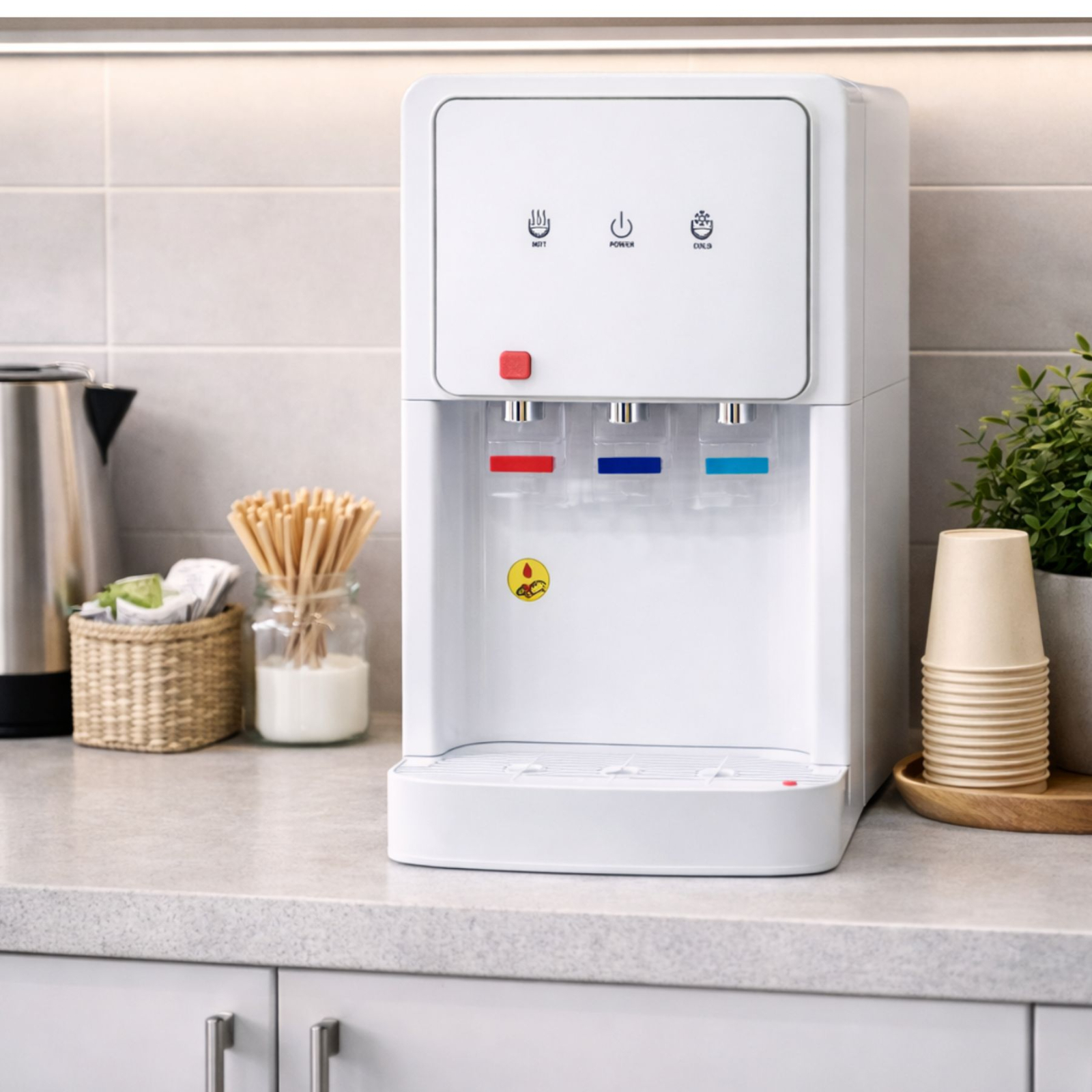
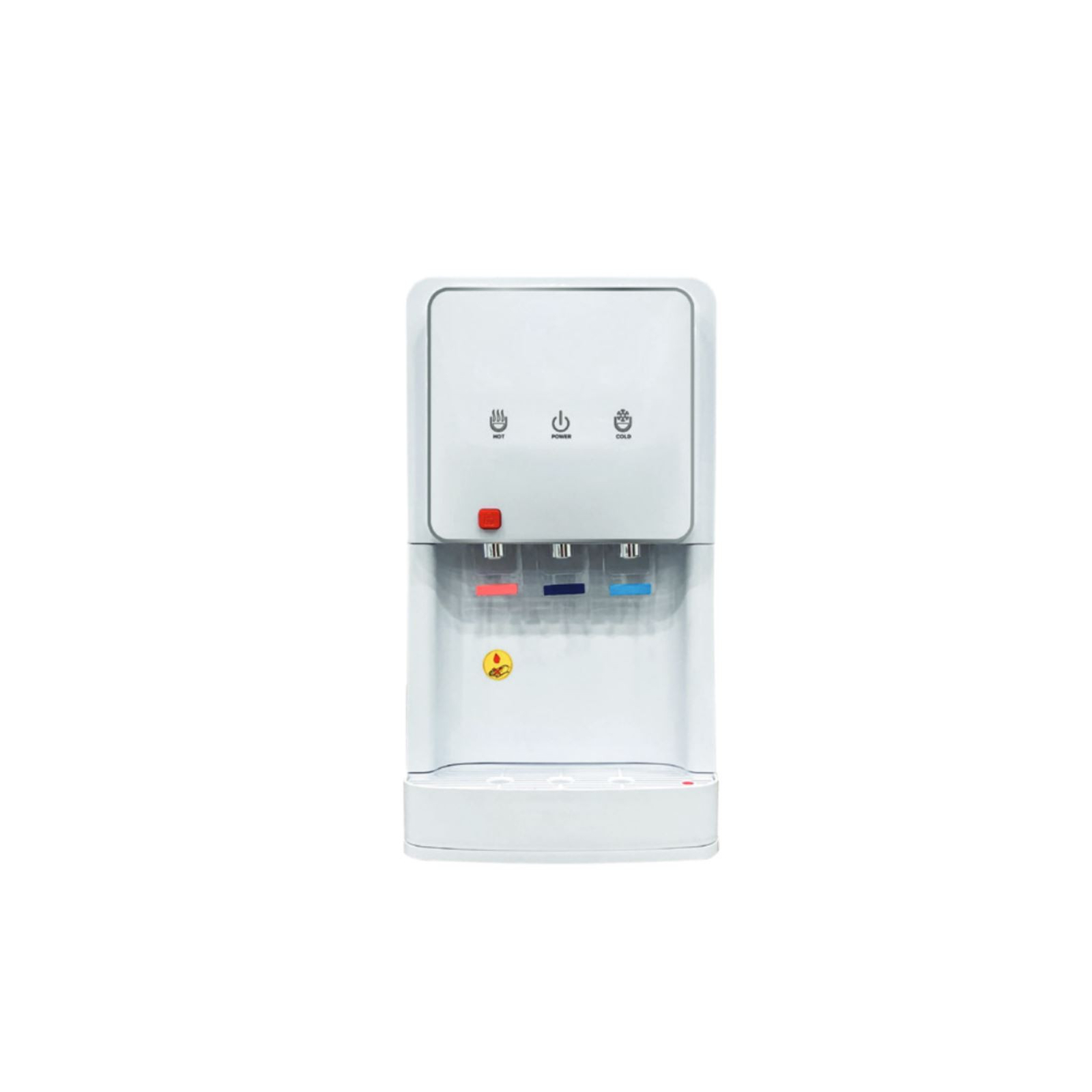
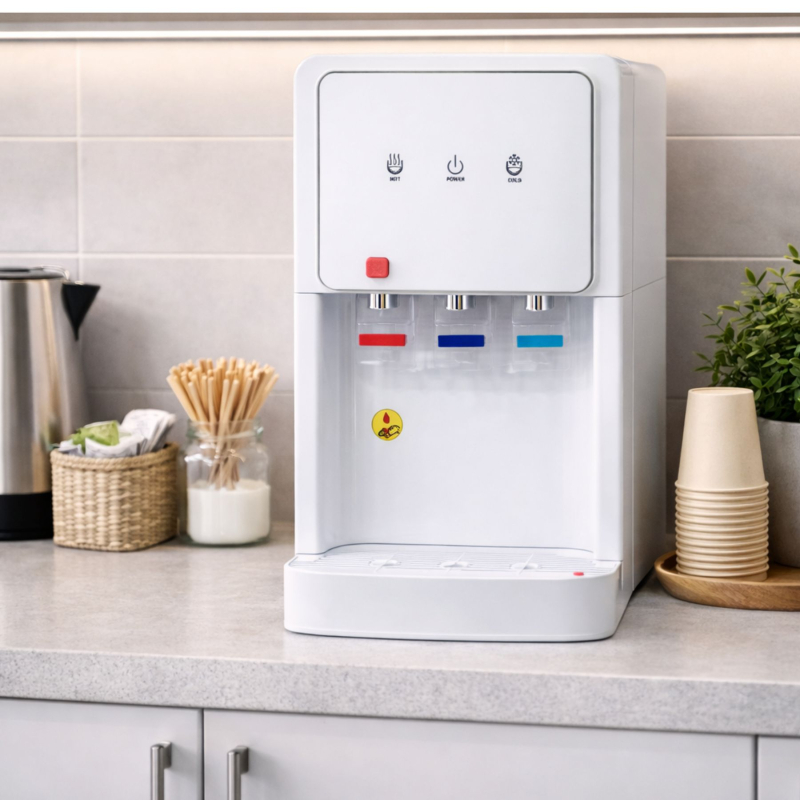
Discover our new BlueMountain mini RO water dispenser ! Produce an unlimited supply of excellent-quality water in your offices and support the well-being of your team, employees, and customers. Compared with the Bluesea, this model is much more compact, and its water tank is smaller. It also requires a supporting surface such as a table, just like our Libertos or Mobilos dispensers.
This dispenser requires a water supply connection and a drain connection.
Frequently bought together
Certifications

RoHS
Restriction of Hazardous Substances
The RoHS directive regulates the use of certain hazardous substances in electrical and electronic equipment to limit their presence in the components concerned.

CE marking
European conformity
CE marking indicates that the product concerned meets the applicable European requirements allowing it to be placed on the market within the European Economic Area.

FDA
U.S. Food and Drug Administration
The FDA is the U.S. authority responsible, among other things, for regulating many products related to food, health, and consumer safety.

Water Quality
Water treatment industry
This accreditation is associated with the water treatment and filtration industry and helps identify products that meet the relevant standards.

ISO 9001 & ISO 14001
Quality and environmental management
The ISO 9001 standard covers quality management systems, while the ISO 14001 standard addresses environmental management.

NSF
Standards related to water and public health safety
NSF develops, among other things, standards and evaluation protocols applicable to equipment and components used in water treatment.
Understanding certification standards and the assurances associated with reverse osmosis membranes.
Are your RO systems NSF certified?
A reverse osmosis membrane referenced in Josmose documentation, the RHD3013-600, holds NSF/ANSI 58 certification covering the safety of its materials. This certification does not mean that all Josmose RO systems are NSF certified. The scope of certification must always be checked for the model and components concerned.
What exactly does NSF 58 certification guarantee?
The NSF/ANSI 58 standard covers, among other things, material safety and certain characteristics of reverse osmosis systems. For the RHD3013-600 membrane, the test documents indicate an analysis covering more than 150 substances, including solvents, phthalates, nitrosamines, and hydrocarbons. No exceedances of the applicable thresholds were found. Please note: this material certification does not validate the contaminant reduction rates of the complete RO system.
What is the difference between NSF 58 and NSF 61?
The NSF/ANSI 58 standard covers home reverse osmosis water treatment systems. The NSF/ANSI 61 standard primarily addresses materials and components in drinking water distribution installations, such as pipes and valves. The two standards serve different purposes and rely on appropriate safety criteria.
How can you verify NSF certification?
Visit the official NSF website and consult the drinking water treatment equipment database. Search for the manufacturer Ningbo RXHL Technology and model RHD3013-600. Check that the certificate matches the component used in your unit and review the characteristics actually covered.
Where are the RO systems and their membranes manufactured?
Josmose technical documentation indicates that they are manufactured in China. The manufacturer of the RHD3013-600 membrane, Ningbo RXHL Technology, is monitored by NSF as part of its certification. Manufacturing origin alone is not enough to determine the quality of an RO system: materials, checks performed, and traceability are also essential.
Do you have test results for the filtered water?
Independent testing of the units is listed as ongoing in our documentation. A TDS tester also lets you measure the total amount of dissolved solids in the water before and after filtration. This measurement provides an indication of how reverse osmosis is working, but cannot, on its own, verify the absence of PFAS, pesticides, or other specific contaminants.
Specifications
| Specification | Blue Mountain |
| Dimensions | 560 × 410 × 300 mm |
| Power supply | 220–240 V / 50–60 Hz |
| Maximum power | 520 W |
| Compressor | CFC-free R600a refrigerant gas |
| Filtration | Reverse osmosis down to 0.0001 micron |
| Inlet water temperature | 6 to 40 °C |
| Inlet pressure | 0.1 to 0.4 MPa, equivalent to 1 to 4 bars |
| Production flow rate | 15 L/h |
| Cold water production | 4 L/h below 10 °C |
| Hot water production | 5 L/h above 90 °C |
| Cooling power | 100 W |
| Pre-filtration | Sediment + activated carbon |
| Membrane | 100 GPD |
| Post-filtration | Coconut carbon |
| Cold water tank | 3.5 liters |
| Hot water tank | 1.3 liters |
| Room-temperature water tank | 1.3 liters |
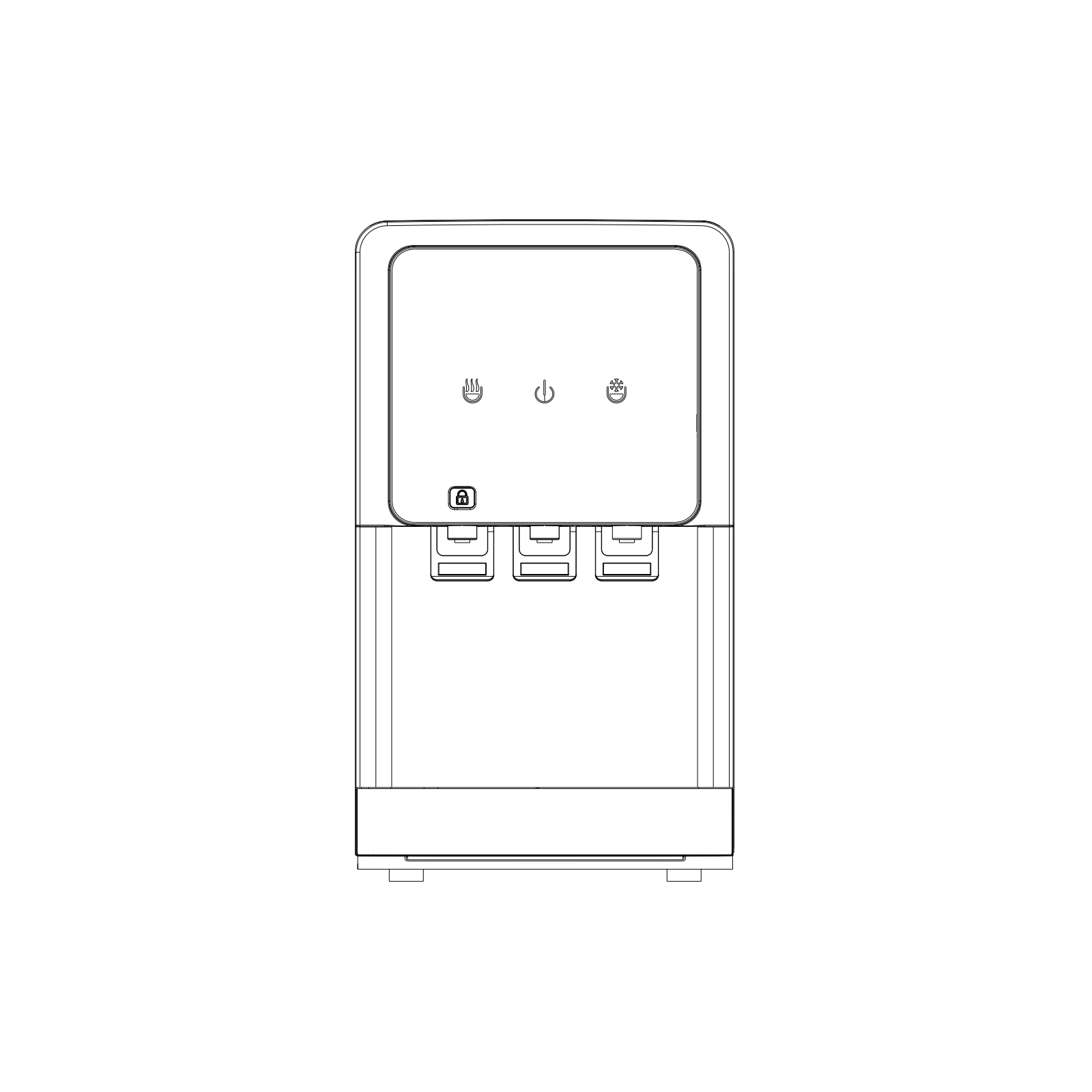
Blue Mountain dimensions

Installation and maintenance
Installation
The Blue Mountain water dispenser must be connected to a drinking water supply, a 220 V – 50 Hz power supply, and a water drain.
Important: never turn on the heating system until the internal filtered water tanks are full. Before activating the heating, check that water flows properly from the hot water outlet.
Connecting to the water supply
The water dispenser can be connected directly to the municipal water supply. If the unit is located far from the water inlet, we can provide up to 30 meters of tubing.
The supplied tubing is food-grade, NF-certified, white, and 6 mm in diameter to keep the installation discreet.
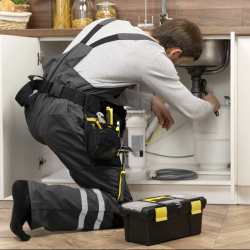
You can install it yourself, or our team can handle the installation for an additional fee. Contact us .
Stability: the four rubber feet keep the water dispenser stable on different types of flooring.
Maintenance
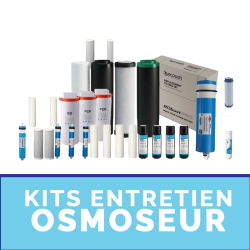
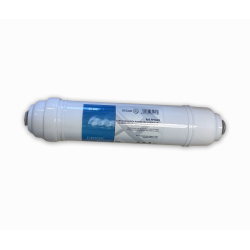
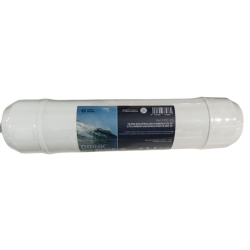
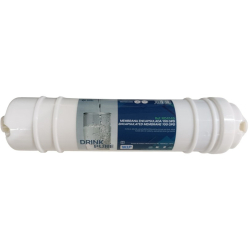
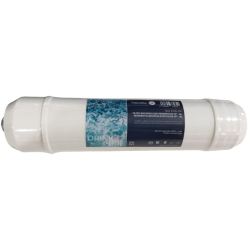
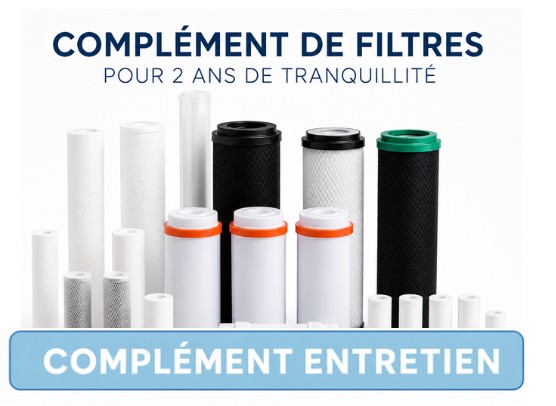
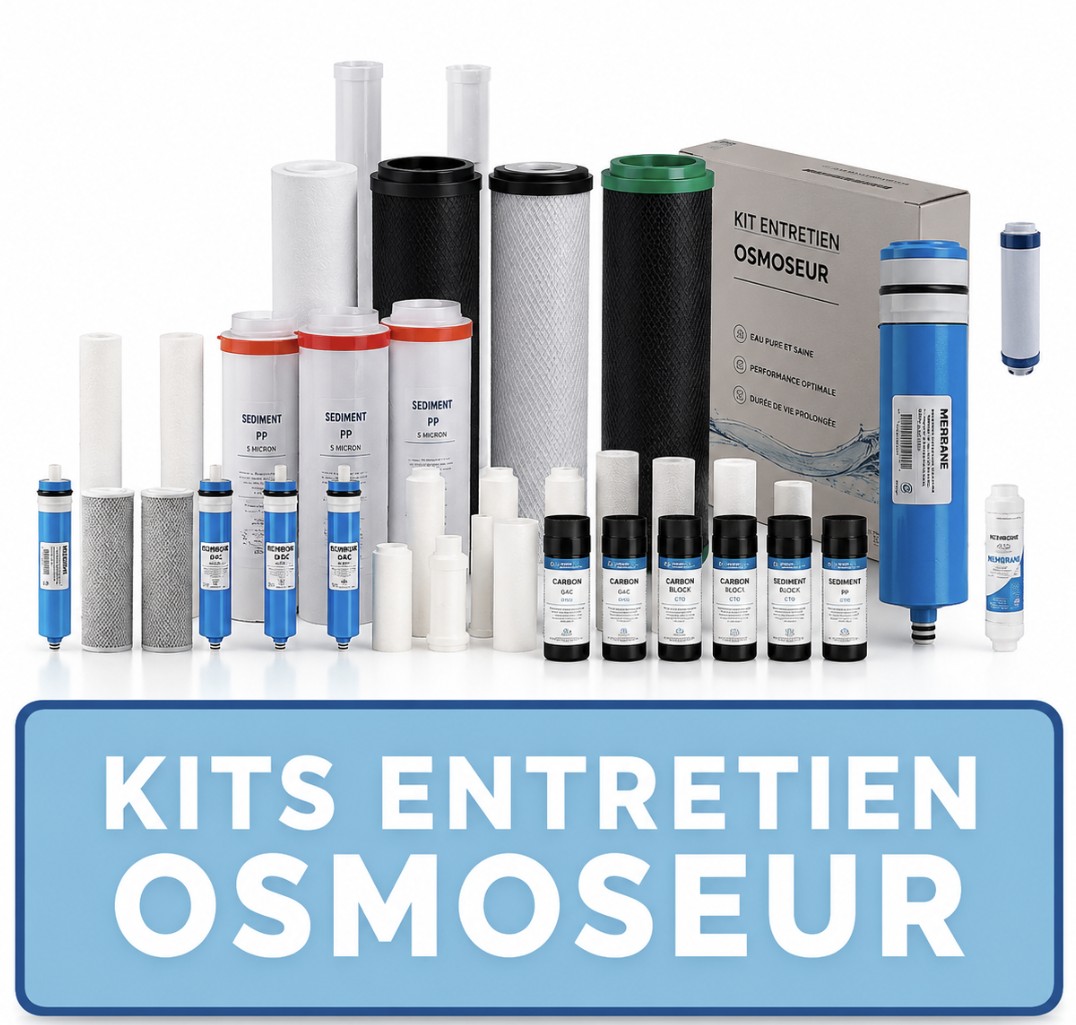
The Blue Mountain is easy to maintain. Replacement supplies are available individually or as a kit to simplify routine replacements.
Regular maintenance helps preserve filtration performance, the unit's flow rate, and the quality of the water dispensed.
Documentation
Installation manual
View the installation manual for the Blue Mountain RO water dispenser.
Download the manualData sheet
Find the main specifications and technical data for the Blue Mountain.
Download the data sheetBenefits of reverse osmosis
A reverse osmosis system uses the principle of reverse osmosis to reduce many dissolved substances and impurities present in water. This technology produces highly purified water, available directly at the faucet or water dispenser.
Why choose reverse osmosis?
The main benefits
Reverse osmosis or ultrafiltration? Discover the differences between reverse osmosis and ultrafiltration .
What can reverse osmosis reduce?
Examples of substances and impurities
Depending on the membrane used, the quality of the feed water and the operating conditions, reverse osmosis can help reduce many substances present in water.