Recherche dans le blog
Featured Articles
Articles in the category "Featured Articles"
PFAS Filtration in Water: Why to Be Concerned and How to Protect Yourself With a Home RO System
PFAS, the invisible pollutants in tap water: filtration is essential
PFAS (per- and polyfluoroalkyl substances) are chemical compounds that have been used for decades in many products: nonstick pans, waterproof clothing, food packaging, firefighting foams... Extremely persistent, they are now known as “forever chemicals”.
Imagine a substance so resilient that it resists water, grease, and heat. That is the "superpower" of PFAS, or per- and polyfluoroalkyl substances. Unlike other chemicals, they do not break down easily and can remain in water, soil, and living organisms for decades.
The problem? Their strength is also their greatest weakness. Their chemical structure, based on extremely strong carbon-fluorine bonds, makes them nearly indestructible. That is why they are called "forever chemicals": once released into nature, they stay there for decades, or even centuries.
They are found throughout the environment, including in drinking water. In France and elsewhere, testing shows PFAS in tap water, sometimes at concerning levels.
Here is an explanatory video by Alexis Destombes, founder of OJA Solutions / josmose.fr:
PFAS, also known as “forever chemicals,” are chemical substances found in many everyday consumer products. What is less widely known is that they are also found in tap water.
In this video, we will explain what PFAS are, where they are found, the dangers they pose, and how you can protect yourself with solutions such as reverse osmosis.
PFAS (per- or polyfluoroalkyl substances) form a large family of chemicals used in various industries since the 1950s. They are found, for example, in food packaging, waterproof clothing, firefighting foams, and the nonstick coatings on pots and pans.
These substances are extremely resistant to water, heat, and grease, which makes them useful, but also dangerous. They do not break down easily and accumulate in the environment… and in the water we drink.
Why should we be concerned? Because they can be toxic to human health. Studies have shown that prolonged exposure can lead to endocrine disruption (hormonal disorders), fertility problems, immune-related infections, and an increased risk of certain cancers, particularly liver and kidney cancers. Even at low doses, PFAS pose a long-term danger because they accumulate in the body.
In France, recent testing revealed PFAS in 43 % of the 89 tap water samples collected. Some cities, such as Lille and Auxerre, even had levels considered concerning. Yet tap water is supposed to be one of the most closely monitored products in France. But to date, PFAS are not yet included in routine health monitoring—they will only be included starting in 2026.
So, how can you protect your family?
The most effective solution at home remains reverse osmosis. This filtration process uses a semipermeable membrane to remove PFAS along with other contaminants: nitrates, pesticides, heavy metals, microorganisms, etc. In simple terms, an RO system captures and removes all unwanted molecules to provide healthier, purer water.
Many studies have shown that reverse osmosis is one of the only truly effective methods for removing PFAS. The system includes several filtration stages, including activated carbon, which already filters out some PFAS, and, above all, a very fine reverse osmosis membrane capable of removing more than 90 % of them.
It is a home solution that is easy to install, quickly pays for itself, and guarantees superior-quality water free of dangerous pollutants.
In summary :
PFAS are invisible but very real substances present in our everyday environment—and particularly in water. Fortunately, solutions exist. With an RO system, you can significantly reduce your exposure to these toxic substances and protect your long-term health.
To learn more and explore our solutions, visit josmose.fr.
Why should you filter out PFAS ?
PFAS accumulate in the body and can have long-term effects, even at very low doses. Studies have identified possible links to:
- Hormonal disorders
- Fertility problems
- Certain cancers (kidney, testicular)
- A weakened immune system
- Effects on children's development
That is why many experts recommend limiting your exposure to PFAS as much as possible.
How do PFAS get into tap water?
PFAS seep into soil, groundwater, and rivers as a result of:
- Industrial discharges
- The breakdown of products containing PFAS
- The spreading of contaminated sewage sludge
Conventional wastewater treatment plants are not designed to effectively remove these pollutants. As a result, they are found in tap water in many cities.
Comparison of PFAS filtration technologies
The table below compares the main filtration methods available and their respective effectiveness against the most common pollutants, including PFAS.
|
Filtration Technology |
Chlorine & Taste |
Lead & Heavy Metals |
Bacteria & Viruses |
PFAS (Forever Chemicals) |
|
Water filter pitcher |
Good |
Limited |
None |
Very low |
|
Faucet-mounted filter |
Good |
Moderate |
None |
Low to limited |
|
Reverse Osmosis |
Excellent |
Excellent |
Excellent |
Excellent (>90%) |
Effective water filtration at home with an RO system
What is a home RO system?
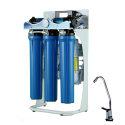
A reverse osmosis system (RO system) is a water filtration device that uses a reverse osmosis membrane to remove impurities. This technology is recognized as one of the most effective for purifying drinking water at home.
Is reverse osmosis effective against PFAS?
Yes. Many studies show that reverse osmosis systems can remove up to 99 % of PFAS, including the best-known ones, such as PFOA and PFOS.
In addition to PFAS, an RO system also removes:
- Nitrates
- Pesticides
- Heavy metals (lead, arsenic, mercury)
- Pharmaceutical residues
- Microplastics
- Viruses and bacteria
Benefits of an RO system for PFAS removal
- Effective against invisible pollutants
- Purified water whenever you need it at home
- Easy under-sink installation
- Protection for your whole family, including children and pregnant women
Which solution should you choose to filter out PFAS at home?
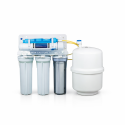
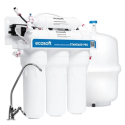
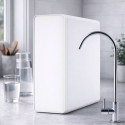
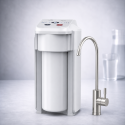
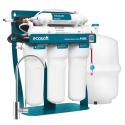
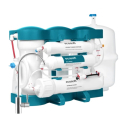
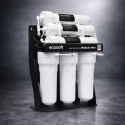
There are several models of home RO systems suitable for family use. Some include a system or a remineralization filter cartridge to restore balanced water after filtration.
- Published on
- Featured Articles
Related blog posts
>-

The Benefits of Reverse Osmosis Water
Why drink reverse osmosis water? Why is it a good...
-
The Benefits of Reverse Osmosis Water
Why drink reverse osmosis water? Why is it a good...