
-
-
-
Refurbished RO systems
Tested and inspected RO systems for pure water at a reduced price.
See offersRO system + water softener pack
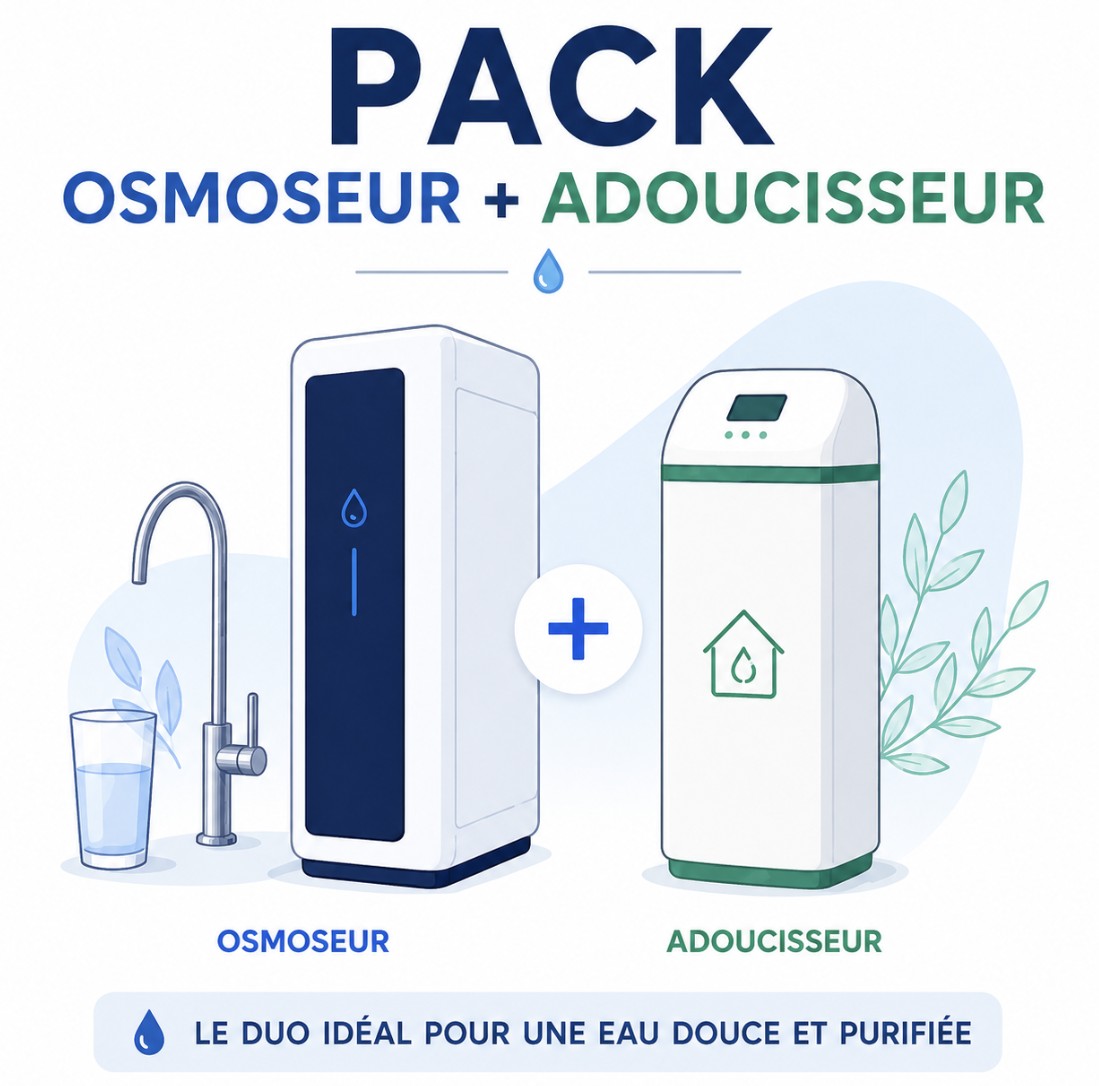
Complete protection with an RO system and a water softener.
Get 15% offRO system + hydrogen water generator pack
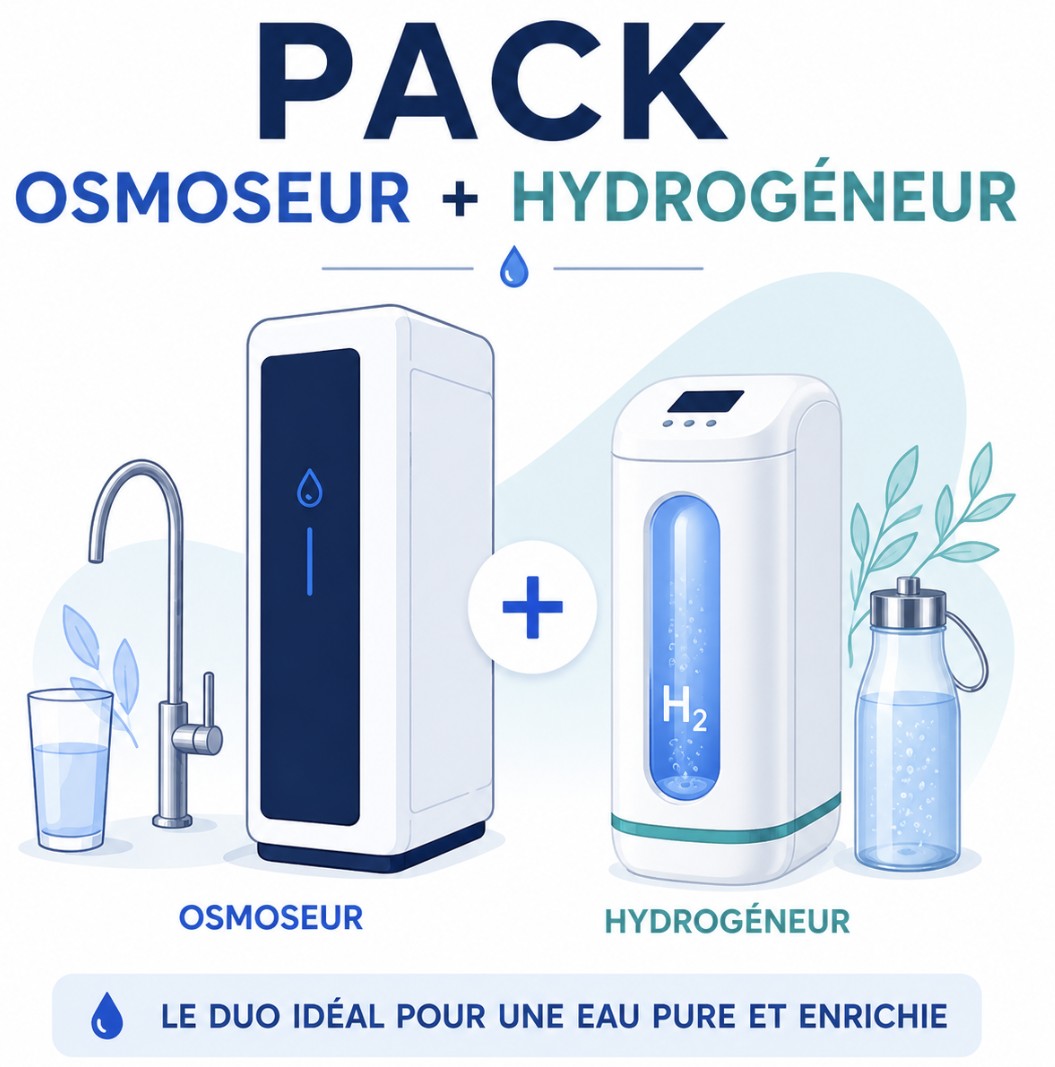
Combine reverse osmosis water and hydrogen-rich water.
Get 15% off
-
-

FREE SHIPPING
On orders of €150 or more within mainland France
(home products only)
Ships within 24 hours
+33 3 66 88 17 85
Call us Monday to Friday,
9:30 am–5 pm (Paris time)!
Email: contact@josmose.fr

Water Self-Sufficiency
-
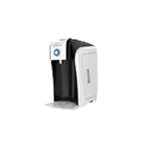
Ultrafiltration
Here you will find our ultrafiltration solutions for homes and professionals.
Ultrafiltration is a widely used system in the field of water filtration. It costs less than a reverse osmosis system. It can be installed on its own or to support a water softener or an RO system.
Home ultrafiltration: what is it used for?
An ultrafiltration system mainly removes all bacteria and viruses present in the water.
The advantage of this system is that it produces no wastewater, can be installed to treat all the water in a home, and costs relatively little.
This system does not work with every type of water. Ultrafiltration is intended for rainwater, well water, and similar sources. Seawater or heavily polluted water is not suitable.
As a result, ultrafiltration is mainly aimed at people who want drinking water in several rooms of a home, at a lower cost, and with no wastewater!
Ultrafiltration: how does it work?
Ultrafiltration was developed in the 1970s by the dairy industry to remove bacteria and viruses using a membrane whose pores have a maximum diameter of 0.01 micron, which is 10,000 times finer than a human hair.
Ultrafiltration uses no chemicals, only physical filters. There is therefore no impact on the environment, and ultrafiltered water is safe to drink.
The different levels of filtration

We offer different ways to ultrafilter your water: a filter for the whole house and a point-of-use water dispenser, like reverse osmosis.
Ultrafiltration is more affordable than reverse osmosis and produces little or no wastewater.
For even better drinking water, we recommend installing an RO system downstream of the ultrafiltration system.
-
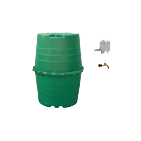
Rainwater Harvesting
Do you want to be self-sufficient and get a rainwater harvesting system?
Today, rainwater harvesting has become a necessity for being water self-sufficient and protecting our planet. Being self-sufficient in water is no longer a hermit's dream! It's even a trend found in many countries or in permaculture, for example. Access to this resource will become increasingly problematic in the future because of pollution, the privatization of the resource, or climate change… Being self-sufficient already means benefiting from a free resource, but it's also a strong ecological gesture. Whether you want to be self-sufficient for watering your garden, for your toilets, or for your drinking water, you will need to equip yourself with a water reserve!
But first of all, you'll need to be able to store the rain you collect, via your gutter for example or any other source. Using a rainwater tank is therefore necessary. For rainwater harvesting, you'll find here a selection of rainwater tanks with tank volumes between 200 liters and 1,300 liters. You can also pre-filter your rainwater with a pre-filter.
Discover our high-capacity tank
Our rainwater tanks will blend easily into your outdoor space thanks to a discreet design with a stone-look finish, for example, for convenient water harvesting.
Do you want to drink your rainwater? Add an ultrafiltration system with a filter or a UV lamp that will let you drink your rainwater! Finally, if you want to benefit from almost pure rainwater, choose our RO systems!
Why install a rainwater harvesting system?
In the summer, some households and industrial buildings set up a rainwater filtering collector or a rainwater harvesting tank.
Josmose offers you the chance to discover this whole other category of home equipment that you should install at your house.
By browsing our store, you can get an affordable rainwater collector, a wine barrel and even a filtering gutter collector.
Whether for family or professional use, our water harvesting products are designed to be environmentally friendly and to offer an economical and sustainable solution for rainwater harvesting. We believe everyone should be able to take part in preserving our planet by using ecological, simple, and affordable solutions, which is why we are committed to offering you the best products on the market.
Ecology at the heart of the rainwater harvesting system
Using a water barrel or a rainwater harvesting tank goes hand in hand with protecting and preserving our environment. Drinking water is among the scarce commodities, while the World Health Organization (WHO) recommends drinking a minimum of 1.5 liters per day per person.
We therefore need to reduce our consumption of spring water. In this case, all it takes is to collect stormwater or rainwater stored underground. That is why, to guarantee water self-sufficiency, Josmose offers you a wine barrel or an affordable rainwater collector.
Beyond this idea of water self-sufficiency, setting up a rainwater harvesting system is part of an environmental protection strategy. It helps treat wastewater better and limit the waste of natural resources.
-
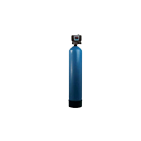
Iron Filters
What is an iron filter used for?
An iron filter is a device that removes iron and manganese from water down to a concentration of 0.75 mg/L.It works with materials such as manganese dioxide, also called pyrolusite, which causes strong oxidation of the iron, turning it into iron hydroxide that then precipitates and remains trapped in the filter bed. These precipitates are removed when the filter bed is backwashed. This type of material has a very long service life and requires no regeneration with any chemical product.
Thanks to special ECOMIX resins, our Clack and Clack premium water softeners also filter iron, manganese, ammonium, and organic molecules in addition to limescale.
Also discover our range of water softeners
The benefits of an iron filter
The use of an iron filter offers many benefits. It improves water quality by providing clear, healthy water for all your needs. It also extends the life of household appliances such as washing machines and dishwashers. Pipes and faucets are also protected from corrosion, which extends their life. Finally, the iron filter is also an economical and ecological choice, as it reduces water consumption by reducing cleaning needs.
How does an iron filter work?
The iron filter works by using a resin bed to remove iron ions from the water. Hard water containing iron ions passes through the resin bed. The iron ions are then replaced by sodium ions. The resin is regularly regenerated with salt to maintain its effectiveness.
Iron filter models available at Josmose
At Josmose, we offer a wide range of high-quality iron filters suited to every need. We have models for small and large homes, as well as iron filters for commercial buildings. We also have manual and automatic iron filter options, depending on your preferences.
-
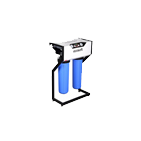
Pre-filtration
Pre-filtration for off-grid water
A pre-filtration system can be installed on several types of setups.
We offer all kinds of filters to remove the elements you want. Whether you need to remove chlorine, organic particles, sediment, limescale or nitrates, you will find the right filter for your needs.
Water pre-filtration is one of the most important steps in water treatment. It removes suspended particles, sediment and impurities from the water before it is treated further. That is why it is essential to choose the right pre-filtration system to ensure the quality of the water you consume.
At Josmose, we offer a wide range of pre-filtration systems to meet all your water treatment needs. Our products are designed to deliver effective, long-lasting filtration, using the latest water filtration technologies.
Why use a pre-filtration system?
Pre-filtration systems are designed to protect other water treatment equipment such as water softeners, RO systems, UV sterilizers and activated carbon filters. By removing suspended particles and sediment from the water, they also extend the life of pipes and household appliances by reducing the buildup of deposits and corrosion.
In addition, pre-filtration systems improve water quality by eliminating bad tastes and odors. They also reduce the turbidity of the water, making it clearer and more pleasant to drink.
How do you choose the right pre-filtration system?
The choice of pre-filtration system depends on the quality of the incoming water, the impurities to be removed, the water flow rate and your water treatment needs. At Josmose, we can help you choose the pre-filtration system that best suits your needs.
Our experts can guide you through the process of selecting the right pre-filtration system based on your specific needs. We can also give you advice on the installation, upkeep and maintenance of your pre-filtration system.
By choosing Josmose for your pre-filtration system, you can be sure of enjoying clean, pure water for your home or your business.
-
Off-Grid Water Consumables
10-inch PP filter for home reverse osmosis systems
This pre-filter, 25 cm long and 7 cm in diameter, is made of 100% polypropylene fibers. This material physically blocks particles larger than 5 microns in diameter. As a result, PP filters remove dust and other large impurities. Easy to maintain, these filters must nevertheless be replaced every 6 months or every 2,500 liters so they do not clog the pre-filters and the RO membrane. To do so, simply use the supplied wrench to unscrew the right-hand housing, replace the filter and screw the housing back on.
10-inch CTO filter for home reverse osmosis systems
This pre-filter is made of activated carbon blocks that retain impurities such as chlorine, organic contaminants, pesticides and other chemicals that alter the smell and taste of water. These 10-inch CTO filters for water filtration measure 25 cm long by 7 cm in diameter. This type of RO system filter needs to be changed once every 12 months or every 4,500 liters, depending on how you use your RO system. To do so, turn off the unit, unscrew the center housing using the supplied wrench, then screw it back on after replacing the filter.
10-inch GAC filter for home reverse osmosis systems
This pre-filter is made of granular activated carbon and is designed for tap water filtration. It retains impurities such as chlorine, organic contaminants, pesticides and other chemicals that can alter the smell and taste of water. This filter measures 25 cm long by 7 cm in diameter. As with the CTO, this filter needs to be changed every 12 months or every 4,500 liters, depending on how often you use the RO system. After turning off the unit, simply unscrew the left-hand housing using the supplied wrench, replace the filter, then tighten the housing back the same way.
Anion anti-nitrate resin
This 10-inch anion resin cartridge fits a standard home RO system or a standard 10-inch filter housing. This accessory provides drinking water filtration. It is made of resin to effectively remove nitrates present in water. Place it just before the activated carbon cartridge so that the carbon can remove the unpleasant taste the resin releases. These water filtration consumables must be replaced every year.
Become water self-sufficient
Want to stop depending on the public water supply? There are several reasons you may want to become self-sufficient in water. Collected water is free. And that is the 1st reason to invest in an independent water supply system.
The second reason: the ever-increasing pressure people put on water resources. Overexploited by industry and agriculture, water is becoming scarcer. Global warming adds to this by making rainfall less frequent and droughts longer. Finally, pollution of water resources can reach your faucet.
Choosing to become self-sufficient in water means freeing yourself from all these problems. Apart from the initial investment, your water is free and available in large quantities. Imagine, for example, that with a 150 m² roof and annual rainfall of 1,000 mm, you can collect 150 m³ of water a year!
The equipment you need
To make your home self-sufficient in water, you will first need to collect rainwater. The simplest method is to collect water from a roof through a gutter. You can also pump your water from a spring.
The water then passes through a pre-filter to remove large impurities before reaching a water storage tank. This can be a plastic tank or a concrete cistern.
For drinking water, you will need to install a system with several different filters.
An iron filter may be necessary if your water contains too much iron. You will then need to install an ultrafiltration system or a reverse osmosis system to ensure impeccable water quality. You will be sure that your water no longer contains pesticides, heavy metals, chlorine or pharmaceuticals. In addition, rainwater does not cause limescale buildup, which means fewer plumbing problems.
Finally, check your water quality yourself with our water testing kits.