


Recherche dans le blog
Scientific Articles
- A few figures?
- Why drink water?
- When should you drink water?
- How much water should you drink each day?
- Signs of dehydration
- Qualities required for good drinking water
Why Should You Avoid Drinking Softened Water?
- The reason given by the WHO
- Further details on water softeners
- Maintenance considerations
- An alternative to conventional salt-based water softeners
Should You Filter Tap Water in France?
- The official answer: No, water filtration is not necessary
- According to scientists: Yes, purifying your drinking water is essential
Can Your Body Absorb the Minerals in Drinking Water?
- An interesting study in Germany
- What does the WHO think?
- Water for dummies
- The study results
- The minerals in water are not bioavailable
- Other drawbacks of mineral water
A Closer Look at Dry Residue in Water
- Drinking water: a luxury in France?!?
- Pesticides and other little gifts in tap water
- As with VW, the levels change, but the nature stays the same...
- Another major problem: water chlorination!
- Are we drinking medicated water?!?
- What goes unnoticed in health safety tests...
- ...but not under scientists' scrutiny, as they even find heroin in tap water
- Laboratories' conflict of interest
Drinking Water Around the World
Beware of Natural Water Sources!
- Double standards…
- Bottled waters have very different mineral levels
- A few unexplained peculiarities
- The case of Cristaline water
- Thermal waters
- Beware of minerals!
- And where does soda fit into all this?
How to Read Your Mineral Water Label
- Dry residue
- Anions/cations
- Calcium
- Magnesium
- Sodium
- Potassium
- Bicarbonate
- Chloride
- Sulfate
- Nitrate
- The bioavailability of minerals in water
Municipal Water and Nanoscale Particles
Aluminum in Water Doubles the Risk of Developing Alzheimer's Disease
- A danger worse than asbestos
- Tap water, a cocktail of chemical medications
- What the « official recommendations » don't say
Drinking Water Around the World
Drinking water: a scarce commodity
Water covers approximately 71 % of Earth's surface. Seas and oceans alone account for more than 97 % of the water available on Earth. Drinking water accounts for only 2.5 % and is found mainly in the form of ice (2/3) and in groundwater.
Ultimately, humans and the entire ecosystem must make do with less than 1 % of all water resources.
Fresh water is therefore a scarce resource that is continually recycled. We use the same water we have been recycling since the dawn of time.
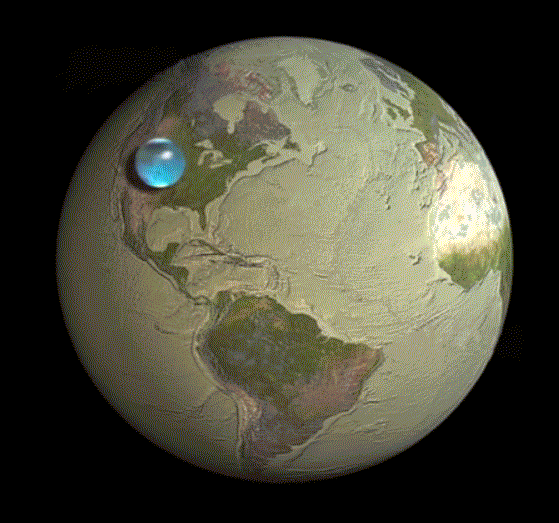
This is what all the water on the planet would look like if it were concentrated into a sphere.
Water: this blue gold
Today, no one can deny that water in all its forms is openly coveted around the world. After oil and electricity, our blue gold represents the world's third-largest industry. Because of its rapidly increasing scarcity and its vital importance, it will soon become the leading source of profits. The bodies that make decisions in the water market face increasing pressure, reaching into the very heart of their institutions. Access to water and its distribution can generate enormous profits. Major conflicts of interest are multiplying day by day.
The global water situation is becoming very concerning. For example, in some countries such as Syria or Israel, and even in France at certain times of the year, water is starting to run short. California faces water shortages all year round. In “civilized” countries, water is wasted with abandon, without concern for the consequences for neighboring populations. After Las Vegas in the United States, China and some Arab countries are now building new cities in the middle of the desert, depleting water reserves and leaving surrounding populations thirsty. In addition, drinking water should be safe to drink, but unfortunately remains inaccessible to some populations. Even in privileged countries, it is increasingly mistreated, wasted, and disrespected.
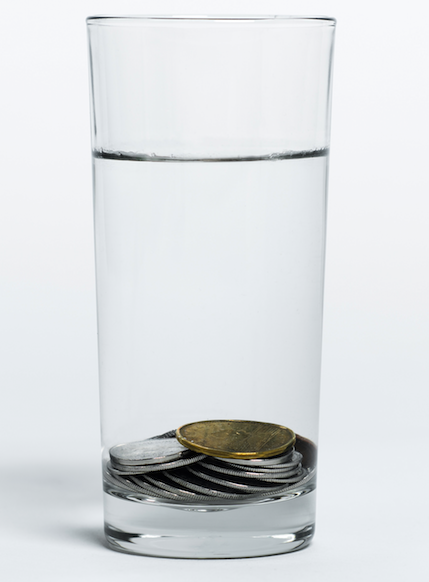
A few examples from around the world
The political and financial stakes are so high that no one truly concerns themselves with water pollution ; at the risk of seeing entire populations disappear soon.
For example, in the Amazon, the damage goes beyond cutting away more of the forest every day. Gold fever is increasing mercury levels in the major surrounding rivers and forcing residents to flee the region to avoid dying from this pollution.
The same is true in Bolivia, where mining for tin, silver, gold, and lithium irreversibly pollutes many rivers.
In Togo, the chore of fetching water assigned to women forces them to walk tens of kilometers every day, carrying heavy loads to ensure their families' survival.
In Japan, in 2009, researchers at Kyoto University revealed that they had found traces of Tamiflu, a molecule used to treat infectious diseases with severe side effects, in the country's rivers.
As a result of drinking unsafe water, 1.5 million children under the age of 5 die every year from preventable diarrheal diseases. 3.6 million people die each year from water-related causes (diarrhea, cholera, typhoid, hepatitis…). According to a WHO study from January 2012, 50 % of the world's population has no access to drinking water, including 1.9 billion people who have no choice but to drink dangerous water. Other, more rigorous studies put the figure at 3.5 billion people.
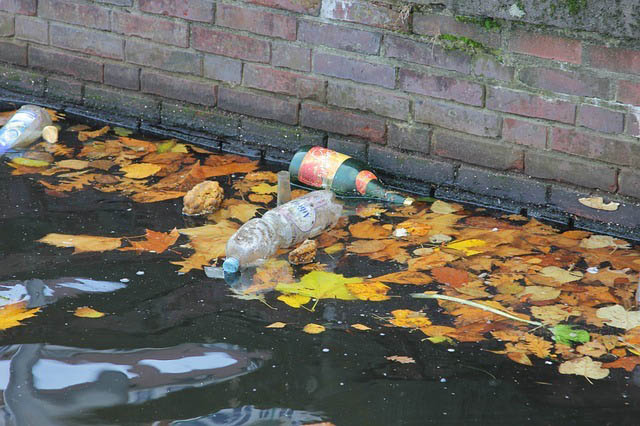
We should also consider the other types of pollution associated with our drinking water consumption. Only 12 % of the plastic bottles produced by Nestlé, the world's leading bottled water producer, are recycled. This means that 88 % of them end up in the environment, where they remain for more than a century.
How much longer will nature withstand this assault ? When will we finally realize that water, this blue gold, is our source of life, and soon of survival ? These are questions we should have been asking long ago…
Our blue planet is crying, and its tears are polluted !
Source : “How to Purify and Revitalize Your Drinking Water” by Richard Haas :
A former healthcare professional specializing in aqueous injectable solutions who spent years researching water using Vincent's bioelectronics (BEV).
- Published on
- Scientific Articles
Related blog posts
>-

Plastic Water Bottles: A Chronicle of Global Pollution
Plastic water bottles are among the many types of...
-

Poison in Tap Water
This France 3 report dates from 2010 and was...
-

Beware of Natural Water Sources!
We reviewed the 3 main alternative sources of drinking...
-

Should You Filter Tap Water in France?
After this broad overview (see previous articles), the...
-

Medications in Drinking Water
The presence of medications in drinking water in...
-

The “Cocktail” Effect
The “cocktail” effect has nothing to do with...
-

The Water Situation in France
The water situation in France is barely any brighter...
-
Plastic Water Bottles: A Chronicle of Global Pollution
Plastic water bottles are among the many types of...
-
Poison in Tap Water
This France 3 report dates from 2010 and was...
-
Beware of Natural Water Sources!
We reviewed the 3 main alternative sources of drinking...
-
Should You Filter Tap Water in France?
After this broad overview (see previous articles), the...
-
Medications in Drinking Water
The presence of medications in drinking water in...
-
The “Cocktail” Effect
The “cocktail” effect has nothing to do with...
-
The Water Situation in France
The water situation in France is barely any brighter...