


Recherche dans le blog
Scientific Articles
- A few figures?
- Why drink water?
- When should you drink water?
- How much water should you drink each day?
- Signs of dehydration
- Qualities required for good drinking water
Why Should You Avoid Drinking Softened Water?
- The reason given by the WHO
- Further details on water softeners
- Maintenance considerations
- An alternative to conventional salt-based water softeners
Should You Filter Tap Water in France?
- The official answer: No, water filtration is not necessary
- According to scientists: Yes, purifying your drinking water is essential
Can Your Body Absorb the Minerals in Drinking Water?
- An interesting study in Germany
- What does the WHO think?
- Water for dummies
- The study results
- The minerals in water are not bioavailable
- Other drawbacks of mineral water
A Closer Look at Dry Residue in Water
- Drinking water: a luxury in France?!?
- Pesticides and other little gifts in tap water
- As with VW, the levels change, but the nature stays the same...
- Another major problem: water chlorination!
- Are we drinking medicated water?!?
- What goes unnoticed in health safety tests...
- ...but not under scientists' scrutiny, as they even find heroin in tap water
- Laboratories' conflict of interest
Drinking Water Around the World
Beware of Natural Water Sources!
- Double standards…
- Bottled waters have very different mineral levels
- A few unexplained peculiarities
- The case of Cristaline water
- Thermal waters
- Beware of minerals!
- And where does soda fit into all this?
How to Read Your Mineral Water Label
- Dry residue
- Anions/cations
- Calcium
- Magnesium
- Sodium
- Potassium
- Bicarbonate
- Chloride
- Sulfate
- Nitrate
- The bioavailability of minerals in water
Municipal Water and Nanoscale Particles
Aluminum in Water Doubles the Risk of Developing Alzheimer's Disease
- A danger worse than asbestos
- Tap water, a cocktail of chemical medications
- What the « official recommendations » don't say
Municipal Water and Nanoscale Particles
What is a nanoparticle?
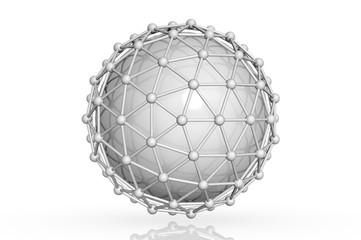
A nanometer is one billionth of a meter, 3,000 times smaller than a red blood cell. Particles of this size are already found in our everyday water, but these elements are practically impossible to detect.
Some are already recognized as toxic and dangerous to our health. We are heading toward a technological tsunami that no one has under control at present.
Yet nanoparticles, once properly controlled, will probably revolutionize many fields, particularly healthcare and medications.
What do the authorities say?
In 2010, ANSES recommended applying the precautionary principle to nanomaterials and better oversight of their use. Today, it is going even further by calling for the inclusion of nanomaterials in the European CLP framework (classification, labeling, and packaging) for hazardous chemical substances. The goal is to improve the traceability of these nanomaterials intended for incorporation into consumer products and to better target risk assessment. Be careful ! These particles do not all behave like conventional chemical molecules and do not produce the same reactions in our bodies. In addition, it is essential to implement special precautions for workers who handle them.
In 2012, France placed 500,000 tonnes of nanoparticles on the market, including 220,000 from imports. Carbon black used in tire manufacturing alone accounted for approximately 250,000 tonnes (source : DNA, “ Nanomaterials : a danger ? ”, May 16, 2014).
And yet...

Manufacturers do not need to declare or prove the safety of the particles they manufacture as long as they stay below one tonne produced per year. Thus, if 1,000 producers each manufacture 999 kg/year, that still amounts to 999,000 kg of nanoparticles per year that can circulate in nature and end up in water without any oversight. No one knows whether these nanoparticles are dangerous to humans, but we already know that some cosmetic creams containing them had to be withdrawn from the market, because they caused multiple allergies. Indeed, these particles, smaller than the pores of the skin, ended up in the bloodstream. They can also cross cell membranes and even reach our brains.
Conclusion
For this reason and all those discussed in our other articles, we recommend that everyone filter their water from faucets, springs, or wells ; the best solution for doing so is unquestionably reverse osmosis.
- Published on
- Scientific Articles
Related blog posts
>-

The Health Benefits of an RO System
An RO system offers various benefits for your health....
-

Poison in Tap Water
This France 3 report dates from 2010 and was...
-

Beware of Natural Water Sources!
We reviewed the 3 main alternative sources of drinking...
-

Should You Filter Tap Water in France?
After this broad overview (see previous articles), the...
-

Medications in Drinking Water
The presence of medications in drinking water in...
-

The “Cocktail” Effect
The “cocktail” effect has nothing to do with...
-

The Water Situation in France
The water situation in France is barely any brighter...
-

Drinking Water Around the World
An article reporting on the drinking water situation...
-
The Health Benefits of an RO System
An RO system offers various benefits for your health....
-
Poison in Tap Water
This France 3 report dates from 2010 and was...
-
Beware of Natural Water Sources!
We reviewed the 3 main alternative sources of drinking...
-
Should You Filter Tap Water in France?
After this broad overview (see previous articles), the...
-
Medications in Drinking Water
The presence of medications in drinking water in...
-
The “Cocktail” Effect
The “cocktail” effect has nothing to do with...
-
The Water Situation in France
The water situation in France is barely any brighter...
-
Drinking Water Around the World
An article reporting on the drinking water situation...