


Recherche dans le blog
Scientific Articles
- A few figures?
- Why drink water?
- When should you drink water?
- How much water should you drink each day?
- Signs of dehydration
- Qualities required for good drinking water
Why Should You Avoid Drinking Softened Water?
- The reason given by the WHO
- Further details on water softeners
- Maintenance considerations
- An alternative to conventional salt-based water softeners
Should You Filter Tap Water in France?
- The official answer: No, water filtration is not necessary
- According to scientists: Yes, purifying your drinking water is essential
Can Your Body Absorb the Minerals in Drinking Water?
- An interesting study in Germany
- What does the WHO think?
- Water for dummies
- The study results
- The minerals in water are not bioavailable
- Other drawbacks of mineral water
A Closer Look at Dry Residue in Water
- Drinking water: a luxury in France?!?
- Pesticides and other little gifts in tap water
- As with VW, the levels change, but the nature stays the same...
- Another major problem: water chlorination!
- Are we drinking medicated water?!?
- What goes unnoticed in health safety tests...
- ...but not under scientists' scrutiny, as they even find heroin in tap water
- Laboratories' conflict of interest
Drinking Water Around the World
Beware of Natural Water Sources!
- Double standards…
- Bottled waters have very different mineral levels
- A few unexplained peculiarities
- The case of Cristaline water
- Thermal waters
- Beware of minerals!
- And where does soda fit into all this?
How to Read Your Mineral Water Label
- Dry residue
- Anions/cations
- Calcium
- Magnesium
- Sodium
- Potassium
- Bicarbonate
- Chloride
- Sulfate
- Nitrate
- The bioavailability of minerals in water
Municipal Water and Nanoscale Particles
Aluminum in Water Doubles the Risk of Developing Alzheimer's Disease
- A danger worse than asbestos
- Tap water, a cocktail of chemical medications
- What the « official recommendations » don't say
Should You Filter Tap Water in France?
Here are the answers we offer :
The official answer: No, water filtration is not necessary
- Certainly “ No ” if you go by official standards. According to the authorities, in 2010, 96.8 % of the population received tap water that complied with drinking water standards. Let's simply forget the roughly 2 million people drinking water that fails to meet standards, and too bad for their health !
According to scientists: Yes, purifying your drinking water is essential
- “ Yes ” if you listen to the relentless calls from scientists and leading water specialists who have been clamoring for years for new standards stricter than the current ones, including testing for many undesirable molecules whose presence in tap water has been demonstrated repeatedly. You only find what you look for ! Naturally, these requests remain wishful thinking, because if the authorities granted them, half of France would be drinking water that failed to meet standards or would have no drinking water at all.
- According to Richard Haas, a former healthcare professional specializing in aqueous injectable solutions who conducted research on water using Vincent's bioelectronics (BEV) for years, if we had to filter out all the undesirable molecules currently present in drinking water that are suspected of being truly toxic to humans and are not officially tested for, there is currently only one system for home users among all those on the market: reverse osmosis, which is reliable and retains practically all undesirable molecules. In addition, this system produces water with a low mineral content that is ideal for humans; contrary to the marketing argument used by large companies that sell you mineral water when those same minerals are already present in (excessively ?) large amounts in your diet.
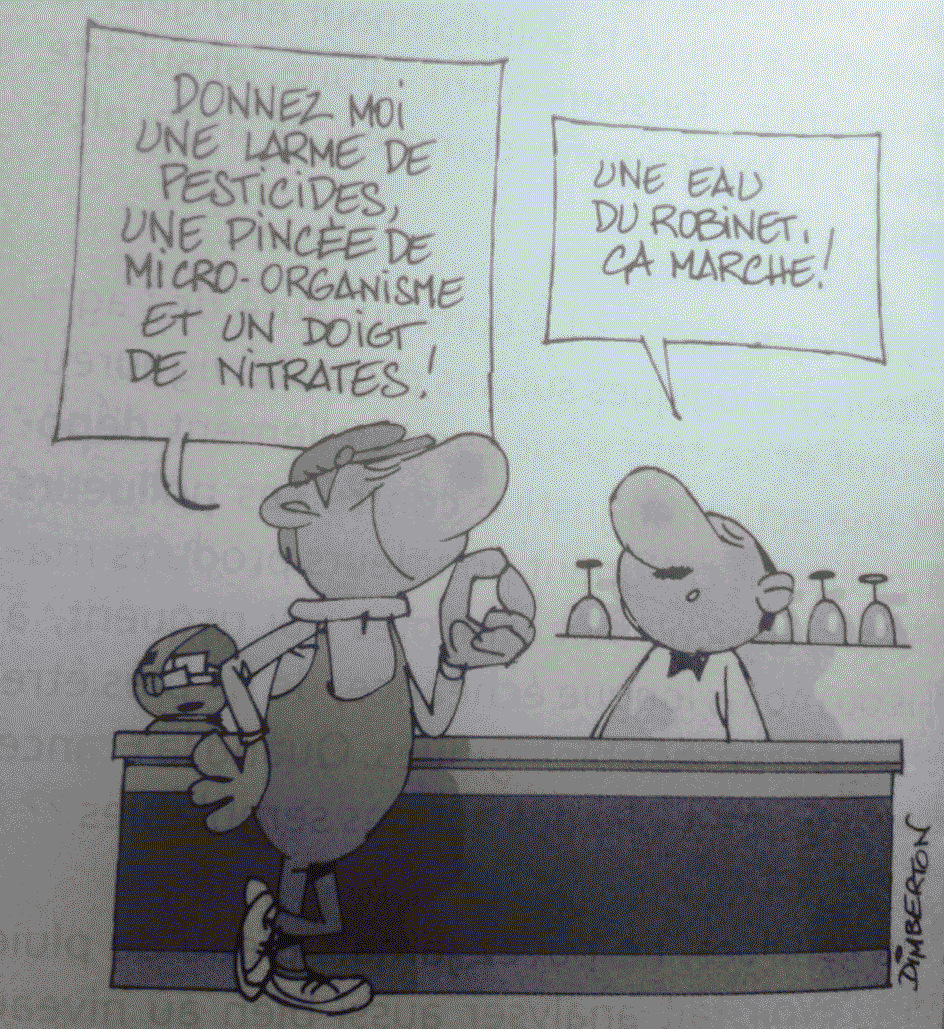
In France, practically all tap water undergoes chemical treatments (chlorine, ozone, UV, aluminum salts, etc.) to make it drinkable before distribution. While its bacteriological quality is impeccable, the same cannot be said of its chemical quality. As discussed in a previous article, France officially tests for and analyzes only 54 parameters and undesirable molecules. However, you should know that all the chemical molecules produced worldwide, numbering 143,000, could one day end up in our tap water following an incident of some kind.
Avoid consuming chemicals present in your tap water by filtering it with a reverse osmosis system.
Discover which reverse osmosis system is right for you by following our guide!
- Published on
- Scientific Articles,
- FILTERING YOUR DRINKING WATER
Related blog posts
>-

Medications in Drinking Water
The presence of medications in drinking water in...
-

The “Cocktail” Effect
The “cocktail” effect has nothing to do with...
-

The Water Situation in France
The water situation in France is barely any brighter...
-

Drinking Water Around the World
An article reporting on the drinking water situation...
-
Medications in Drinking Water
The presence of medications in drinking water in...
-
The “Cocktail” Effect
The “cocktail” effect has nothing to do with...
-
The Water Situation in France
The water situation in France is barely any brighter...
-
Drinking Water Around the World
An article reporting on the drinking water situation...