

Tested and inspected RO systems for pure water at a reduced price.
See offers
Complete protection with an RO system and a water softener.
Get 15% off
Combine reverse osmosis water and hydrogen-rich water.
Get 15% offFREE SHIPPING
On orders of €150 or more within mainland France
(home products only)
Ships within 24 hours
+33 3 66 88 17 85
Call us Monday to Friday,
9:30 am–5 pm (Paris time)!
Email: contact@josmose.fr

For swimming pools and spas, there are 3 types of chlorine you can test, each serving a purpose:
In summary, testing total chlorine lets you monitor overall water disinfection, testing free chlorine ensures effective disinfection, while testing combined chlorine helps detect potential problems with overchlorination or underchlorination.
Chlorine occurs in nature as free chlorine, combined chlorine, or both.
Total chlorine = Free chlorine + Combined chlorine (chlorinated compounds formed by reaction with organic matter).
In water, chlorine is found in 3 forms whose balance varies with pH and temperature: the hypochlorite ion (ClO-), hypochlorous acid (HClO), and the chloride ion (Cl-).
Chlorine is used as a disinfectant because it effectively eliminates a large proportion of the bacteria present in water, as well as algae, parasites, and viruses.
Total chlorine is the chlorine that remains in water, whether it is free or has reacted. The WHO has established a guideline value of 5 mg/L, based on the absence of unpleasant odor or taste caused by chlorine.
The main routes of exposure to chlorine are drinking water and food.
Total chlorine can damage the respiratory system and lungs and affect the skin, especially in moist areas of the human body (groin, armpits).
This paragraph is based in part on the WHO report " Guidelines for Drinking-water Quality ".
*A guideline value is a reference value provided by the WHO.
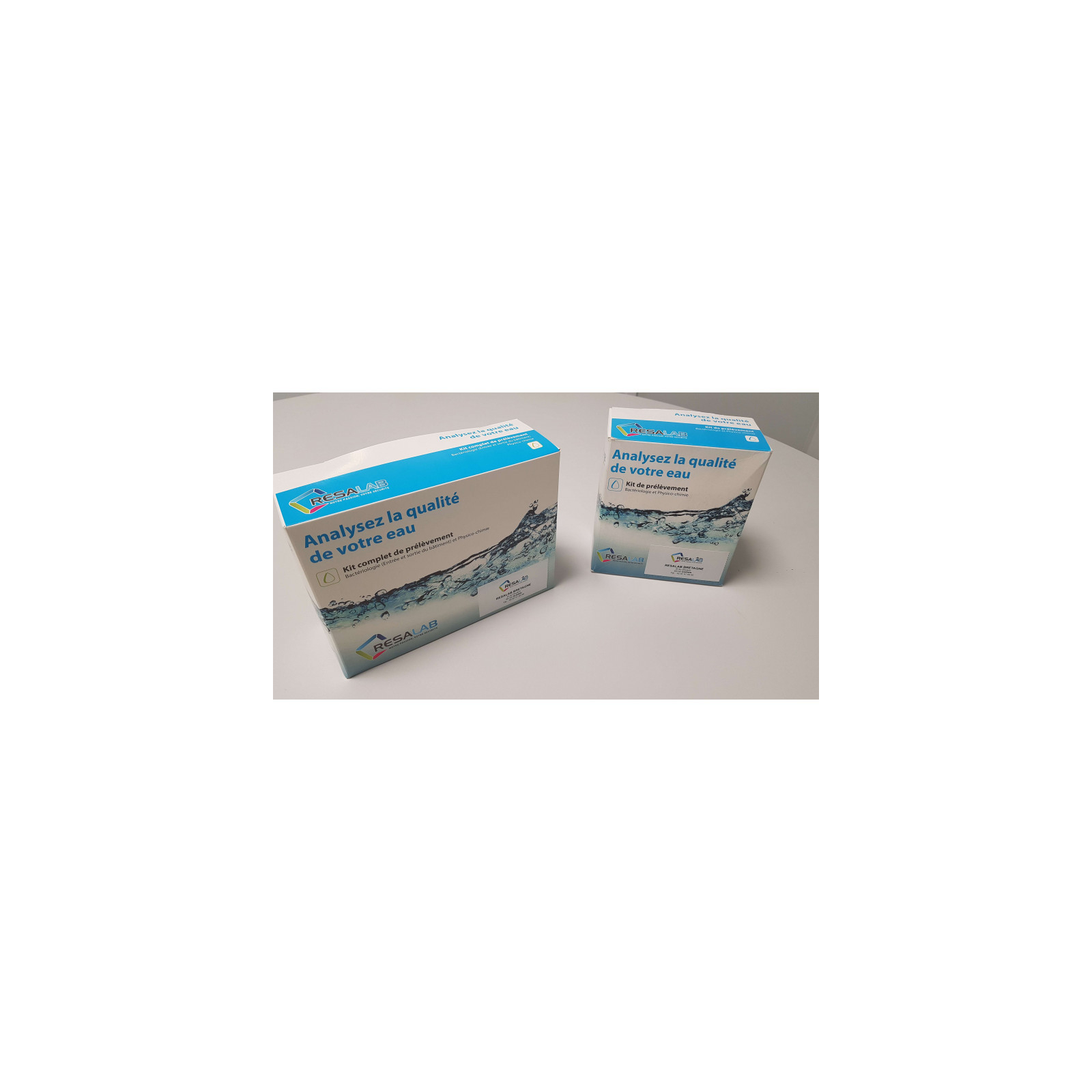
Here, we offer laboratory analysis of your water to determine its exact total chlorine level.
To do this, you must also order the basic laboratory analysis available here. This basic analysis includes a sampling kit and shipment of the kit to our independent partner laboratory.
If you do not want the hassle of sending samples to a laboratory or think you may need to perform this test several times, you can test the free chlorine level in your water yourself!
The eXact iDip and eXact Micro 20 photometers let you test a wide range of substances and elements present in your water. Once you have the device, order the combined chlorine test for photometers.