


Tested and inspected RO systems for pure water at a reduced price.
See offers
Complete protection with an RO system and a water softener.
Get 15% off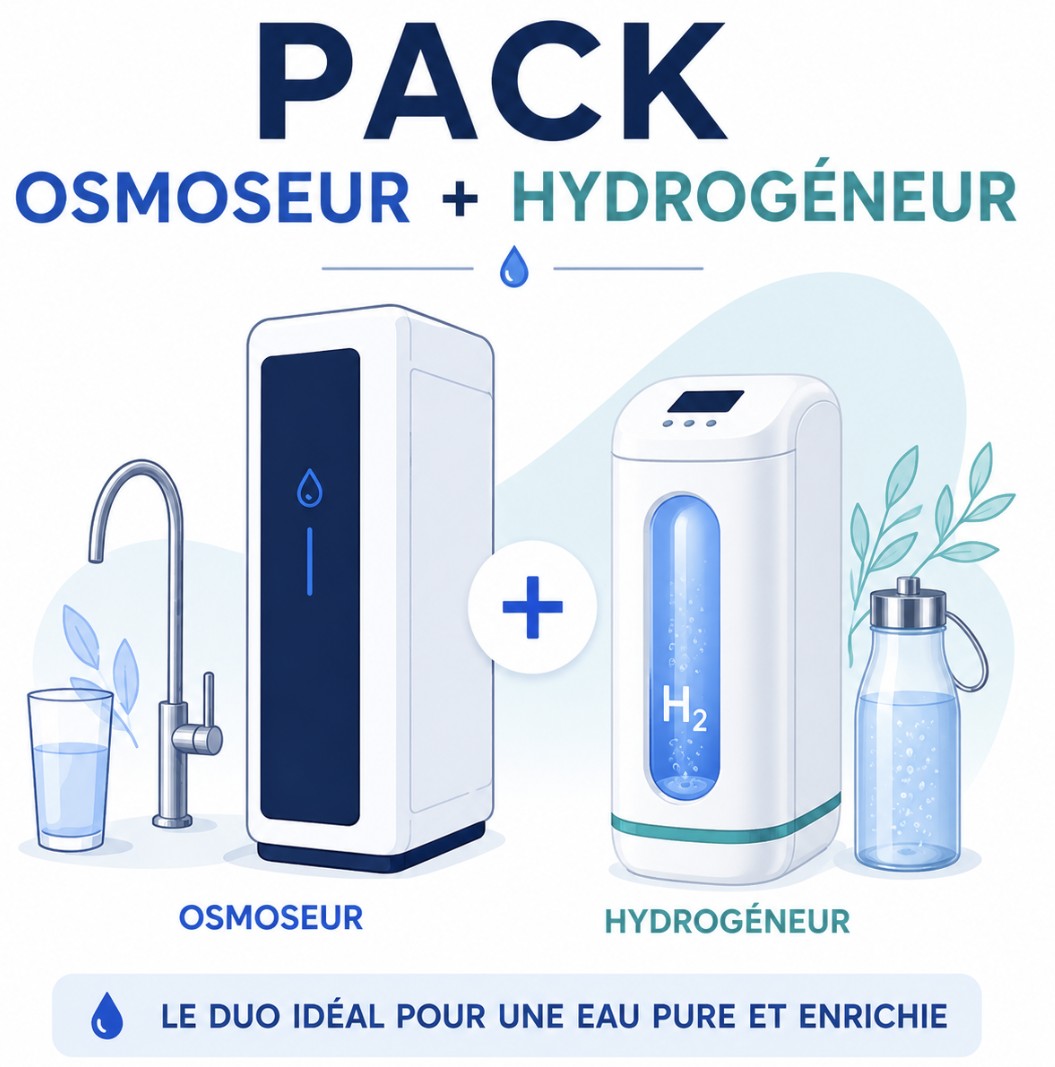
Combine reverse osmosis water and hydrogen-rich water.
Get 15% offFREE SHIPPING
On orders of €150 or more within mainland France
(home products only)
Ships within 24 hours
+33 3 66 88 17 85
Call us Monday to Friday,
9:30 am–5 pm (Paris time)!
Email: contact@josmose.fr

Nitrate (NO3-) occurs naturally in the environment with a groundwater concentration of 5 to 15 mg/l in water not contaminated by fertilization. The main source of nitrate in soil is nitrogen fertilizers, but also industrial or municipal discharges.
The maximum nitrate content in water intended for human consumption is set at 50 mg/L by decree (Decree 2001-1220 of December 20, 2001). And at 10 ml/L in Quebec ! We'll let you judge the difference… This standard takes into account the most vulnerable populations, infants and pregnant women, for whom some doctors recommend a limit of 15 mg/L.
Water with a nitrate content above 50 mg per liter is considered unfit for drinking.
However, if the concentration is between 50 mg/L and 100 mg/L, the water is considered temporarily acceptable, except for at-risk populations.
If the nitrate concentration is above 100 mg/L, you must neither drink the water nor use it for cooking.
The WHO has established an acceptable daily intake (ADI) for nitrates in food of 0.84 mg-N/kg/j (3.7 mg of NO3/kg/j).
Nitrates are very harmful to infants because they turn into nitrites, which can oxidize hemoglobin and therefore reduce blood oxygenation, causing “blue baby syndrome.” The main risk for adults is that nitrates, and therefore nitrites, can cause cancer as well as reproductive dysfunction.
Boiling water does not remove nitrates because they do not evaporate. It could even increase their concentration in the water.
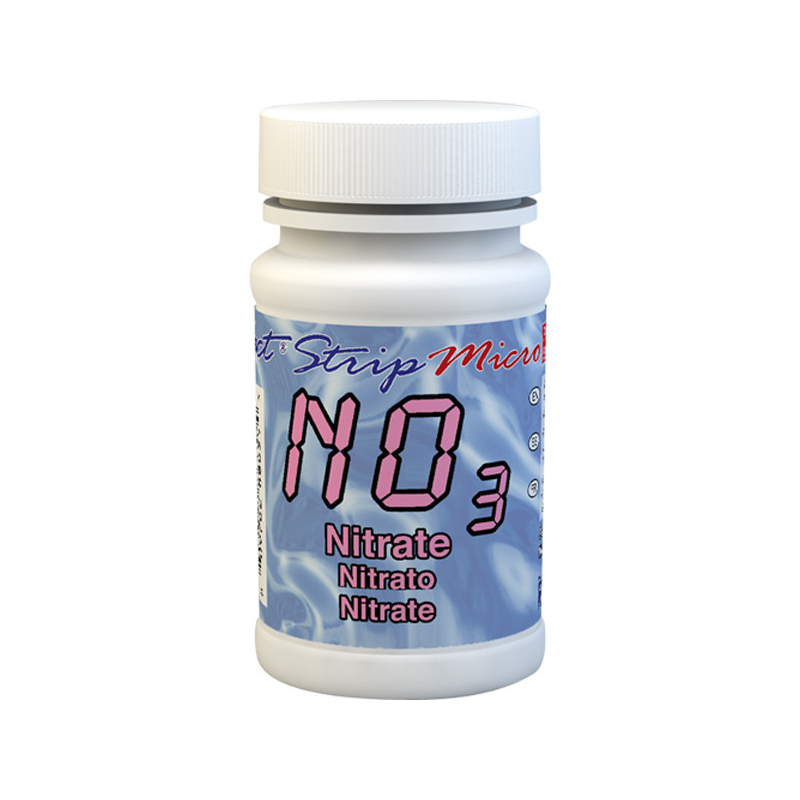
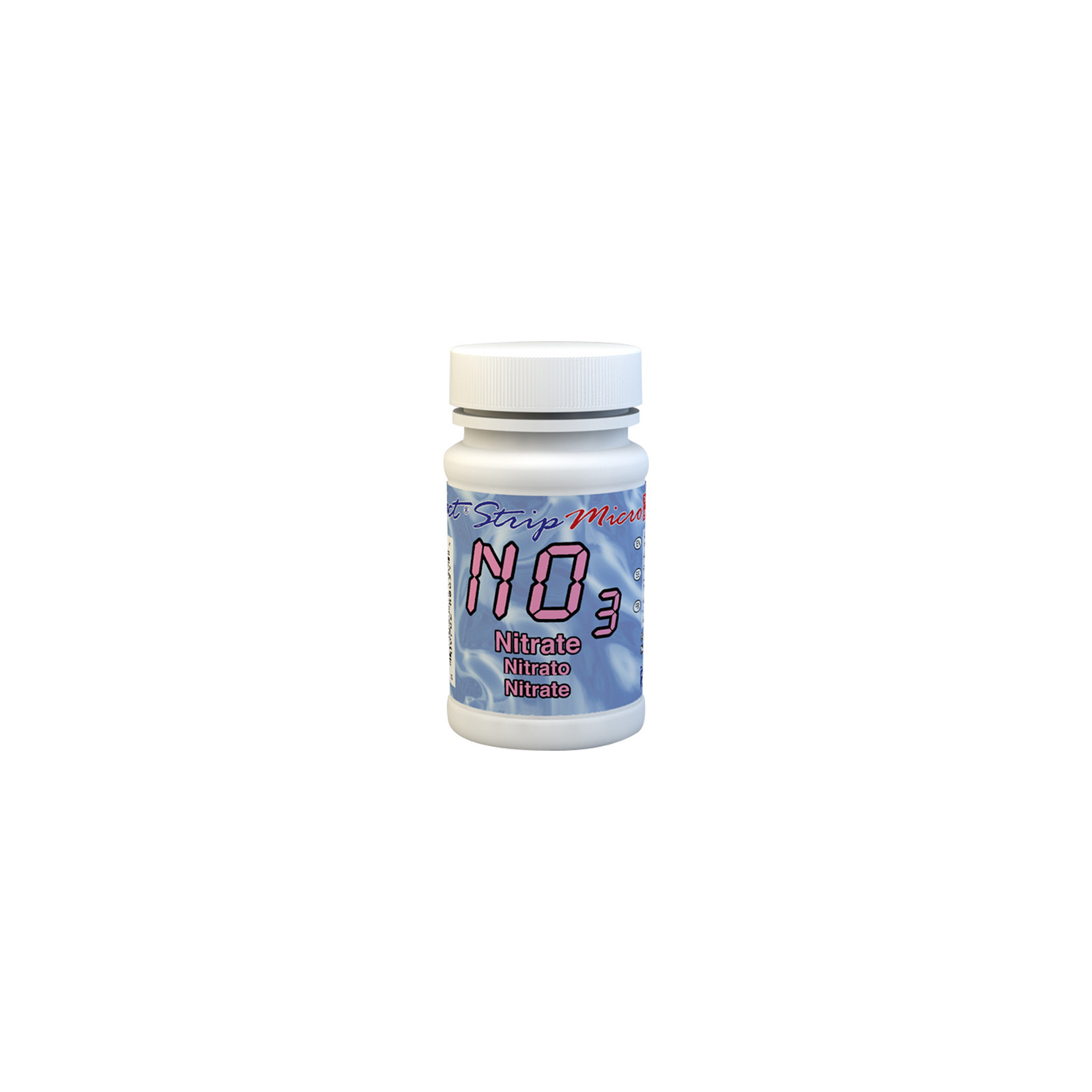
This kit for 50 tests lets you check for nitrate in your water.
Caution, this test kit only works with one of the following eXact photometers : iDip, Micro20, iDip570, Eco-Check or Well eXact EZ.
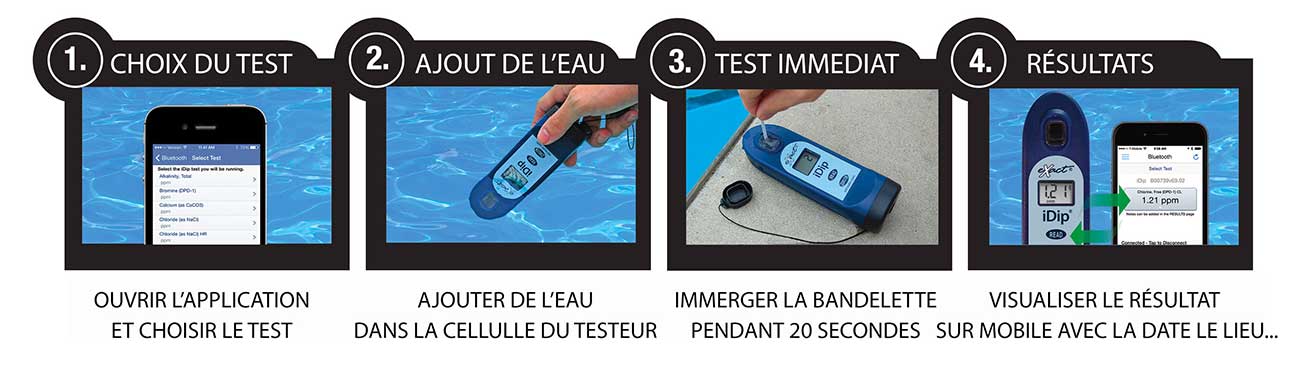
These test strips and reagents let you measure nitrate in your water using the IDIP photometer. The process is very simple :
1. Open the app on your mobile phone and turn on the photometer.
2. Add water to the tester's designated sample cell
3. Place the strip (and the reagent if needed) in the water for 20 seconds
4. View the result directly on the photometer, and the result is automatically saved to your phone.
This water testing system is fast, reliable, modern, expandable and comprehensive, making it THE most accessible system.
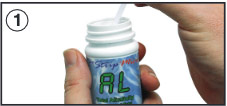 |
Remove a strip from the container before starting the test. Leave it in a dry, easily accessible place, and close the container immediately. |
 |
Turn on the photometer by pressing the ON/ZERO button. The screen will show all indicators, then the selected menu, then the most recent results. |
 |
Press the SELECT button repeatedly to choose group 4 or 5. Then press the MENU button repeatedly to select the test parameter : NO3. (You will find all this information in a table in the user manual supplied with the device) |
 |
Next, rinse the sample cell at least 3 times with the water you are going to test (to reduce the risk of cross-contamination from your previous test). Finally, fill the small cell completely with the water to be tested. |
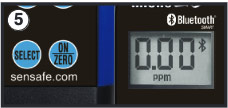 |
Press the ON/ZERO button. The cursor will move across the screen before it displays 0.00PM. This indicates that the sample is ready to be tested. |
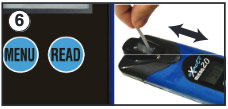 |
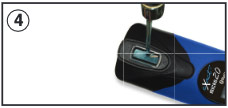
Dip the appropriate strip into the small cell, and immediately press the READ button. This will start a countdown. During the countdown, gently move the strip back and forth (about 1 back-and-forth movement per second). As soon as the "1" disappears from the screen, remove the strip. |
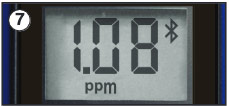 |
The cursor will move across the screen while the photometer prepares the test results. Record the value displayed for the parameter. This value is automatically saved in the MENU, and if you use the exact iDip app, the results will be saved in its "RESULTS" section. After the test, rinse the cell and clean it with the small brush. |