


Tested and inspected RO systems for pure water at a reduced price.
See offers
Complete protection with an RO system and a water softener.
Get 15% off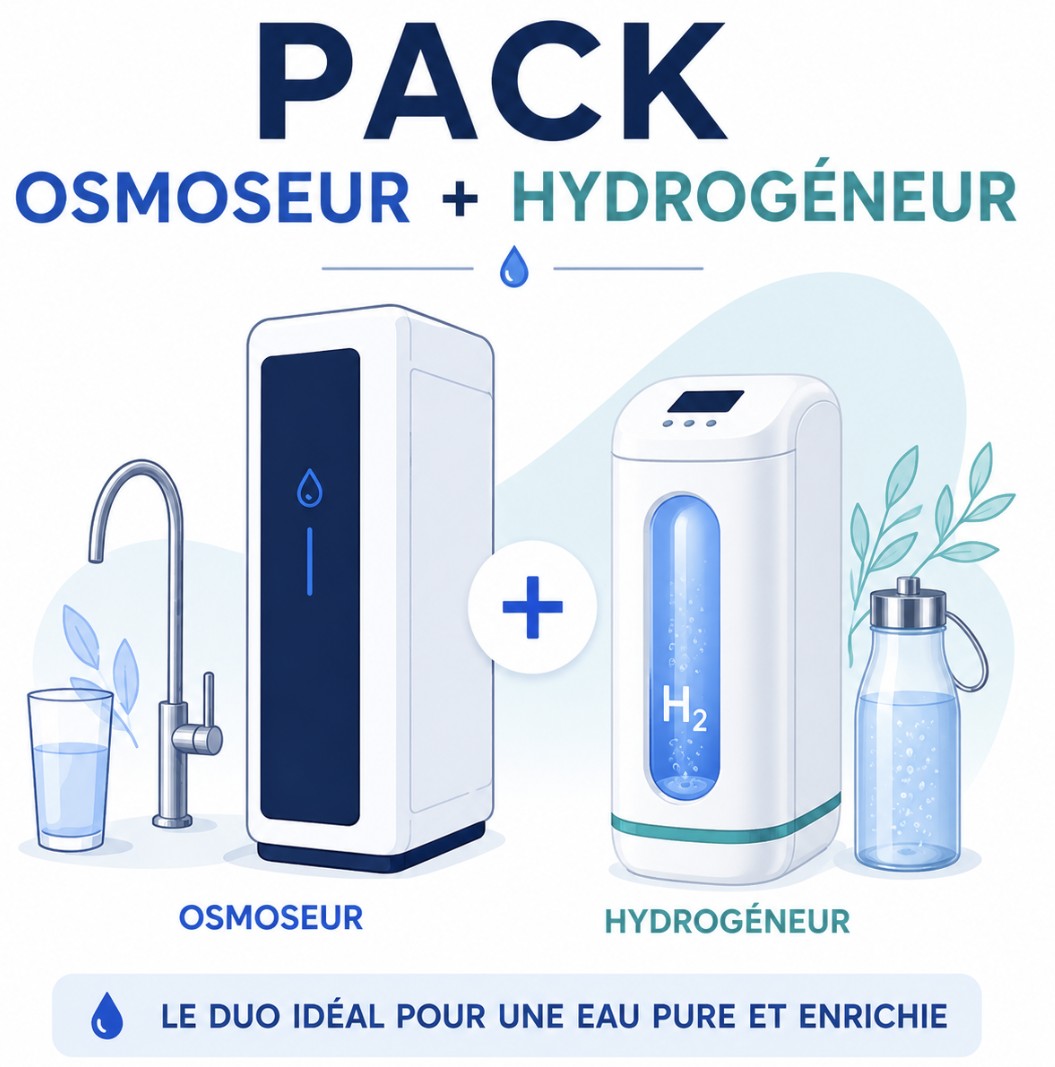
Combine reverse osmosis water and hydrogen-rich water.
Get 15% offFREE SHIPPING
On orders of €150 or more within mainland France
(home products only)
Ships within 24 hours
+33 3 66 88 17 85
Call us Monday to Friday,
9:30 am–5 pm (Paris time)!
Email: contact@josmose.fr

Arsenic occurs naturally in soil, associated with other minerals such as copper, gold, or zinc. It is therefore found in ancient rocks, known as “bedrock,” or, in France, in the volcanic rocks of the Massif Central or the Vosges. Naturally occurring arsenic salts are also present in all water, but at very low concentrations. In France, arsenic contamination of water is natural in origin, as there is a correlation between arsenic in the soil and arsenic in the water.
Most water worldwide has naturally occurring arsenic concentrations below 0.01 mg/liter. However, contamination can also come from industry, since many activities use arsenic for its useful properties :
– bleaching properties: glass, leather, and wallpaper industries
– preservative properties: wood industry
– or… its toxicity! Arsenic is indeed a common ingredient in the pharmaceutical and chemical industries…
While France and Europe are relatively unaffected, the same is not true in Argentina, Bangladesh, Chile, China, Mexico, or certain other countries, where environmental arsenic pollution has become a major problem.
The WHO recommends a guideline value of 0.01 mg/liter for arsenic in drinking water. **
Who hasn't read a detective novel or seen a thriller in which the victim was slowly poisoned by ingesting arsenic? Unfortunately, this poison, favored by novelist Agatha Christie, is not confined to literature or film. In various countries around the world, arsenic pollution is a real problem that kills or sickens exposed populations.
Drinking arsenic-contaminated water causes a form of poisoning called arsenicosis. Arsenic poisoning is insidious because it develops over very long periods, sometimes from 5 to 20 years! The following health problems have been reported :
– skin problems, including skin cancer
– kidney and bladder problems
– lung problems
– blood-related problems, particularly affecting the blood vessels in the legs and feet
– diabetes
– high blood pressure
That gives you something to think about and, above all, a reason to test your water quality if you have any doubts.
* This paragraph is based in part on the WHO report “Guidelines for Drinking-Water Quality”.
**A guideline value is a reference value provided by the WHO.
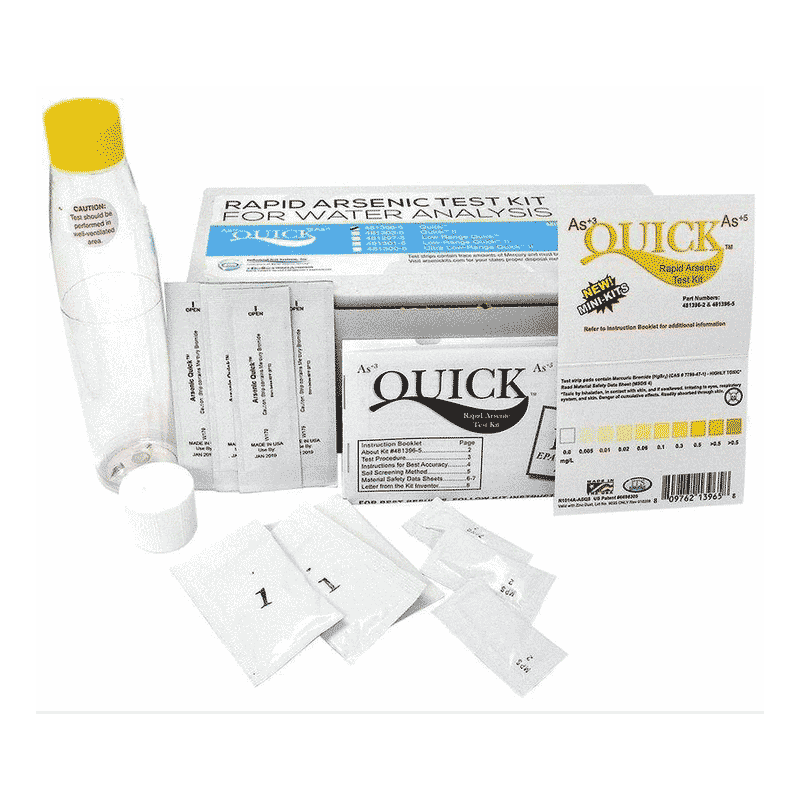
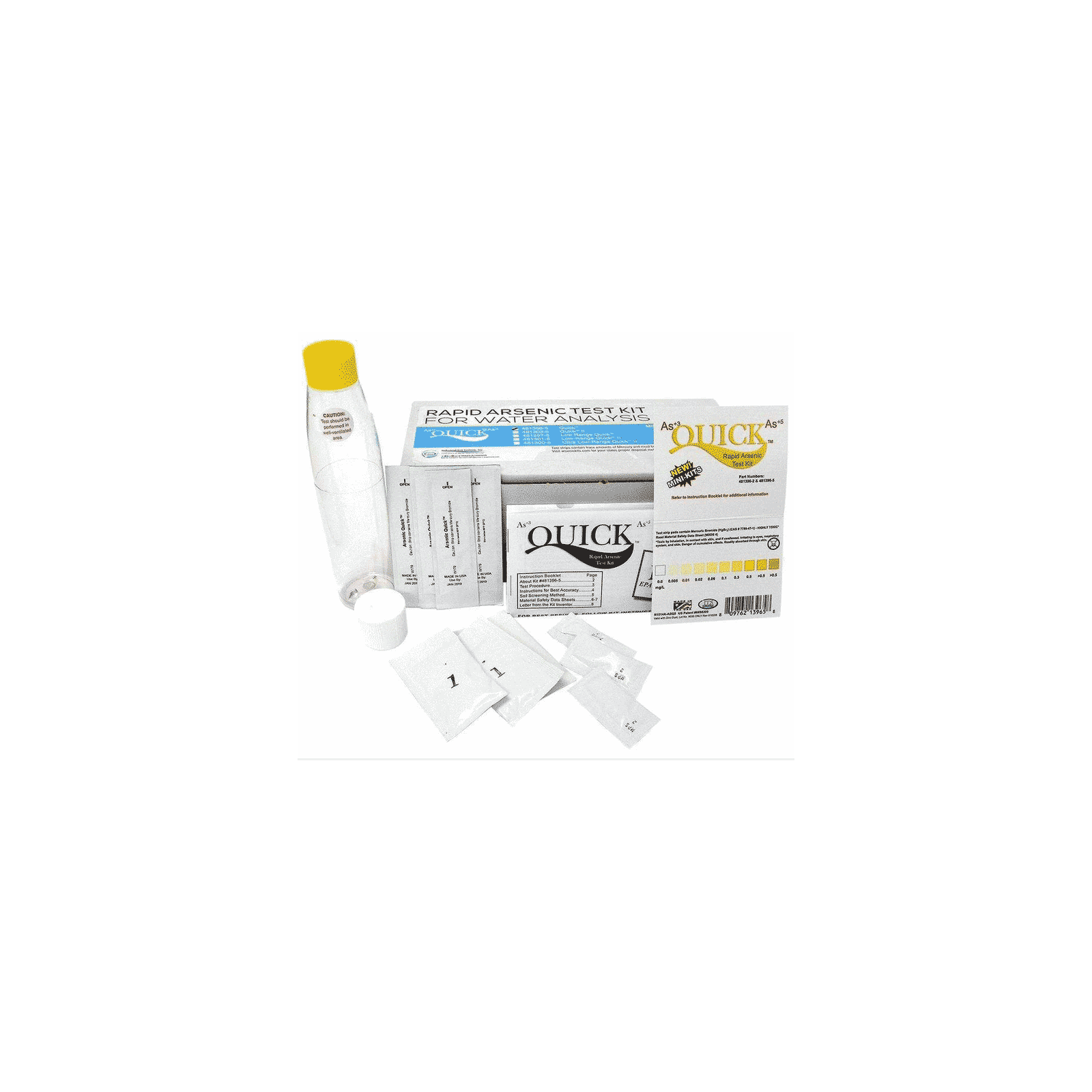
It's very simple! Just collect a sample of the water to be tested in the provided bottle, add the supplied reagents in the specified order, and wait 10 minutes.
Practical and reasonably priced, these tests require no technical training: you read the results by comparing colors.
This test tells you whether the tested water contains 0, 5, 10, 20, 30, 40, 50, 60, 80, 100, 150, 200, 250, 300, 400, 500, or >500 µg/L of arsenic.
You can download the French user manual below.
Unfortunately, our laboratory does not perform this analysis.