

Tested and inspected RO systems for pure water at a reduced price.
See offers
Complete protection with an RO system and a water softener.
Get 15% off
Combine reverse osmosis water and hydrogen-rich water.
Get 15% offFREE SHIPPING
On orders of €150 or more within mainland France
(home products only)
Ships within 24 hours
+33 3 66 88 17 85
Call us Monday to Friday,
9:30 am–5 pm (Paris time)!
Email: contact@josmose.fr

It is a chemical compound made up of nitrogen (N) and hydrogen (H), with the chemical formula NH3. It is generally present as a gas, but can also dissolve in water, forming ammonium (NH4+).
Ammonia can enter water from various sources, such as agricultural fertilizers and the decomposition of organic waste, including animal droppings and plant matter.
Previously produced by distilling slurry and manure, ammonia was later obtained, starting in the late 19th century, as a by-product of the town gas industry through the carbonization of coal. Ammonia is a component of nitrogen fertilizers and is also used to produce nitric acid, which is used in the manufacture of explosives.
Some cleaning products also contain ammonia and can contaminate water sources when used nearby.
The risks of drinking water containing ammonia depend on the concentration of this compound in the water. At high levels, ammonia can be toxic to humans and cause health problems, including respiratory and gastrointestinal irritation. In addition, ammonia can react with other substances in water to form potentially harmful by-products, such as chloramines.
In France, the maximum recommended ammonia level in drinking water is 0.5 milligrams per liter (mg/L), according to the water quality standards set by the Public Health Code. However, the maximum permissible values may vary depending on local regulations and specific recommendations from health authorities.
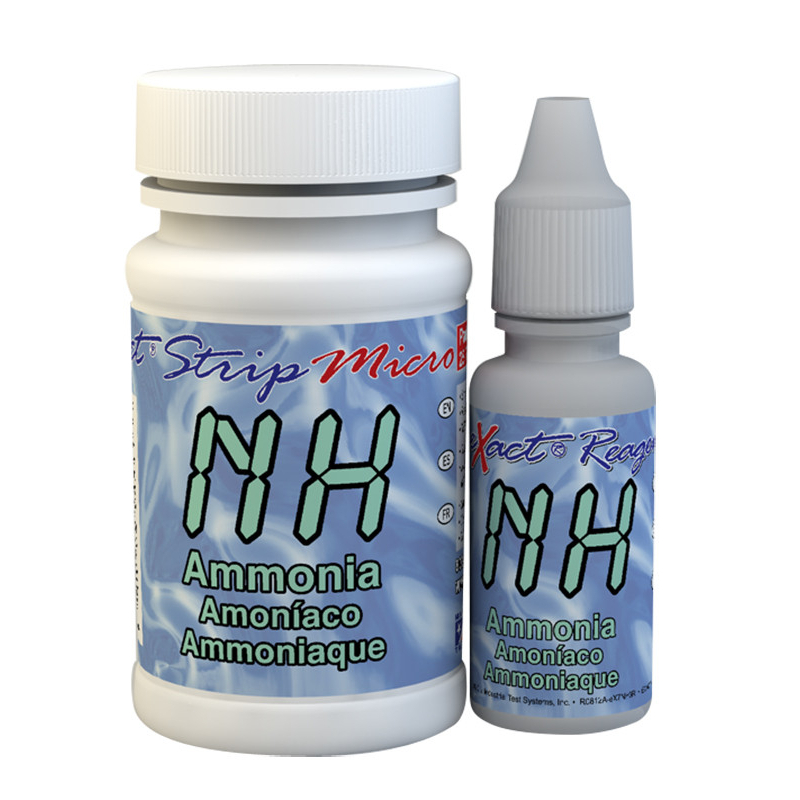
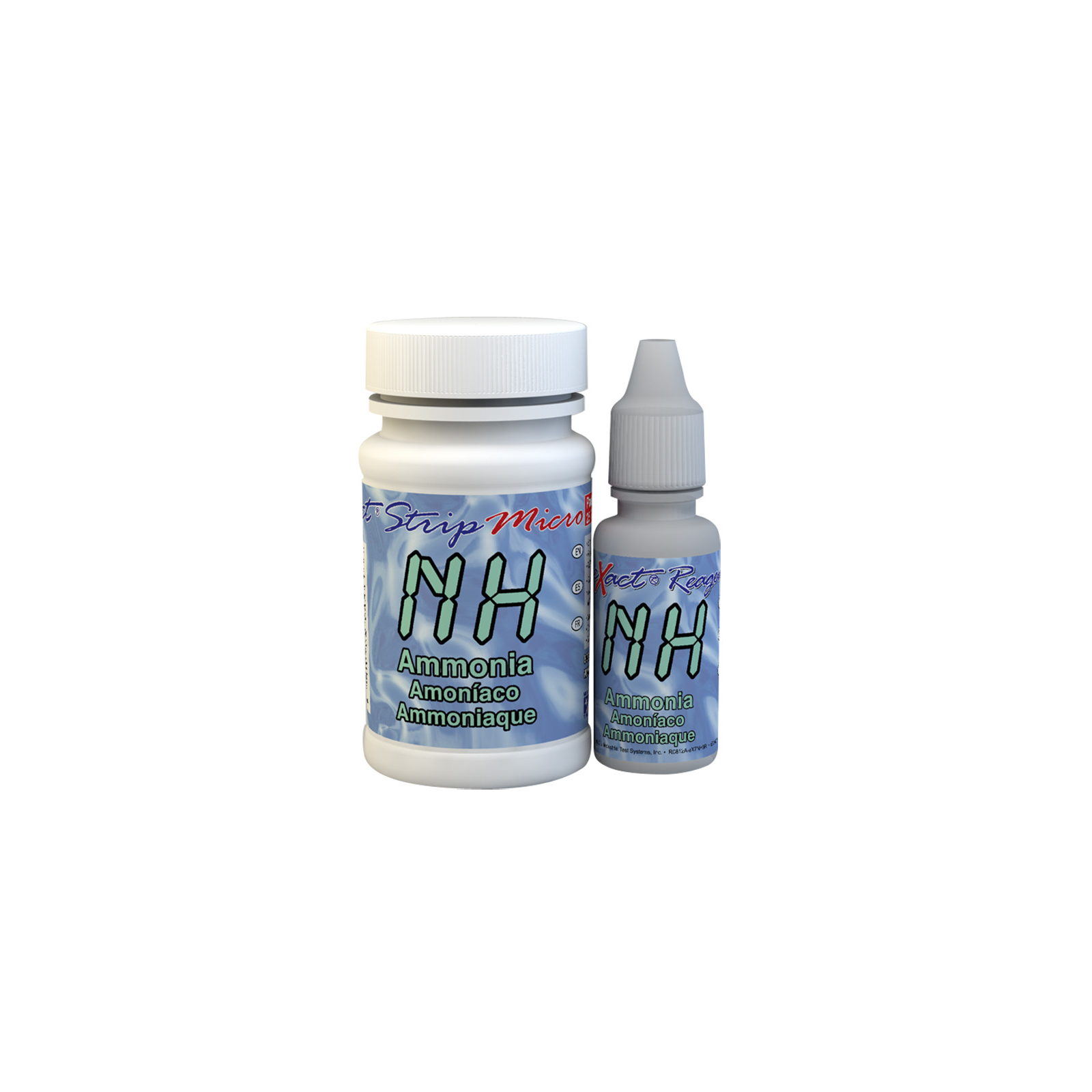
This kit, consisting of a bottle of reagent and a bottle containing 25 test strips, lets you perform 25 tests.
It is important to note that this kit is used with the eXact Micro 20 photometer.
How do you perform this test with the eXact Micro 20? Follow these instructions:
Notes: for the ammonia test, the device's calibration is based on water with a temperature between 14°C and 28°C. If the tested water's temperature is below 14°C, the ammonia value displayed by the device may be lower than the actual value.