


Water Softeners in Everyday Use: We Answer All Your Questions
Water is essential. Especially for cooking and quenching your thirst. You need it for other vital needs. There's no denying that water is an essential commodity for our lives. Everyone knows it and uses it. It simply contributes to our overall well-being.
In reality, water is a combination of two substances. Chemists say it's a combination of dihydrogen and oxygen. For many others, it's a substance made up of numerous trace elements. In reality, these are precisely ions. They have a positive effect on our bodies.
Of course, some elements are found in greater quantities than others. Here, we're referring specifically to calcium and magnesium. In small amounts, these two substances are perfectly beneficial. When water is used abundantly, they pose a danger to your body. In reality, these two substances form limescale. It builds up on your fixtures, such as bathrooms, and on your appliances.
Water softeners were designed to fight the buildup of limescale. It's also to protect your health. However, some questions arise about how they work. Others aim to inform people who know nothing about these devices.
The most common ones are: what is a water softener for? Why get a water softener? What is a water softener? How much does it cost? Which are the quality brands? These relevant questions deserve answers. For your information, we invite you to read the following clarifications.
Water distribution in general
 As we just mentioned, water is a vital substance. Indeed, it serves us in every area of daily life. That's why it's impossible to do without it. Our entire well-being depends on it. Access to water is a fundamental right. That's why public authorities strive to distribute it everywhere.
Thus, facilities are set up in every region. This makes it possible to meet the needs of as many people as possible. But sometimes, pipes are built to drain water away. If it becomes unfit for use, it needs to be disposed of.
Distributed water is made up of a multitude of other substances. It would be difficult to quantify them all. However, we know it contains calcium and magnesium ions. They are very beneficial and provide a way to keep you in good health.
However, these ions can leave limescale deposits on your plumbing fixtures. This is due to water hardness. Water is said to be hard when it contains a high level of calcium and magnesium.
What's more, water hardness varies depending on where you are. In some regions, it's considerably high. In others, it's much lower. How do we know this? Because it can be measured. Indeed, water hardness is measured in TH. So, the higher the TH, the harder the water.
In other words, the water you normally use is hard. As a result, it can prove harmful to your pipes and household appliances. It's therefore becoming urgent to remedy this situation. To do this, there is indeed a solution.
Why buy a water softener?
You've probably understood by now. The water that's normally supplied to you is hard. It contains high levels of calcium and magnesium. These two substances, when accumulated in large quantities, form another one. It's called limescale.
What can be done to get rid of this limescale? Installing a water softener remains the most suitable solution today. As its name suggests, this device softens water. This means it makes it better for your pipes as well as for your skin.
A water softener isn't a device that transforms the water supplied to you. It simply manages to purge it of calcium and magnesium. Once rid of these harmful substances, it can be used with confidence.
There's an important fact we'd like to point out! Although hard, the water supplied to you is no less drinkable. In fact, it's perfectly safe to consume. The only concern here is the risks associated with consuming limescale. These risks need to be reduced.
To do this, the water softener's function is to change calcium and magnesium into sodium. This makes the water much softer. What's more, this device allows you to have soft water throughout your home.
How does a water softener work?
Water softeners work thanks to two main categories of elements. These are the accessories, and of course, the various functions they have.
The accessories
A water softener is first and foremost an electronic device. As a result, it needs electrical power to run. To do this, it must undoubtedly be fitted with a connection cable. As you can see, this allows it to be plugged into the mains. However, you need to check that its installation has been done correctly. You know that water and electricity don't mix well.
But there's also the possibility of coming across a standalone model. This spares you electrical concerns, while being more practical. What's more, the water softener operates at a water entry point. To be effective, its installation needs to be carefully planned with a professional.
Most water softeners have an LED screen. This lets you see the progress of the softening process. It also gives you access to useful information about the treated water. This way, you'll be able to determine its quality yourself. You can see, then, that the LED screen is a very useful accessory.
How it actually works
How softeners work varies by model. However, they all operate on a fairly similar principle. It's essentially based on the exchange function.
In other words, all a water softener does is exchange the substances contained in the water. Indeed, this is the main role this device plays. It replaces the calcium and magnesium in the water with sodium. This ion exchange is carried out thanks to an essential component: resin. In fact, it's the resin that has this capability. It was designed to perform this chemical exchange.
Nevertheless, it's worth remembering that the water itself isn't transformed. It simply contains more softening elements for the body. Let's also not forget that the device has another particular function. Thanks to all these functions, the water softener achieves its ultimate goal. That of fighting the limescale that builds up all over your fixtures.
Who is a water softener for?
A water softener can be used in several ways. Generally, it's intended for individuals for home use. Professionals may install one for their own personal use. They may also offer their services to private users.
Use by individuals
This is the most widespread use. Indeed, it's very common to see water softeners installed in households. This reflects the significant need we have for them. So, you can see that the consumption and use of purified water are in high demand.
That's why individuals budget appropriately for this purpose. Generally, they choose a particular type of device: the salt-based softener. It's also worth noting that there's a wide range of equipment available. Their capacities and volumes are suited to the number of potential users.
So, it's possible to opt for a device designed for one person. A water softener for 2 people is also available. Similarly, you can choose to buy one for 4 people. Large families can get equipment for 8 people.
For greater efficiency, check the capacity or volume of the devices. Also check the hardness level they can treat. Take, for example, a softener of at least 10 liters. It can meet the needs of a family of 1 to 5 people. The condition is that it treats a hardness level between 15 and 20. For a softener for 8 people or more, the minimum volume should be 16 liters.
Use by professionals
 By professionals, we mean people specialized in the water industry. There are also plumbers. There's nothing stopping them from having softeners in their own homes. They can use them as individuals would. But they must install them as professionals.
Their use of water softeners is therefore a bit different. They take charge of them in order to install them properly. They also do this to check for faults. Because they can find a solution for them. So, many individuals get in touch with them at any time. They need professionals for repairs or maintenance of their devices. But first and foremost, they need to know more about the types of water softeners!
Types of water softeners
There's a wide range of water softeners available on the market. This is precisely why it can be quite difficult to make the right choice. To get softened water, you can opt for the following devices:
These are the most common softeners found in households. In fact, this is even the conventional model. In other words, it's the one everyone buys. The reason is that it's ergonomic and highly effective. This is the softener we discussed earlier. It exchanges calcium and magnesium ions for sodium ions. It's the resin it contains that makes this chemical feat possible. To function, this type of softener uses salt.
As you may have guessed, this softener doesn't need salt to work. Instead, it uses other chemical substances. This is how it's able to work with potassium or CO2. These substances can also purge your water of calcium and magnesium. However, there's one difficulty. Potassium is a bit complex to obtain. This is reason enough to prefer the ion-exchange softener.
Unfortunately, this can't be adopted by everyone. People who are allergic to salt carefully avoid it. They prefer the salt-free device. This one has a different way of working. It doesn't remove calcium and magnesium from the water. It's designed to block their path. This way, it prevents limescale from building up in your various pipes.
As their name suggests, these are devices simply equipped with two tanks. But they don't operate at the same time. The first one finishes distributing water first. Then the second one automatically takes over. As a result, food industry companies or entire apartment buildings use them.
This softener is a fairly unique piece of equipment. For it to work, you simply connect it to the main pipes. What's more, its nature allows it to use certain electromagnetic pulses. These help alter the structure of calcium and magnesium ions. The formation of limescale and scale buildup is thus stopped. The cleanliness and proper maintenance of the pipes are thereby guaranteed. However, the magnetic softener doesn't remove limescale; it prevents it from forming in the pipes.
As you can see, there are different types of water softeners. However, it's not uncommon to see hesitation. Potential users remain cautious. They still have difficulty making a choice. You probably have questions about the quality of the devices. Will the one you buy give you complete satisfaction? How can you be sure you're making the best choice? To find out, you should take a closer look at certain brands.
What are the best water softener brands?
The brand is a key factor in choosing your water softener. Indeed, some brands are very well known. Others, on the other hand, are less so. The brand can be an indicator of quality. If it's in high demand, that's a sign of customer satisfaction. Sometimes, lesser-known brands offer equipment. These can be very high-quality devices.
When it comes to water softeners, we present the following brands below. They can help you make choices that meet your needs.
- The Fleck brand
It's considered one of the leaders in water softener design. Its reputation is worldwide. It's well known for the excellent value for money of its devices. Their durability is also very impressive. What's more, this brand has exceptional features. Its devices are equipped with control valves. Ultimately, Fleck softeners are highly regarded on the market.
- The Autotrol and Apic brands
They don't have as much renown as the Fleck brand. The products they make are good and affordable. It's fair to say they offer devices of average quality. So they have just what's essential to let you use softened water.
- The Aquasana and Waterside brands
They offer quality products with remarkable features. However, they're still on par with the BWT brand. You can get essential satisfaction with Aquasana and Waterside. That of being able to effectively fight limescale.
- The Kinetico brand
It's generally considered a mid-range brand. But ultimately, it's still among the best. Indeed, it's capable of taking into account even your smallest needs. It can deliver all the water volumes you want. The number of users you have matters little. Kinetico is therefore a reliable brand. With it, you'll have the softening system you truly need.
- The Permo brand
It's one of the best water softener brands for good reason. It perfectly combines quality and economy. In fact, Permo manufactures models with a 3-cycle regeneration system. This technique allows for limited electrical energy consumption. This makes it the most economical brand. It's also one of the safest there is. Indeed, it's equipped with special features. We can mention, for example, resin sanitization.
Let's first look at the Waterside brand. It's certainly one you could turn to. That's because it focuses mainly on the hardness of the water to be treated. What's more, it offers a variety of softener models. They can be adapted to all types of apartments.
Culligan, for its part, has accumulated many years of experience. It has therefore built up a thorough understanding of customers. As a result, it's aware of their every need. That's why Culligan provides great satisfaction to its users. Its devices are among the most reliable and durable. However, their prices remain quite high.
The Clack brand is very versatile. That's why it offers you multi-purpose models. Its devices are capable of softening your water. But they can also filter it. Do you want quality water? Clack is the brand you need!
How much does a water softener cost?
It's not easy to determine the price of a water softener. To be precise, it's not enough to just consider its purchase price. It's also necessary to consider the cost of accessories. They're essential for installation, the cost of which must also be estimated.
The price of a water softener
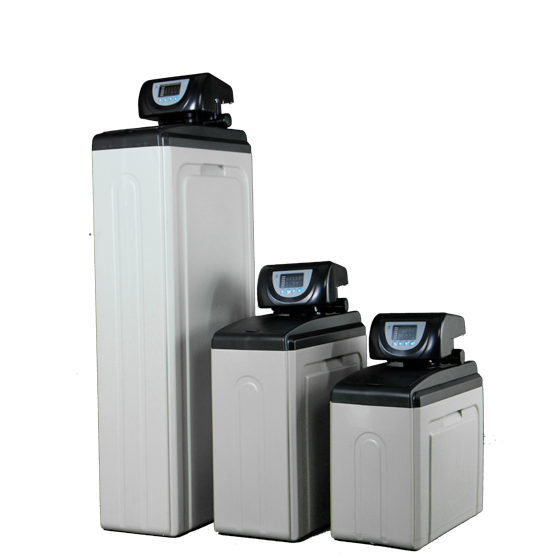 As you might guess, the price of softeners varies. Some are available at a very affordable price on the market. On the other hand, some are extremely expensive. So, for a device within everyone's reach, you can budget around €500.
Some softeners have a higher price. But it's well worth it for the quality offered. So, there are devices you can buy for €1,200.
The price of installation
The price of installation also varies. It's set depending on the range you've chosen. On average, it will cost you around €200-300.
You should know that the installation price includes that of other supplies. It also takes labor into account. In fact, it's a professional who handles the installation of your softener. As a result, you need to budget for the cost of their services. However, it is possible to avoid paying for this. In that case, you'll need to install your softener yourself.
What are the benefits of a water softener?
There are many benefits to using a water softener. The most important one relates to fighting limescale. Besides this aspect, there's also:
- Preserving your appliances and pipes.
- Making savings
Installing a water softener leads to savings. It reduces the maintenance costs of your sanitary equipment. Because you'll no longer need to spend much on household products.
- Improving the quality of your skin
Softened water isn't harsh on the skin at all. It takes care of it and protects it against many infections.
- Maintaining impeccable laundry and sparkling dishes