Recherche dans le blog
Featured Articles
Articles in the category "Featured Articles"
Guide: What's the Difference Between a Direct-Flow and a Tank-Based RO System?
Direct-flow or tank-based RO system: what's the difference and which one should you choose?
When you want to improve the quality of your tap water, a home reverse osmosis system is one of the best filtration systems available. But a dilemma quickly arises: direct-flow or tank-based RO system? Both types of units use reverse osmosis technology, but they work differently, affecting size, flow rate, hygiene and ease of use.
In this article, we explain the differences between the two systems, including their pros and cons, to help you make the right choice for your needs.
What is a home reverse osmosis system?
A water RO system is an ultra-high-performance filtration system that removes up to 99% of impurities:
-
Nitrates
-
Heavy metals
-
Chlorine
-
Pesticides
-
Pharmaceutical residues
-
Bacteria and viruses
- PFAS
It is ideal for anyone who wants to drink pure, light, taste-free water straight from the faucet.
Tank-based RO system: how does it work?
A tank-based RO system filters water gradually and stores it in a pressurized tank. The water is then available immediately on demand.
Pros:
-
Water always available, with no waiting for filtration
-
More affordable than direct-flow models
-
Proven technology that is reliable
-
Ideal for households with average consumption
Cons:
-
The water sits in the tank: risk of bacterial growth if poorly maintained
-
Bulky under the sink
-
Limited flow rate: once the tank is empty, you have to wait for it to refill
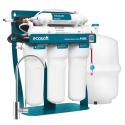
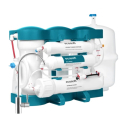
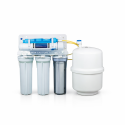
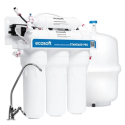
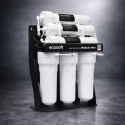
Examples of tank-based RO systems:
Direct-flow RO system: instantly purified water
A direct-flow RO system does not store water. It filters it in real time as soon as you open the faucet, using a high-performance membrane.
Pros:
-
Always fresh, hygienic water: no standing water
-
Space-saving: no tank under the sink
-
Modern technology: often more eco-friendly, with a better wastewater ratio
-
High flow rate on high-performance models
Cons:
-
Higher price upfront
-
Requires good water pressure (a booster pump may be necessary)
-
Flow rate sometimes limited on entry-level models
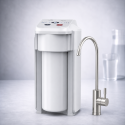
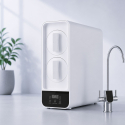
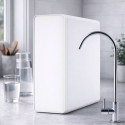
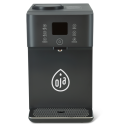
Examples of direct-flow home RO systems:
- Entry-level: Optimos home RO system
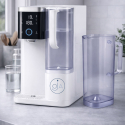
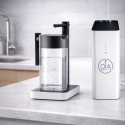
- Mid-range: Beastos home RO system
- High-end: Olympos home RO system
Comparison: tank-based or direct-flow RO system
| Criteria | Tank-based RO system | Direct-flow RO system |
|---|---|---|
| Price | Less expensive | More expensive |
| Under-sink space | Bulky | Compact |
| Water quality | Very good | Excellent (fresh water) |
| Hygiene | Risk of standing water | Zero storage |
| Flow rate | Immediate (when full) | Varies by model |
| Maintenance | Tank cleaning | Simpler maintenance |
Which RO system should you buy for your home?
Choose a tank-based RO system if:
-
You have a limited budget
-
You use a moderate amount of water
-
You have enough space under the sink
Go for a direct-flow RO system if:
-
You want pure water with no standing water
-
You are short on space under the sink
-
You prefer modern, long-lasting solutions
At Josmose.fr, we offer a wide range of RO systems to suit every need and budget. Our models are tested, certified and delivered with everything you need for easy installation.
Need personalized advice?
Don't hesitate to contact our team! We help you choose the best RO system for your home based on your consumption, local water quality and technical constraints.
Call us at 03 66 88 17 85 or email us at contact@josmose.fr for tailored support.
In summary
- Published on
- Featured Articles,
- REVERSE OSMOSIS,
- FILTERING YOUR DRINKING WATER
Related blog posts
>-

PFAS Filtration in Water: Why to Be Concerned and How to Protect Yourself With a Home RO System
PFAS, or forever chemicals, contaminate tap water....
-

The Benefits of Reverse Osmosis Water
Why drink reverse osmosis water? Why is it a good...
-

What Is a Reverse Osmosis System?
What is an RO system? What does it do? How will it...
-

Why Buy a Home Reverse Osmosis System?
What reasons would lead you to buy an RO system?
-
PFAS Filtration in Water: Why to Be Concerned and How to Protect Yourself With a Home RO System
PFAS, or forever chemicals, contaminate tap water....
-
The Benefits of Reverse Osmosis Water
Why drink reverse osmosis water? Why is it a good...
-
What Is a Reverse Osmosis System?
What is an RO system? What does it do? How will it...
-
Why Buy a Home Reverse Osmosis System?
What reasons would lead you to buy an RO system?