

Tested and inspected RO systems for pure water at a reduced price.
See offers
Complete protection with an RO system and a water softener.
Get 15% off
Combine reverse osmosis water and hydrogen-rich water.
Get 15% offFREE SHIPPING
On orders of €150 or more within mainland France
(home products only)
Ships within 24 hours
+33 3 66 88 17 85
Call us Monday to Friday,
9:30 am–5 pm (Paris time)!
Email: contact@josmose.fr

Originally used to control plants harmful to crops, pesticides have seeped into the soil and spread on the wind, and now pollute our rivers and groundwater. They also enter the food chain, reaching our tap water and appearing widely on the fruits and vegetables we eat.
A 2014 study highlighted the presence of pesticides in French waterways at 87 % of sampling locations and in 73 % of groundwater measurements.
This means that 53 % of waterways and 31 % of groundwater reportedly exceed the “ drinking water ” standard (a concentration of 0.1 μg.L-1) ! Unfortunately, France is Europe's largest consumer of pesticides…
The following pesticides are most commonly found in French water, grouped into chemical families :
The total permitted pesticide limit in drinking water is 0.5 µg/l, with a maximum threshold of 0.1 µg/l for each individual pesticide.
In 2014, the Ministry of Social Affairs and Health published a report on tap water quality with regard to pesticides.
Absorbed through the mouth, skin, or respiratory tract, pesticides insidiously enter the human body and cause harmful effects, sometimes immediately and, more seriously, often over the long term.
General symptoms include :
Pesticides also appear to contribute to certain cancers, Parkinson's and Alzheimer's diseases, infertility, and neurological problems… Pregnant women and young children are particularly vulnerable, with risks of miscarriage, birth defects, and subsequent problems with the baby's development.
The French government provides an interactive map of drinking water quality in France, including pesticide measurements.
* This paragraph is based in part on the WHO report “ Guidelines for Drinking-water Quality ”.
**A guideline value is a reference value provided by the WHO.
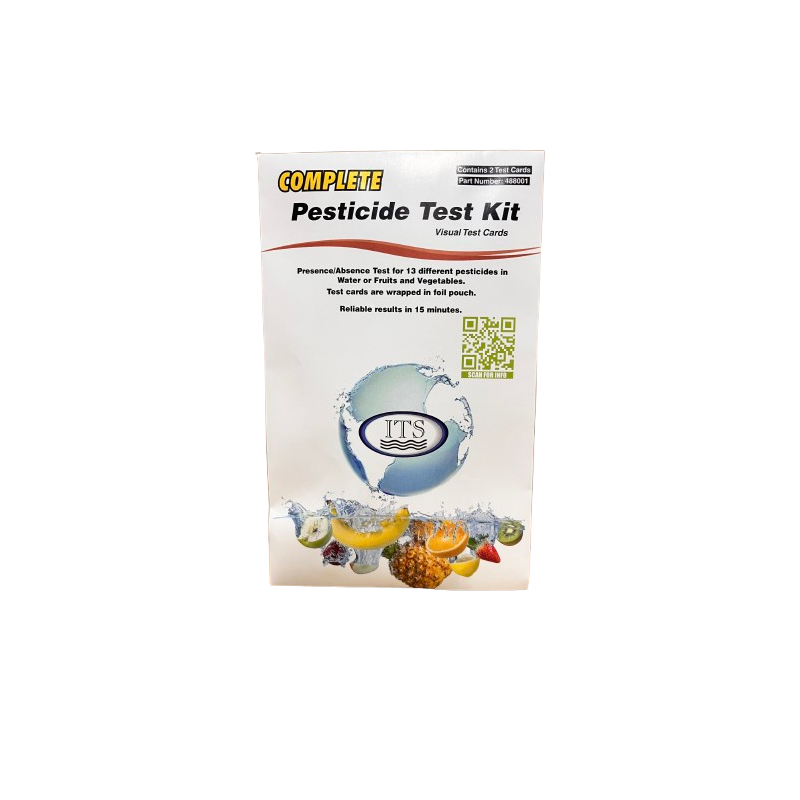
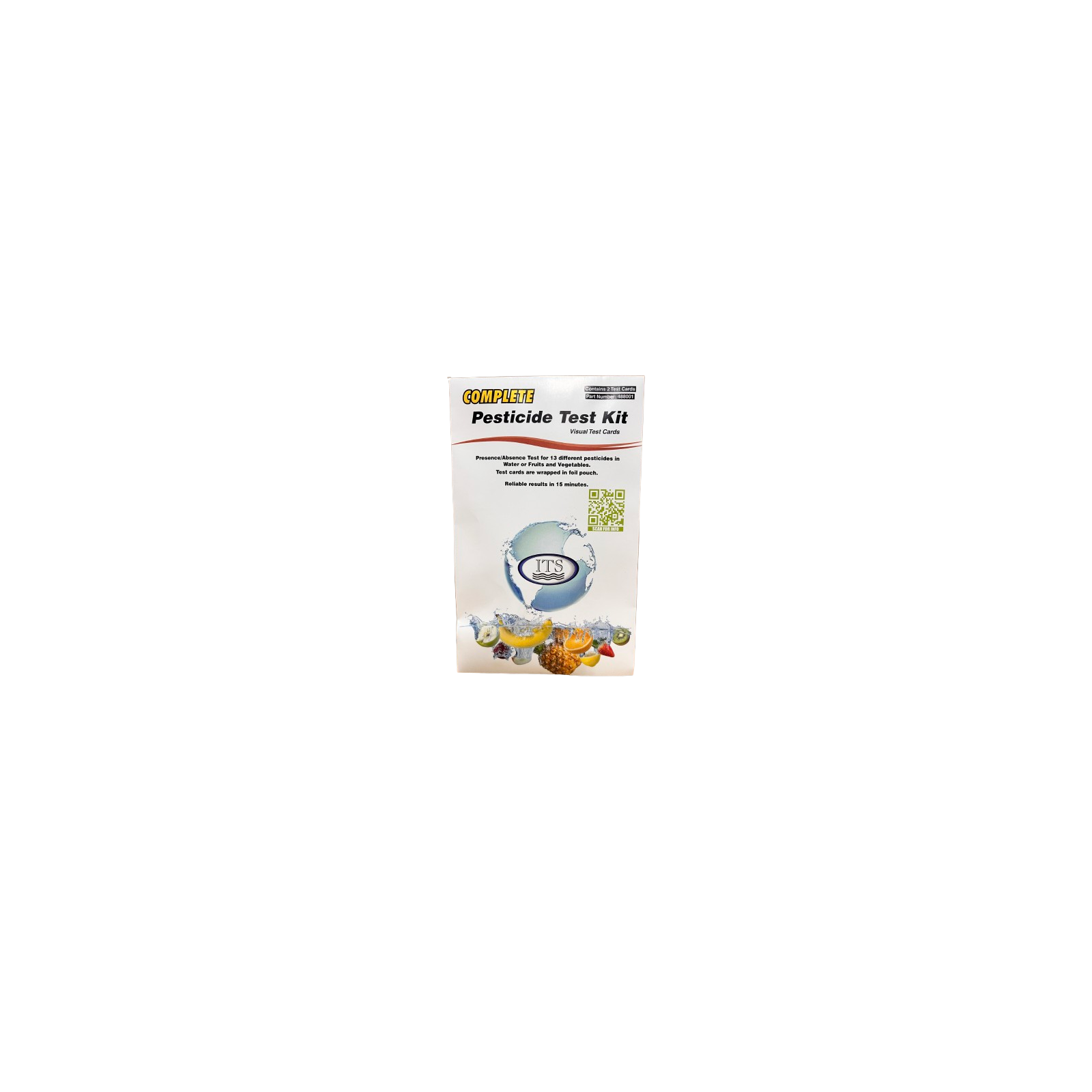
This kit contains two do-it-yourself tests that let you find out whether your water contains pesticides. More specifically, this test detects the presence of organophosphate and carbamate insecticides.
Here is the exact list of pesticides this test detects:
Compact and easy to use, this test gives you a simple positive/negative result in 15 minutes.
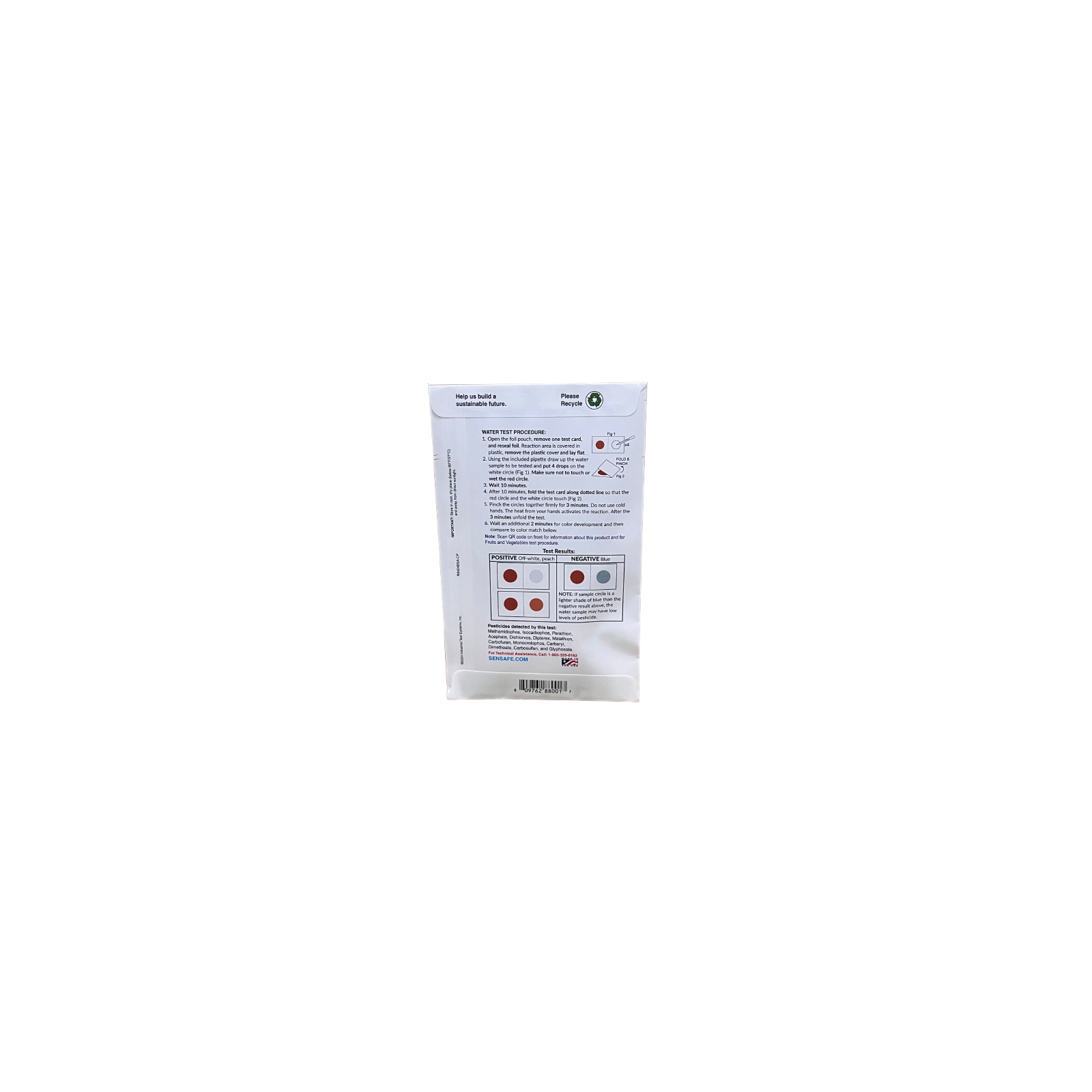
Take one of the test cards from the aluminum pouch (reseal it securely if you are not using the second card right away), and remove the plastic covering it.
Using the pipette supplied in the pouch, place 4 drops of the water you want to test on the white circle. Be careful not to touch or wet the red circle.
Wait 10 minutes. Then fold the card along the dotted lines so that the white and red circles touch. Pinch the card to keep the two circles in contact for 3 minutes. Your hands must be warm when performing this test, as their warmth allows the chemical reagent to react.
After 3 minutes, unfold the card and wait another 2 minutes for the colors to develop.
Then compare the color of the white circle with the color chart printed in the user manual. If the white circle turns off-white or peach, the result is positive and your water contains pesticides. If the color is blue, the result is negative. If the blue is lighter than the blue on the color chart, the water may contain a low level of pesticides.