


Tested and inspected RO systems for pure water at a reduced price.
See offers
Complete protection with an RO system and a water softener.
Get 15% off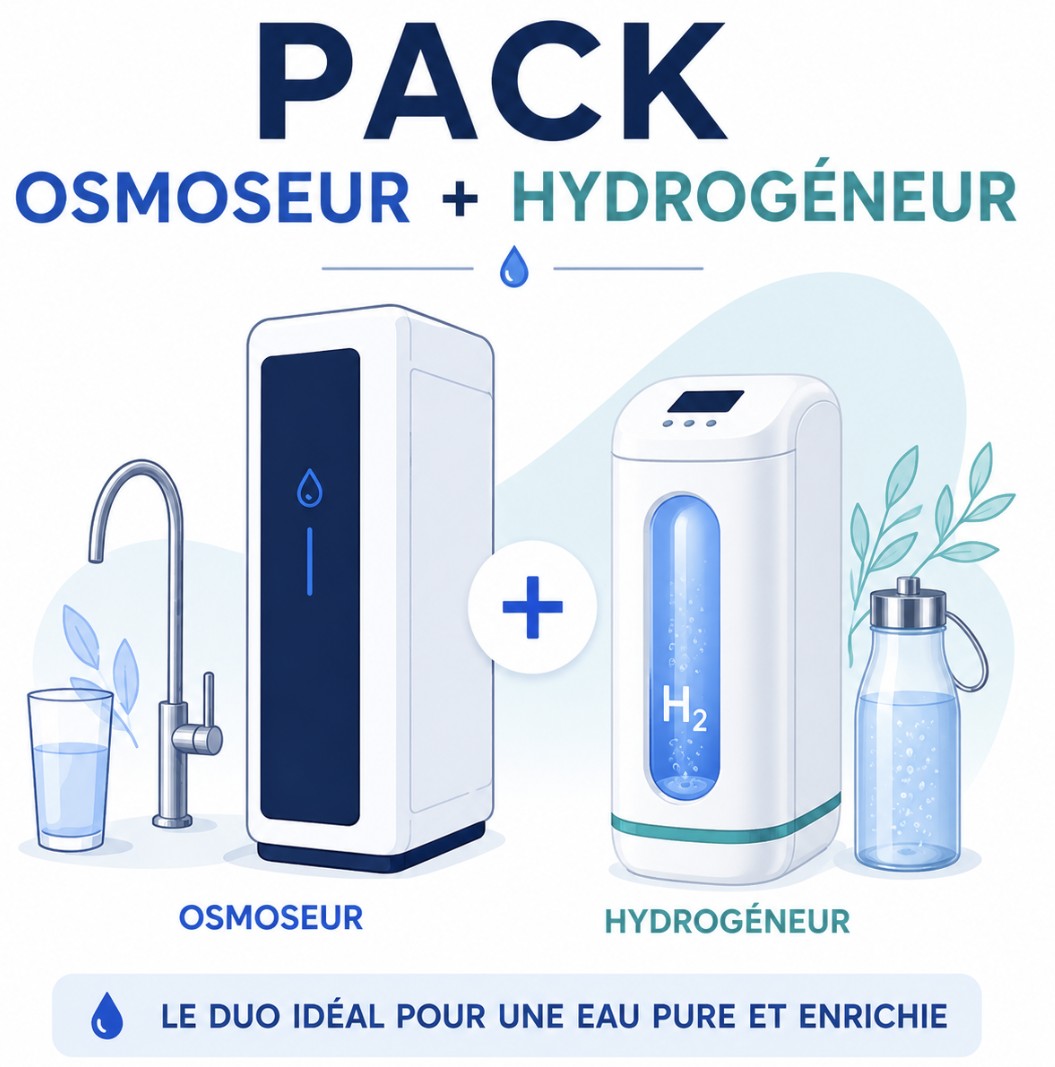
Combine reverse osmosis water and hydrogen-rich water.
Get 15% offFREE SHIPPING
On orders of €150 or more within mainland France
(home products only)
Ships within 24 hours
+33 3 66 88 17 85
Call us Monday to Friday,
9:30 am–5 pm (Paris time)!
Email: contact@josmose.fr

The presence of nitrates/nitrites in water generally comes from :
Nitrate and nitrite salts are extremely soluble in water and therefore move easily through the soil : this is how they end up in the groundwater used to supply our “drinking” water.
In addition to drinking water, vegetables and cold cuts may contain small amounts of nitrates or nitrites.
For nitrites, the ADI (Acceptable Daily Intake) recommended by the WHO is 0.02 mg-N/kg/j (0.06 mg of NO2/kg/j). However, for both nitrates and nitrites, the ADI does not apply to infants under three months of age, who are very sensitive to these substances.
For a person weighing 70 kg, the ADI is equivalent to drinking nearly 6 liters of water with a nitrate concentration of 10 mg-N/l.
Nitrites form when nitrates are converted, and they can oxidize hemoglobin. They are very harmful to infants because they can reduce blood oxygenation, a condition known as “blue baby syndrome.” In adults, nitrites can cause cancer as well as reproductive dysfunction.
Boiling water does not remove nitrites because they do not evaporate. It could even increase their concentration in the water.
* This paragraph is based in part on the WHO report “Guidelines for Drinking-water Quality”.
**A guideline value is a reference value provided by the WHO.
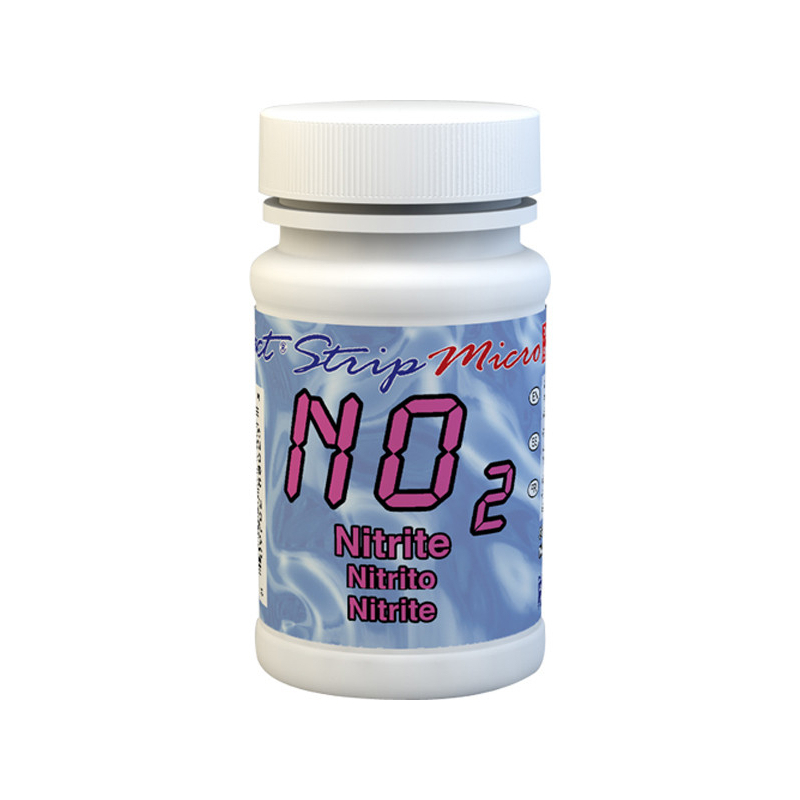
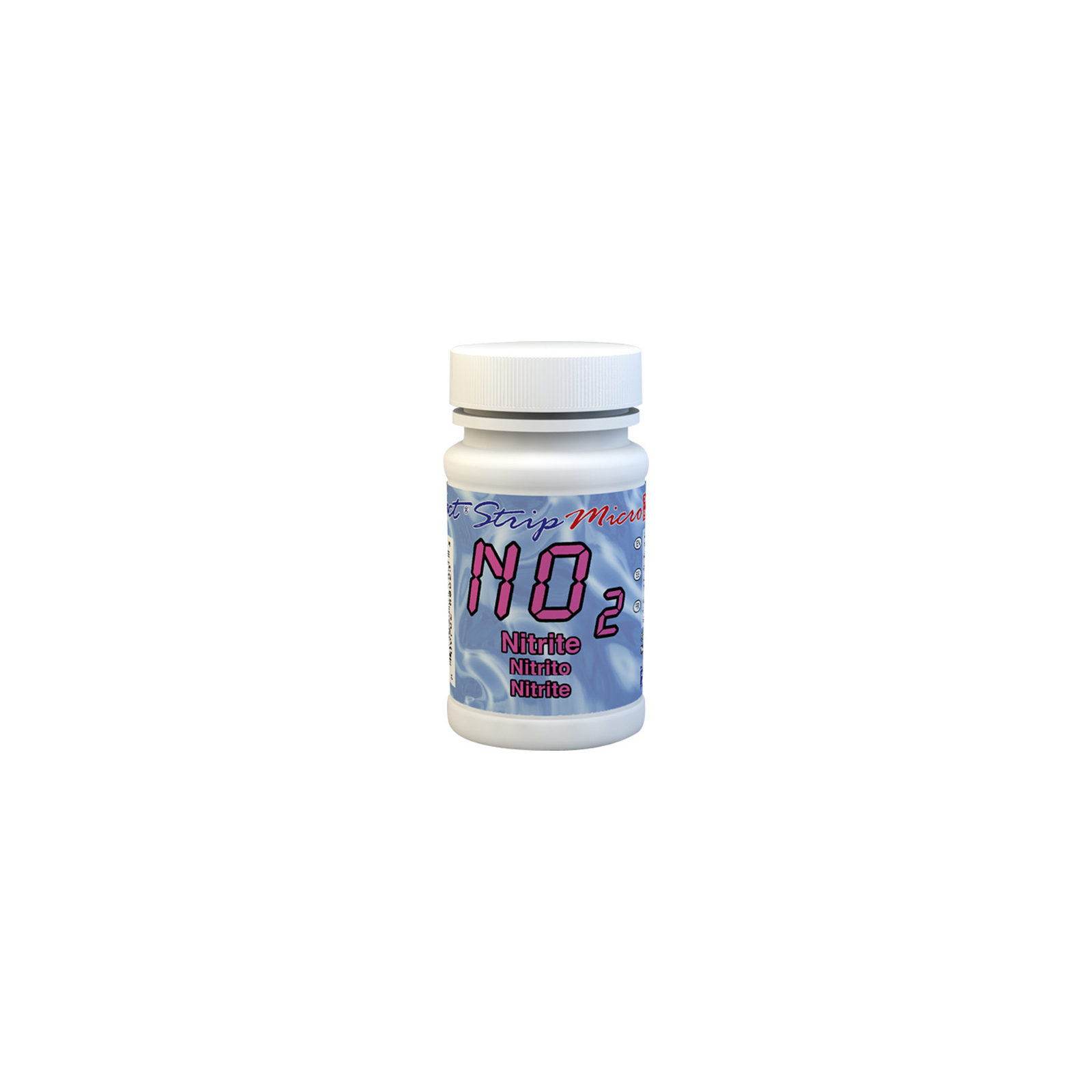
This kit for 50 tests lets you easily check for nitrites in your water using one of the following eXact photometers : iDip, Micro20 and Eco-Check.
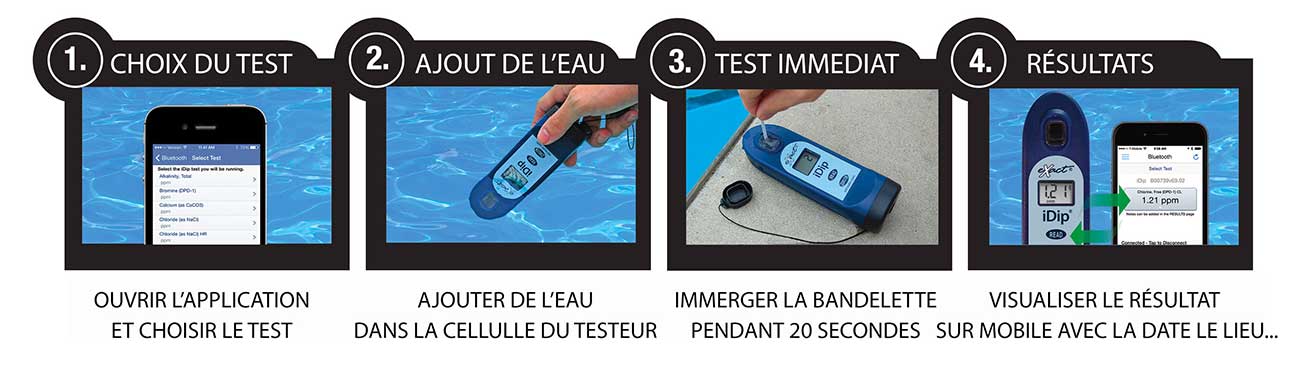
These test strips let you measure nitrite in your water using the IDIP photometer. The process is very simple :
1. Open the app on your mobile phone and turn on the photometer.
2. Add water to the tester's designated sample cell
3. Place the strip (and the reagent if needed) in the water for 20 seconds
4. View the result directly on the photometer, and the result is automatically saved to your phone.
This water testing system is fast, reliable, modern, expandable and comprehensive, making it THE most accessible system.
 |
Remove a strip from the container before starting the test. Leave it in a dry, easily accessible place, and close the container immediately. |
 |
Turn on the photometer by pressing the ON/ZERO button. The screen will show all indicators, then the selected menu, then the most recent results. |
 |
Press the SELECT button repeatedly to choose group 4 or 5. Then press the MENU button repeatedly to select the test parameter : NO2. (You will find all this information in a table in the user manual supplied with the device) |
 |
Next, rinse the sample cell at least 3 times with the water you are going to test (to reduce the risk of cross-contamination from your previous test). Finally, fill the small cell completely with the water to be tested. |
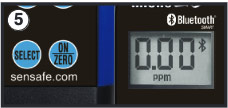 |
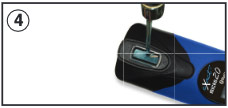
Press the ON/ZERO button. The cursor will move across the screen before it displays 0.00PM. This indicates that the sample is ready to be tested. |
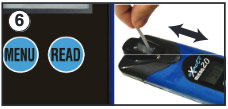 |
Dip the appropriate strip into the small cell, and immediately press the READ button. This will start a countdown. During the countdown, gently move the strip back and forth (about 1 back-and-forth movement per second). As soon as the "1" disappears from the screen, remove the strip. |
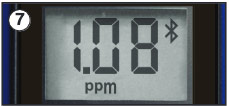 |
The cursor will move across the screen while the photometer prepares the test results. Record the value displayed for the parameter. This value is automatically saved in the MENU, and if you use the exact iDip app, the results will be saved in its "RESULTS" section. After the test, rinse the cell and clean it with the small brush. |