


Recherche dans le blog
Effects of Global Warming on Drinking Water
Global warming is THE major topic in the news right now, as France and other countries around the world experience unusual heat and increasingly disruptive weather events. This raises questions about the connection between our warming climate and the water cycle, as well as drinking water consumption and reserves worldwide.
We will see that climate change has direct and indirect effects on water and people.

Diagram of the water cycle. With global warming, water exchanges between the hydrosphere and the atmosphere are expected to intensify. © Toony, Wikimédia CC by 3.0
Global warming ? More water and… less water !
The greenhouse effect is making our part of the world hotter (in our region, the Nord, there is no denying it !). But did you know that despite the increase in measured temperatures, precipitation is also increasing - at least in areas that are already wet - while it is decreasing in areas that were previously dry. These measurements are concerning because they suggest an increase in ever more extreme weather events : floods or droughts, depending on the region of the world : the water cycle is disrupted and risks deteriorating even further.
Scientists and climate specialists agree that the inertia of Earth's climate system (mainly due to the oceans) only allows for measures over the very long term, and that making accurate predictions is difficult, if not impossible.
Dry areas are getting drier
The first effect of climate change on the water cycle occurs in desert regions. These areas were already short of water, but now they have even less, affecting neighboring areas and, in turn, wildlife and plant life, and of course people. The United Nations Development Programme (PNUE) projects a 5 % to 15 % decrease in precipitation in the world's major desert regions.
Less precipitation therefore means less water in deep reserves. And in many countries, this means turning to unsafe surface water for drinking, which leads to the spread of disease. Diseases also appear in areas where rainfall is increasing, since floods spread germs and bacteria as well… We are seeing a resurgence, and above all a wider geographic spread, of diseases thought to have been almost eradicated by vaccines, or at least greatly reduced, such as malaria and dengue. In short, whether it rains or not, the climate is out of balance and directly affects water.
More precipitation in wet areas
The frequency and intensity of precipitation are increasing in the Northern Hemisphere, causing floods, storms, landslides, erosion, and water runoff : phenomena that are dangerous to people, but also affect surface water and deep groundwater, which become polluted by these external events.
In addition, melting ice and rising sea levels contribute to freshwater becoming contaminated by seawater, making it salty. Glaciers that used to melt in summer now melt all year long, and more water needs to be stored for dry periods.
Another related phenomenon is that seas, lakes, and rivers are getting warmer, disrupting ecosystems and causing problems for wildlife and plant life, or even the disappearance of both in some places. Warmer water also means lower-quality water, since it becomes a favorable breeding ground for bacteria and germs, and water that evaporates more means… less water !
Water resources are being depleted
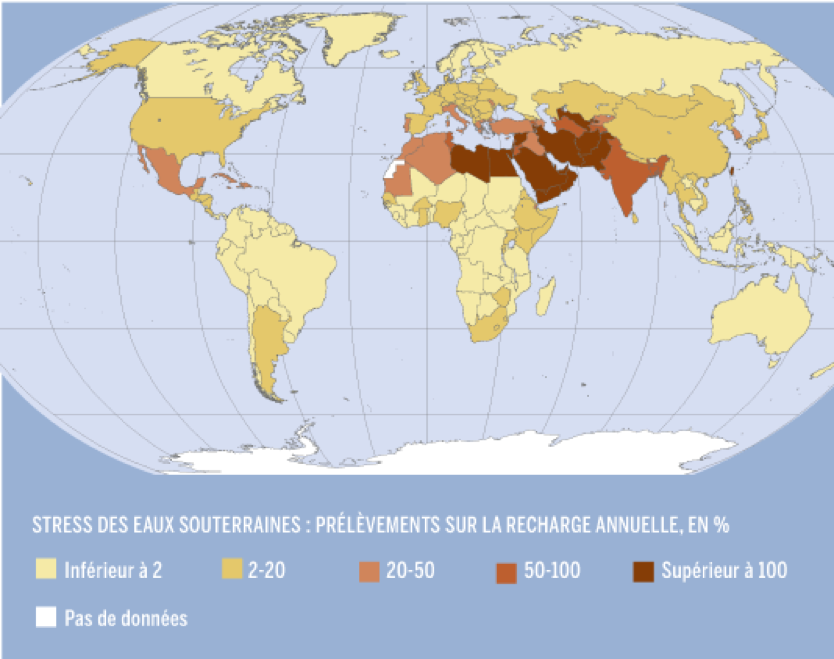
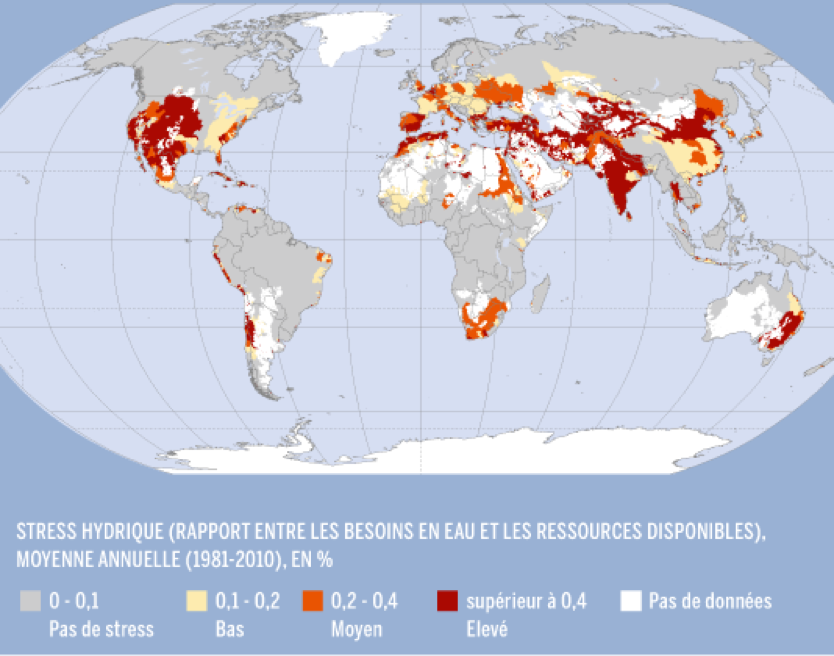
Groundwater levels, our deep water resources, are dropping drastically because these reserves are being overused in developed countries. They are also often contaminated in many countries that pay little attention to environmental pollution, making them unfit for drinking or irrigation.
In many regions of the world, “ peak water ” has been exceeded, meaning that the region's water reserves are being overexploited. This leads to steadily increasing water stress in many parts of the world, mainly developing countries, but also China, Mexico, the southern Mediterranean, and the American West.
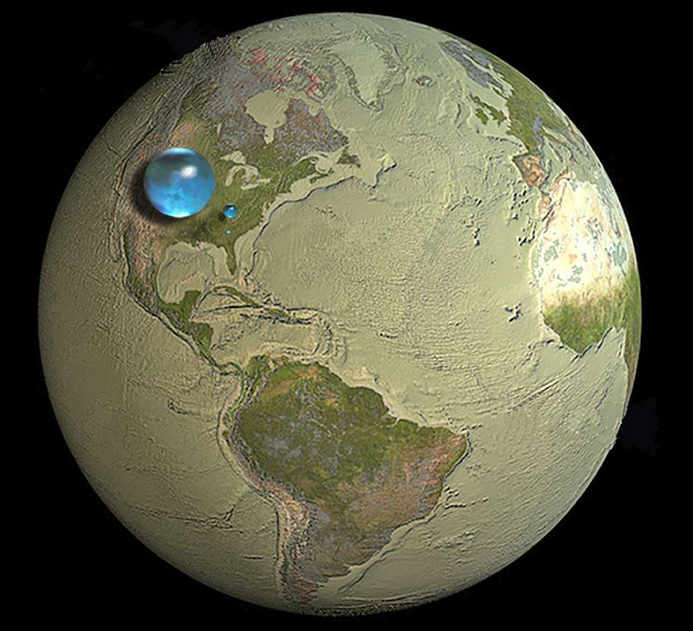
- The largest sphere : 1,400 km in diameter - contains all of Earth's water (saltwater and freshwater)
- The small sphere : 272.8 km in diameter - represents the total volume of freshwater
- The smallest sphere : 56.2 km in diameter - contains all of Earth's freshwater available for consumption (lakes, rivers, and some groundwater)
© Howard Perlman, USGS, Jack Cook, Woods Hole Oceanographic Institution, Adam Nieman
You do not need to be an experienced scientist to understand that water is a major issue for the coming years and decades, and that tackling climate change on a large scale is more than urgent.
Water is essential, and the disruption of its cycle caused by climate change affects the entire world in every respect : health, the economy, politics, industry…
At our own level, let's start by being mindful and conserving water. A drop in the ocean, but essential actions to preserve our planet's water.
- Published on
- All About Water
Related blog posts
>-

Water Overconsumption and Waste
A major problem today is water consumption ,...
-

Are France’s Rivers Polluted?
More than 90 % of France’s rivers are reportedly...
-

Stop Plastic Pollution: The Mediterranean Sea Is on the Verge of Suffocation
If you have listened to or read your favorite news...
-

Wastewater and Its Treatment
Wastewater is water from domestic use, as well as...
-

The Water Situation in France
The water situation in France is barely any brighter...
-
Water Overconsumption and Waste
A major problem today is water consumption ,...
-
Are France’s Rivers Polluted?
More than 90 % of France’s rivers are reportedly...
-
Stop Plastic Pollution: The Mediterranean Sea Is on the Verge of Suffocation
If you have listened to or read your favorite news...
-
Wastewater and Its Treatment
Wastewater is water from domestic use, as well as...
-
The Water Situation in France
The water situation in France is barely any brighter...