Recherche dans le blog
News
We occasionally have news to share in this category.
Wastewater and Its Treatment
The volume of wastewater keeps growing, and treating this water is a true ecological necessity, both for the environment and for human health, to prevent harmful impacts on biodiversity and the risk of disease.
As early as antiquity, the Egyptians filtered water using sand, and many ancient civilizations had adopted wastewater disposal through sewers, which were often open-air at the time. In France, however, wastewater collection and treatment only became systematic in the early 20th century, with suitable infrastructure.
In France, almost 100 % of households are connected to the sewer system and therefore participate in wastewater treatment. However, the opposite is true in developing or emerging countries, where around 90 % of wastewater is discharged into the natural environment without any treatment, causing serious pollution in both the short and long term.

Domestic water pollution
Domestic wastewater includes, on the one hand, what is known as “graywater,” which we use at home for everyday activities: washing dishes, doing laundry, washing the car, using the bathroom… and which contains fats, detergents, solvents, and organic debris.
On the other hand, there is “blackwater,” which comes from toilets and contains germs and nitrogenous organic matter.
One person's daily pollution output (for 150 to 200 liters of water) is estimated at:
- 70 to 90 grams of suspended solids
- 60 to 70 grams of organic matter
- 15 to 17 grams of nitrogenous matter
- 4 grams of phosphorus
- several billion germs per 100 ml…
Nothing makes the need for water treatment clearer!
Industrial water pollution
Industrial water pollution naturally varies by industry. Toxic products, solvents, nitrogen, phosphorus, heavy metals, hydrocarbons… Take your pick! In France, industrial operators are required to remove pollutants from the water they use before it enters the regular wastewater collection networks and mixes with domestic wastewater, under the “polluter pays” principle. Well, that's the theory…
While large companies have indeed stepped up their efforts to remove pollutants from water, small and medium-sized enterprises are now the most polluting businesses, producing more than 90 % of pollution from toxic waste. Paints, solvents, and hydrocarbons often end up in the water without any treatment.
Stormwater pollution
“Singing in the rain” didn't specify how polluted the rain was… Rainwater happily picks up pollutants in the air, as well as those deposited on roofs, roads, sidewalks, fields… Rainwater is normally kept separate from domestic wastewater as it is routed to treatment facilities, but the two may be mixed in some urban areas. Keeping them separate prevents untreated domestic wastewater from being discharged into nature when overflows occur.
Agricultural water pollution
Animal waste, along with all the fertilizers, herbicides, and insecticides used in agriculture, are pollutants that seep into the soil and reach groundwater.
Accidental water pollution
Alongside the three main types of water pollution most often discussed, let's not forget accidental water pollution: toxic products dumped illegally or carelessly, industrial disasters, and accidents also contribute to water pollution by directly harming the environment.
Don't confuse:
- The treatment of water resources: turning natural water drawn from the environment into drinking water
- The treatment of wastewater : treating drinking water after domestic or industrial use.

The different types of water treatment
When wastewater reaches the nearest wastewater treatment plant, it undergoes several treatment stages:
- Coarse and fine screening: a bar screen followed by fine screens filters out the largest pieces of waste.
- Grit removal: sand in the water settles to the bottom of the tanks.
- Grease removal: air bubbles are injected into the tanks to remove fats in the water, which rise to the surface.
- Sedimentation, filtration: suspended solids settle to the bottom of the tank and then form “primary sludge.”
- Biological or chemical treatment: a meal for bacteria, which feast on phosphorus, nitrogen, and other residues! This technique is also called the activated sludge process. Activated carbon also removes polluting substances still present in the water. There are many chemical treatment processes, each with its own advantages and disadvantages.
- Discharge: the clear water is released into nature
Today, highly innovative processes are also available to produce treated water that can be reused. These include ultraviolet treatment, membrane filtration, and reverse osmosis (RO), used by both individuals and certain industries.

When we talk about water shortages, you should know that it is not the overall quantity of water that is lacking, since it remains stable, but the quantity of clean water. We use enormous amounts of water, both for our own consumption and for industry, and this water, released as vapor or liquid, is generally polluted. Wastewater treatment helps maintain a roughly stable balance between our water consumption and the amount of clean water available.
It also guarantees the sanitary safety of the water we consume.
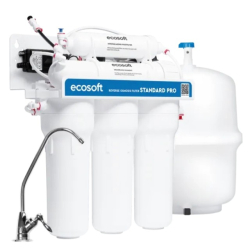
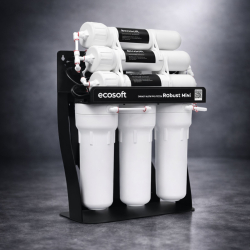
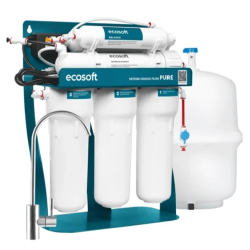
However, we are convinced that tap water is still not sufficiently filtered and pure for consumption without long-term risk. That's why, at Josmose, we offer a full range of products that help you guarantee water quality in your home or business: home reverse osmosis system (RO system) or commercial RO system, water softener, ultrafiltration system, water test kits... We are also available to answer your questions and advise you as you work toward purer, healthier water.
For more technical and comprehensive details on the subject, you can read this article on urban wastewater treatment.
- Published on
- News,
- FILTRATION TECHNIQUES,
- All About Water,
- All About Water for Everyone
Related products