Recherche dans le blog
News
We occasionally have news to share in this category.
Stop Plastic Pollution: The Mediterranean Sea Is on the Verge of Suffocation
If you have listened to or read your favorite news outlets over the past few days, you could not have missed the story of the moment, repeated endlessly after the publication of the WWF report on pollution in the Mediterranean Sea : the Mediterranean, the cradle of many civilizations, is thoroughly polluted, and at this rate, the prospects for the survival of its wildlife and plant life look bleak, even though this sea helps make the countries along its shores famous.
The Mediterranean, a sea of plastic : deadly pollution
Of course, in situations like these, as with any pollution or damage to a shared resource, everyone tries to shift the blame to their neighbors as loudly as possible : “ It's not my fault ! ”
The WWF report mainly discusses plastic pollution in the Mediterranean Sea :
600,000 tons of plastic discharged into the sea across all countries, which, according to Ludovic Frère-Escoffier, head of WWF's ocean life program, amounts to : “ the equivalent of 34,000 plastic bottles thrown into the Mediterranean every minute ”.
Cruise ships sailing the deep blue sea are blamed, with growing numbers discharging dirty water and hydrocarbons, sulfur oxide, and other pollutants.
Polluting industries are condemned for not recycling enough and using harmful products.
Politicians are criticized for doing nothing or very little, churning out reports and more reports to study the reports, and ultimately passing no serious laws, giving economic and financial interests free rein.
But above all, we should be pointing the finger at ourselves, every one of us. You, me, all of us who fail to pay attention in our daily lives and do not sort our waste, or even dump it right onto public streets, into a gutter or river, along a roadside, or onto the beach…
And of course, there is the management of our waste at the local, regional, and national levels. France performs very poorly in this respect and, according to the report, is the largest producer of plastic waste in the Mediterranean region, much of which ends up in the sea.

Plastic is not fantastic
Some chilling figures :
- 5.7 million tons of plastic produced in France in 2016 (1.4 % of global plastic production)
- This generates 4.5 million tons of waste, or 66 kilos of waste per person, just for plastic waste ! And in France alone ! Imagine if we add the plastic waste from the other countries bordering the Mediterranean Sea…
- Of the 4.5 million tons of waste, 80,000 tons end up in the environment and approximately 11,000 tons in the Mediterranean Sea…
- Recycling : recycling efforts are significant, but 22 % of the plastic consumed is recycled
- This leaves 78 % of plastic unrecycled, which must be buried or burned, or quietly sent to a less particular neighbor… how about Malaysia ?
- It is estimated that at least 1,800 billion pieces of plastic waste pollute our oceans, a quantity so enormous that people refer to a “ 7th continent ” : a huge vortex of plastic covering an area of 1.6 million km2, drifting with the currents between California and Hawaii.
Why is plastic pollution in the seas so alarming ?
At this rate, it is predicted that the oceans will contain more plastic than fish by 2050…
Marine wildlife dies because of plastic : swallowing bags, caps, or bottles that suffocate fish, the slow death of animals trapped in nets…
But you should also know that fish that withstand this onslaught of plastic and survive ingest large amounts of microparticles suspended in the water. These plastic microparticles pass directly into our stomachs and bodies when we eat these polluted fish.

How can we curb plastic pollution ?
We need to do more, pass laws, and make major decisions with a long-term vision… We need to… But despite the alarm raised by scientists around the world who see the planet's condition deteriorating at breakneck speed, few concrete decisions are being made.
Significant progress would already be visible with :
- Stricter standards for the hydrocarbons used (currently poor-quality hydrocarbons that are cheaper and much more polluting)
- Tougher legislation for ships : illegal discharges at sea, the use of old, highly polluting ships, and a ban on ships continuing to run their engines while docked
- Progress in waste recycling…

Is plastic pollution also an issue elsewhere in the world ?
While France is singled out as the Mediterranean's biggest polluter in terms of plastic waste production, the other countries are no saints in this area either.
Egypt is a major polluter because its waste is not collected – or very little of it is. Italy and Turkey also perform very poorly.
Until national, European, and even global laws address the problem as a priority, it will be difficult to ensure that every country complies with the standards. Fortunately, scientists are alerting the public, sounding a loud alarm and raising awareness. All we can do now is hope that changes happen quickly enough to curb this massive pollution (and the other ongoing forms of pollution), before it is too late for the planet.
Every citizen urgently needs to change their behavior !
At our own level, turning simple actions into good habits is already a first step toward change and improvement :
- Stop using harmful products : especially products containing microparticles : toothpaste, shampoos, and shower gels make frequent use of them. If sales of these products decline, perhaps this could influence the manufacturers and help raise awareness while we wait for the current government to take action and finally pass stricter laws ?
- Do not throw anything onto public streets or into the sea. Put all your waste in trash cans and commit to sorting it.
- Avoid buying overpackaged products in your daily life : plastic trays, products wrapped in cellophane, individually wrapped fruit (an outrage !). Switch to buying in bulk and bring back older practices such as using returnable glass bottles.
- Stop using plastic straws, plates, and utensils for your picnics, switch to cotton swabs with wooden sticks, and replace shower gels with soap…
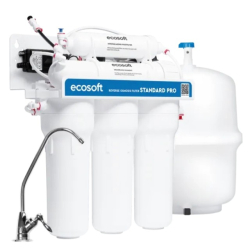
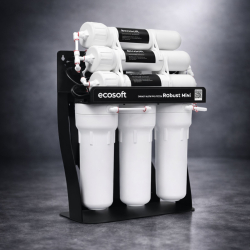
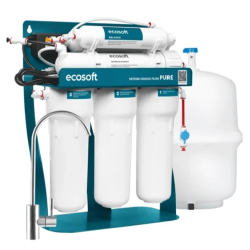
- And drink tap water ! Finally give up water in plastic bottles, which will not only help reduce waste but will also be much better for your health if you install a tap water filtration system in your home : reverse osmosis or ultrafiltration.

To watch the WWF video : https://youtu.be/nouDmK5ZNOw
To read the WWF report : Plastic pollution in the Mediterranean, Let's escape the trap !
For further reading : Pollution in the Mediterranean : current status and outlook for 2030
*The WWF report covers 22 countries around the Mediterranean Sea : Albania, Algeria, Bosnia and Herzegovina, Cyprus, Croatia, Egypt, Spain, France, Gibraltar, Greece, Israel, Italy, Lebanon, Libya, Malta, Morocco, Monaco, Montenegro, Slovenia, Syria, Tunisia, Turkey.
- Published on
- News
Related products