


Recherche dans le blog
Test Your Water or Have It Tested
The Impact of Sulfate on Your Health
Sulfates in water: sources, health risks, and filtration solutions
Sulfates occur naturally in water, but their concentrations vary depending on the environment, industrial activity, and infrastructure. At excessively high levels, they can affect your health, particularly your digestive system. Let's look at how to identify them, their effects, and how filtration such as reverse osmosis can protect your water every day.
Explore recommended RO systems
Sources of sulfates in water
Sulfates come from:
- the natural oxidation of ores
- the presence of shale and sulfur-bearing rocks
- rainwater
- industrial or agricultural pollution
They are also found in many everyday products: cosmetics, detergents, food additives…
Some sulfate derivatives are used in gardening:
- Iron sulfate – stripping wood, removing moss, producing blue hydrangeas
- Potassium sulfate – agriculture, horticulture, plant resilience
If used incorrectly, they can be irritating or toxic to the environment and people (skin, eyes, respiratory tract).
Health standards and acceptable limits
The World Health Organization recommends a maximum limit in drinking water of 500 mg/L.
| < 250 mg/L | Neutral taste |
| 250 – 1,000 mg/L | Noticeable taste (sodium) |
| > 1,000 mg/L | Strong taste (calcium) |
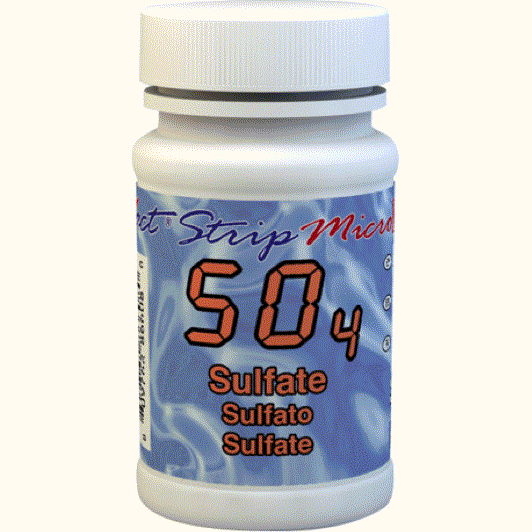
Monitor your water: a sulfate test helps you check your exposure.
Health effects of sulfates
Excessive exposure can cause:
- a laxative effect
- diarrhea and dehydration
- nausea
- abdominal pain
Those most sensitive: infants, older adults, and people with sensitive digestive systems.
It is therefore essential to monitor this parameter, especially if your water comes from a well or a local spring.
How can you remove sulfates from water?
Several methods are available:
- Distillation — very effective but slow and energy-intensive
- Ion exchange — often used in industrial installations
- Reverse osmosis — the most effective home solution (> 95% removal)
FAQ – Sulfates in water
Are sulfates dangerous?
At low doses, they are tolerated. At high doses, they can cause diarrhea and dehydration, especially in more vulnerable individuals.
Can tap water contain too many sulfates?
Yes, especially in certain regions or when the treatment plant experiences contamination spikes. Testing is recommended.
Does reverse osmosis remove sulfates?
Yes, it is one of the most effective methods, with an average 95% reduction — ideal for home use.
- Published on
- Test Your Water or Have It Tested
Related blog posts
>-

The Impact of Chlorine on Your Health
Chlorine is a chemical element naturally present in...
-

What Is Drinking Water?
What criteria determine whether water is safe to...
-
The Impact of Chlorine on Your Health
Chlorine is a chemical element naturally present in...
-
What Is Drinking Water?
What criteria determine whether water is safe to...