


Recherche dans le blog
Featured Articles
Articles in the category "Featured Articles"
What Is a Water Purifier?
A water purifier is a system that removes unwanted substances from drinking water. Although tap water remains closely monitored, its pollution control standards deteriorate year after year. The solution is to filter it to obtain healthy water again, because not a day goes by without the outlook for water resources growing darker... Pollution, water shortages, intensive farming...
One way to enjoy pure water at home is to install a water purifier. What makes a good water purifier? Which type suits which uses?
Purifying your water, whether it comes from the faucet or a natural source (river, lake, spring), guarantees access to quality water in sufficient quantities. With the drought we experienced this year, around a hundred villages in France lost access to drinking water... The effects of global warming (linked to increased solar activity in recent years) are already being felt. One solution is to collect rainwater during the wet season, store it, filter it, and use it during the dry season.
There are several methods for purifying water; we have listed the most common ones here.
Charcoal
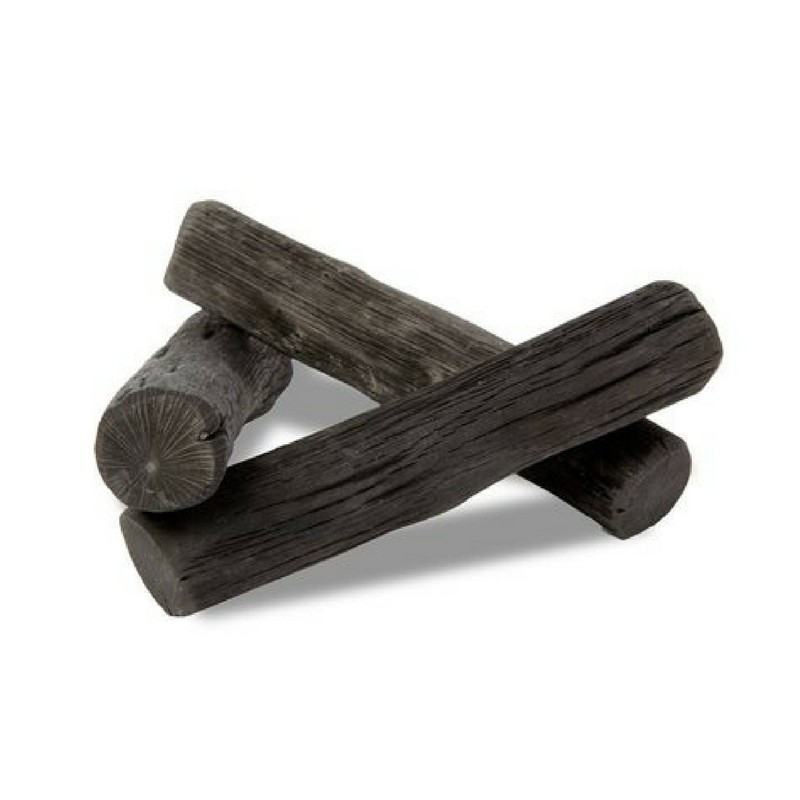
An activated carbon stick used as a water purifier is a piece of wood placed in a container. This piece of wood, usually called Binchotan charcoal, is a piece of oak that has been burned using a very specific technique. This process gives the wood a structure filled with tiny holes that trap molecules through friction, as well as through the reversal of electrical charges between the charcoal and the molecules to be captured.
In principle, these pieces of activated carbon work to purify water in a pitcher.
Unfortunately, they have several drawbacks:
- The volume of purified water is small. This is not suitable for cooking or for an entire family.
- The stick must be submerged in water. Otherwise, it can become a breeding ground for bacteria.
- The stick's effectiveness decreases after about 2 months. Even if you boil it to kill bacteria, its pores gradually fill up, greatly reducing its effectiveness.
- It does not filter out limescale or salt.
- The cost is relatively high: 10 euros / piece: this amounts to 60 euros per year for one person.
To conclude, a Binchotan activated carbon stick is a relatively affordable solution, but it is not very effective over the long term and is unsuitable for high water consumption.
Water Filter Pitchers
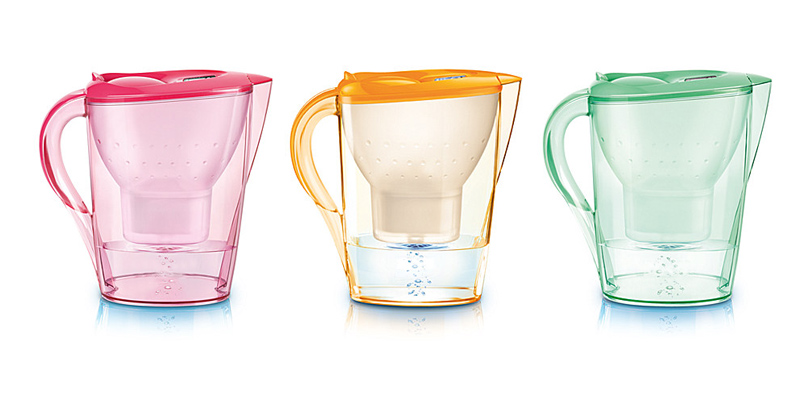
Water filter pitchers are well known as water purifiers and have been sold for around twenty years. The Brita brand has become a household name among customers. More than 200,000 water filter pitchers were sold each year in France in the 2000s. In 2008, the figure was 1 million; in 2009, nearly 2 million!
What explains this success? A seemingly low cost and the promise of water free of harmful substances. Too good to be true?
Advantages:
- “Apparently” low cost (inexpensive pitcher to purchase)
- Activated carbon filtration
- Filters out chlorine, lead, organic particles...
- No assembly required
Drawbacks:
- Filter clogs quickly
- A breeding ground for bacteria if poorly maintained
- Lots of plastic waste: filter cartridge must be changed every month
- Does not filter out pesticides
- Does not filter out bacteria or viruses
- Does not filter out nitrates
- Does not filter out pharmaceutical residues
- High cost: around a hundred euros per year for filters alone!
As we have just seen, water filter pitchers are a first step, but they are far from perfect!
They may be suitable for reducing a few substances, but they let most of them through. Their cost and the plastic waste they generate relative to their filtered water flow rate count against them.
Good to know: chlorine evaporates on its own within a few hours, so using a water filter pitcher just for that offers very limited value.
UV Water Purifiers
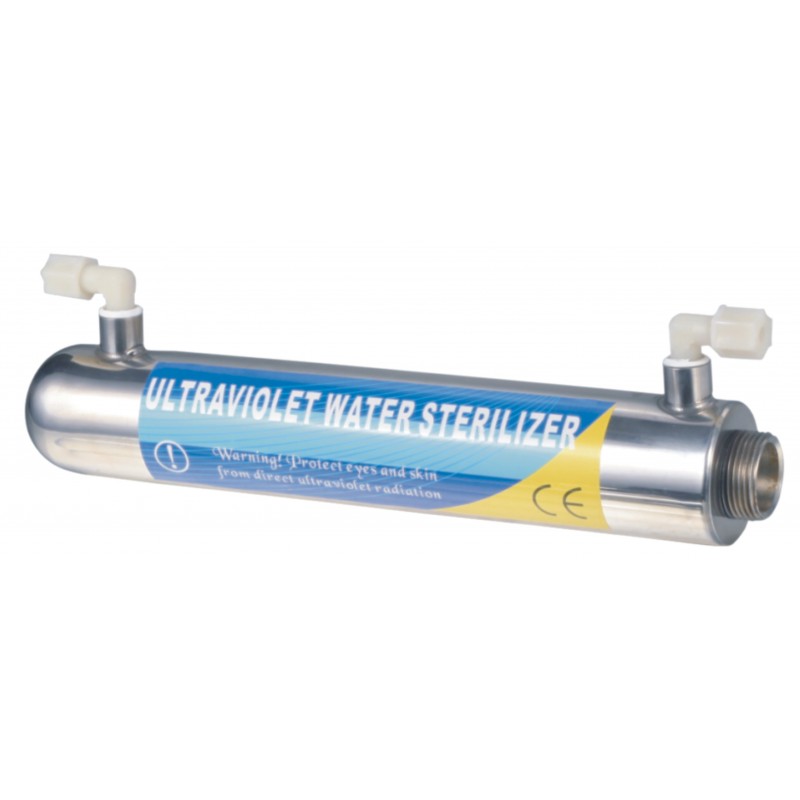
UV-C water purifiers (mainly used in industry), and more recently UV-A purifiers, can sterilize water by killing all bacteria and viruses through damage to their DNA, without requiring chemicals. Their drawbacks, beyond the very real danger to people if their eyes or skin are exposed, include their inability to filter out other substances in water (heavy metals, pesticides , salts, pharmaceuticals). In addition, these lamps require electricity, so their power consumption is proportional to their effectiveness.
UV-A filters claim to remove certain pesticides, but few studies are available yet on their actual effectiveness in this respect.
We recommend using a UV lamp on water that has already been filtered, to disinfect it after a period of stagnation, in an RO system tank, for example, or to supplement a micron filtration installation.
Explore our range of UV lamps
Ultrafiltration
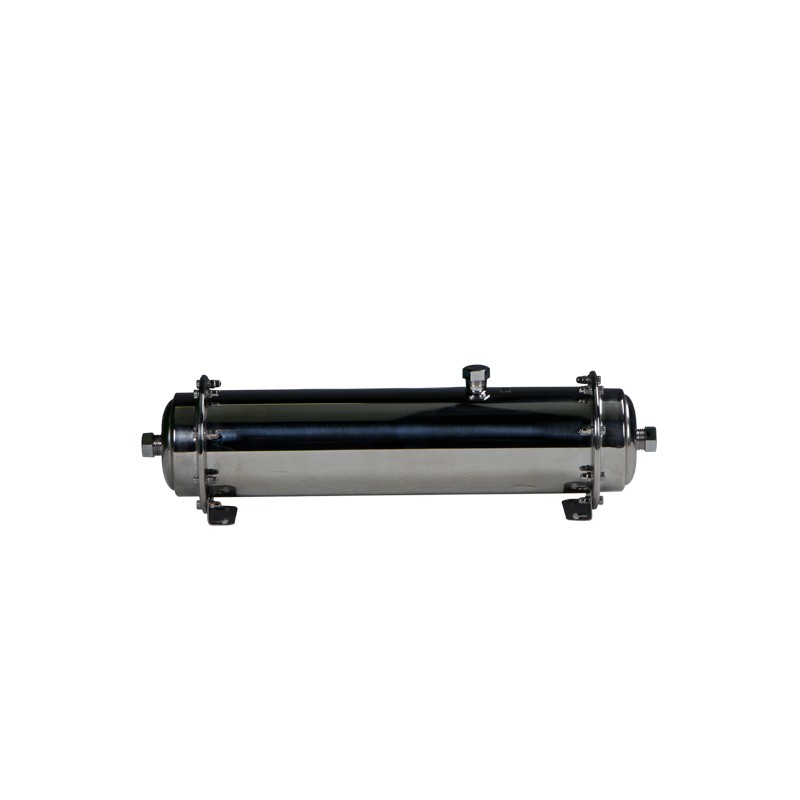
This filtration technique was developed in the 1970s by the dairy industry to remove bacteria and viruses using a membrane with pores no larger than 0.01 micron in diameter, or 5 to 10,000 times finer than a human hair. Ultrafiltration also removes phagocytes and certain colloids and macromolecules.
This water purification technique has the advantage of not wasting water. Particles remain in the filter, and water does not necessarily have to be discharged into the drain (although draining is possible to extend filter life), unlike an RO system, which needs to rinse its membrane whenever it produces water (1 to 2 liters discharged for every 1 liter of RO water).
Finally, the system is fairly easy to install and simply connects to your water supply (from a well or lake, for example).
Explore our range of ultrafiltration filters
Reverse Osmosis Systems
Reverse osmosis was originally a desalination technique. Used notably by NASA in the International Space Station's water recycling circuits, reverse osmosis is currently the most effective water purification system available.
Simply put, an RO system is a device capable of filtering water very finely. It consists of several parts involved in this process. The water to be treated first passes through several pre-filters that remove the largest particles (dust, sand...) as well as all free chlorine (harmful to RO membranes). The water then passes through one or more reverse osmosis membranes with pores measuring 0.0001 micrometer, the size of a water molecule. Only a portion of the smallest minerals (calcium, magnesium) passes through this membrane. As a result, the RO system removes bacteria, viruses, heavy metals, pesticides, pharmaceutical residues, fluoride, chlorine, salt, limescale, and many other impurities. In summary, an RO system is a device that gives you pure water whenever you want it, in whatever quantity you need.
An RO system offers many advantages.
- Nanometer-scale filtration that lets through only water molecules and a small portion of minerals.
- The RO system blocks viruses, bacteria, pesticides, chlorine, pharmaceuticals, heavy metals, salts…
- The RO system provides a high flow rate (up to 2 l/min for a home model and much more for professional models)
- A reasonable cost: entry-level prices start at 200 euros with filters
- Inexpensive consumables: starting at 40€/year
- Operation with or without electricity.
Drawbacks of an RO system:
- For every liter of water produced, at least one liter of water is discharged to clean the membrane (put this in perspective with the 11 liters of water needed to produce a plastic bottle, excluding transportation).
- The filters are not recyclable because they contain concentrated contaminants collected from thousands of liters of water.
Explore our range of RO systems
Water Dispensers
In the world of water dispensers, two main categories stand out: RO water dispensers and filtered water dispensers. Each offers specific advantages for improving the quality of the water you drink every day. But how do you make the right choice? In this article, we explain everything you need to know about these two types of dispensers to help you find the one that suits you best
ADVANTAGES OF A REVERSE OSMOSIS WATER DISPENSER:
- Exceptional water quality: thorough purification
- Removal of chemical and biological contaminants
- Ideal for people with sensitivities or health problems
- Suitable for everyday drinking and food preparation
Explore our wide selection of filtered water dispensers
ADVANTAGES OF A FILTERED WATER DISPENSER:
- More affordable than RO water dispensers.
- Simple installation and maintenance.
- Significant improvement in water taste
- Reduced limescale, ideal for hard water areas
Explore this wide selection of filtered water dispensers
Berkey Gravity Filters
Gravity filters such as Berkey or Berkefield are mechanical gravity filters. These water purifiers work on a simple principle. Water in an upper chamber flows down by gravity into the lower tank, passing through one or more filters.
Their advantage is that they do not need electricity, making them resilient. They also have a simple, sturdy design. Their filters remove a number of substances, including chlorine, viruses and bacteria, pesticides… but are not as effective as an RO system.
Their drawback is their low flow rate. Standard models take a few hours to fill an 8-liter tank.
This may seem limited for a large family or for cooking.
The other drawback is that the tank requires maintenance. If the device is not used for a few days, stagnant purified water provides an ideal environment for bacterial growth. You therefore need to disinfect the chamber whenever you go away.
Berkey filter cartridges are designed to treat 10,000 liters of water "under optimal operating conditions". With very hard water or water containing large amounts of particles, filter life can be significantly shortened.
In terms of cost , 2 standard filter cartridges cost 200 euros, plus 2 optional filter cartridges for filtering out fluoride and arsenic, which also cost 200 euros and must be changed every 6 months.
With 400 euros for filters and 500 euros for the device, your budget quickly approaches 1,000 euros…
In conclusion, no water purifier is perfect. Each has its advantages and drawbacks... It is up to you to identify your needs and choose the solution best suited to your situation!
- Published on
- Featured Articles,
- REVERSE OSMOSIS,
- Ultrafiltration