


Recherche dans le blog
Refrigerating Tap Water in Summer: Good or Bad Idea?
Several of our articles have already covered tap water quality and ways to drink pure water. But whether your water comes straight from the faucet without any filtration or passes through a reverse osmosis system or a water softener before you drink it, the question of storage arises.
How long can you store water, and how should you store it?
First, you should know that water can be stored in the refrigerator for 24 to 48 hours at most, but no longer, because germs and bacteria could then find their way in and happily multiply in your pitcher. These bacteria already multiply at an incredible rate if your container is not completely clean…
Your container should be made of glass, rather than plastic. And it should have a lid. You are already getting half of that wrong, aren't you? The lid (or tightly fitted plastic wrap) keeps particles from coming into contact with the water and also prevents the water from developing an unpleasant taste by absorbing odors in the refrigerator. Try it with a melon and an uncovered pitcher: the water tastes awful!
The benefits of storing tap water in the refrigerator
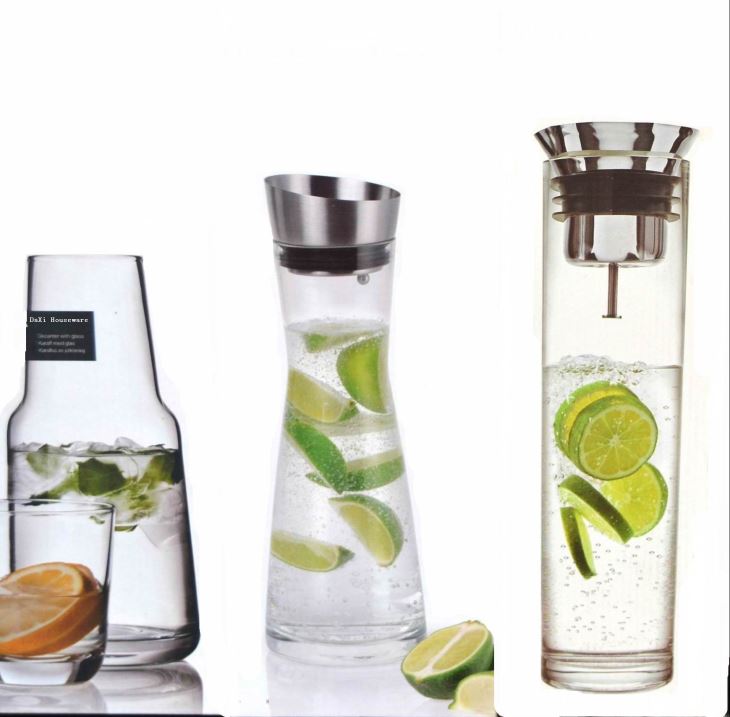
There are, however, benefits to storing tap water in the refrigerator: the cold reduces or even completely eliminates the taste of chlorine. Another way to mask this taste is to add ice cubes to your water just before drinking it. You can also add a drop of lemon juice, a slice of lemon or orange, or fresh mint leaves to give your water a delicate flavor.
Another benefit of keeping water chilled is the savings, since you no longer need to leave the faucet running for a long time to get cold water.
However, you should know that the water coming out of your faucet has been treated for immediate or almost immediate use. It therefore cannot be stored for long periods and could even become unsafe to drink if exposed to extreme conditions (heat and cold, too much light and UV).
A few basic water hygiene rules to follow
A little cleaning tip: when your pitcher is empty, do not leave it uncovered on a kitchen shelf either: that is the best way for dust and various microscopic particles to settle inside! Remember the lid or plastic wrap! Above all, wash your pitcher regularly with white vinegar, which will also make it look as clear and beautiful as it did on day one by removing all traces of limescale. If your pitcher is old or heavily coated with limescale, use a mixture of white vinegar and coarse salt, which is doubly effective. You can also add a little baking soda.
Something else to watch out for: when you are in a hurry, you often take the bottle or pitcher out of the refrigerator and quickly drink straight from it! (Yes, yes, we saw you !). Stop! That is off-limits, because it is the best way to introduce all the germs on your lips and in your mouth into the water… lovely germs that will then end up in your stomach, as well as those of family members who also drink water from the bottle or pitcher in the refrigerator.
Also keep in mind that opened plastic bottles do not keep water fresh very well, especially if you have drunk straight from the bottle. Here again, try an experiment with a small bottle: fill it with tap water, drink straight from it several times, and leave it in the refrigerator for a day or two. The next time you use it, the mouth of the bottle will most likely have developed a rancid taste…
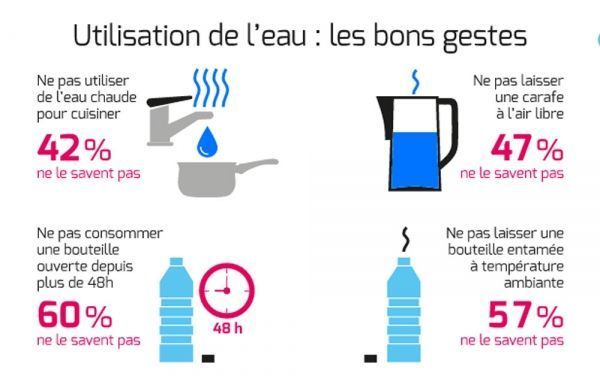
Source : https://www.europe1.fr/societe/en-bouteille-ou-du-robinet-ces-erreurs-a-eviter-avec-leau-2778754
If you choose to fill a pitcher and leave it out at room temperature, remember to keep it away from light and especially sunlight. Once again, bacteria, microorganisms, and germs dance a jig as soon as UV rays warm them up!
The ideal way to enjoy cool water is therefore to let the tap water run a little before filling your pitcher and leaving it exposed to the air for a short while. Then place the pitcher in the refrigerator for about half an hour before drinking it, remembering to put the lid on.
What about the ice cubes stored in your freezer?
Frozen water will not deteriorate. But did you remember to wash your ice cube trays properly before refilling them and putting them in the freezer? Check! Especially since there is no point in storing ice cubes for a long time: after a while, they develop a stale taste, if not the taste of the cheese stored right next to them!
And for your health, is drinking cold tap water good or bad?
When it is hot, and even more so during heat waves, it is essential to stay well hydrated.
Staying hydrated means drinking, but skip sugary juices, sodas, coffee, and alcohol, and drink water, water, and more water! Or tea and flavored water if you prefer a little flavor: you can add a slice of lemon or orange to your water, or mint leaves to enhance the refreshing sensation.
Also remember that it is recommended to drink at least 1.5 liters of water per day, which is roughly equivalent to 9 or 10 large glasses of water.
But should you drink this water at room temperature, lukewarm, or very cold straight from the refrigerator?
When you drink water from a pitcher that has been stored in the refrigerator, you instantly feel a pleasant cooling sensation. This sensation is misleading, because it tricks your body, which is already using a considerable amount of energy to maintain the right temperature, namely 37 °C. So drinking very cold water will soon make you feel hot once that initial sensation passes, giving you the opposite effect of the one you wanted!
Cold water hydrates you faster because it is absorbed more quickly into the bloodstream. But the contraction of blood vessels slows digestion and disrupts your body's hydration ! You may also read here and there that fats in food harden on contact with cold water, slowing absorption. But this argument is often disputed, and our research did not turn up any credible article proving or disproving this theory.
Finally, very cold water can cause intestinal pain and diarrhea, as well as sore throats, because it promotes mucus formation, which weakens your defenses over time.
People who suffer from migraines should also avoid ice-cold water, which will worsen their migraines, and ice-cold water has also been noted to bring back pain in people with rheumatism
You can also look at the opposite case: in hot countries, people often drink very hot tea… and in Asian countries, meals are accompanied by hot drinks, which are said to aid digestion. Except that our bodies are not geared for this and will draw on their energy reserves to regulate their internal temperature – that familiar 37 °C again! In addition, the heat of the drink will make you sweat, which speeds up dehydration: once again, you get the opposite effect of the one you wanted! But it is true that drinking hot beverages helps your body get rid of toxins and quenches your thirst more easily.
Cold water vs. hot water: the winner: lukewarm or room-temperature water!
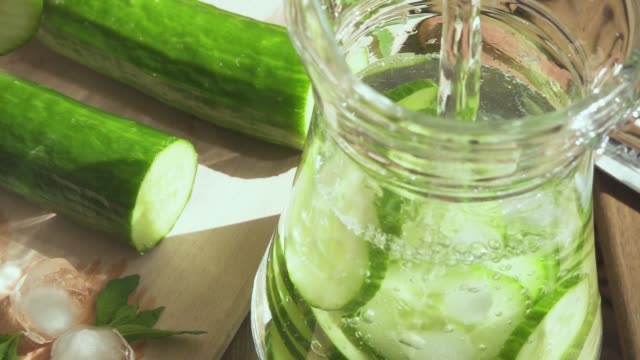
So what is left to drink besides cold water and hot water? Room-temperature water, meaning between 12 and 14 °C. For an even more refreshing sensation, add mint leaves or cucumber slices to your water.
- Lukewarm water boosts metabolic energy. It is excellent to “savor” when you wake up, to raise your body temperature after sleep and boost blood circulation so you can start your day well.
- It eliminates toxins from your body, helping it cleanse itself more quickly.
- Lukewarm water also benefits your intestines by stimulating digestion: goodbye constipation! Lukewarm water is also said to reduce sugar cravings.
In fact, you can find dozens – even hundreds of opinions – online advocating one option or the other: hot water versus cold water, the debate is far from over! In any case, you need to drink enough water to avoid dehydration, especially in very hot weather. The best way to check whether you are drinking enough is to look at your urine: if it is very yellow or even dark, remember to drink a little more. Listen to your body too, because it knows what it needs better than you do!
What we can tell you, and what matters most to us, is that it is important for you to drink good-quality water, treated, for example, through reverse osmosis.
More than its temperature, it is the purity of the water that will best protect your body! And if you are interested in water purity, we are available to answer all your questions!
- Published on
- All About Water